
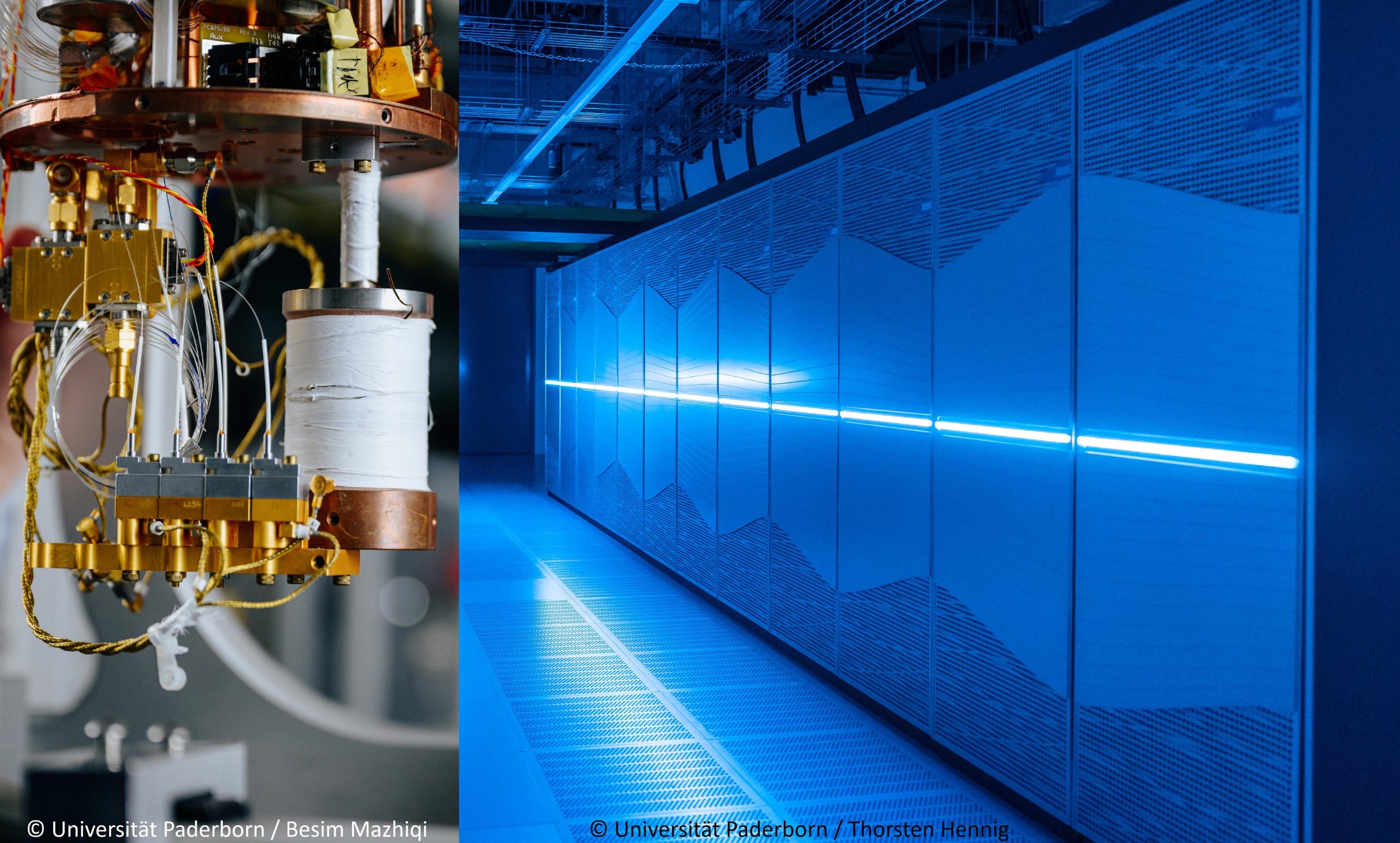
Scientists have revolutionized the field of quantum photonics by employing high-performance computing to analyze quantum detectors at an unprecedented scale.
Their innovative approach involves the tomographic reconstruction of experimental data, enabling rapid and efficient characterization of photon detectors. This development promises to enhance quantum research significantly, paving the way for advanced applications in quantum computing and communication.
Breakthrough in Quantum Photonics With High-Performance Computing
For the first time, scientists at Paderborn University have applied large-scale high-performance computing (HPC) at large scales to analyze a quantum photonics experiment. Specifically, this involved reconstructing experimental data from a quantum detector—a device capable of measuring individual photons, or light particles—using tomographic techniques. To enable this, the research team developed innovative HPC software. Their groundbreaking findings have been published in the journal Quantum Science and Technology.
Advancements in Quantum Characterization
High-resolution photon detectors are becoming essential tools in quantum research, but accurately characterizing these devices has been challenging due to the enormous data volumes involved. Analyzing this data while preserving its quantum mechanical integrity is crucial for effective measurements and future applications. Conventional methods struggle to handle the complex computations required for large-scale quantum systems, but researchers at Paderborn are tackling this by leveraging high-performance computing for detailed characterization and certification.
“By developing open-source customized algorithms using HPC, we perform quantum tomography on a megascale quantum photonic detector,” explains physicist Timon Schapeler, who collaborated with computer scientist Dr. Robert Schade and colleagues from the PhoQS (Institute for Photonic Quantum Systems) and PC2 (Paderborn Center for Parallel Computing). PC2, an interdisciplinary project at Paderborn University, manages the HPC systems. As one of Germany’s national high-performance computing centers, Paderborn University stands at the forefront of advancing HPC capabilities in academia.
Scaling New Heights in Quantum Research
“The findings are opening up entirely new horizons for the size of systems being analyzed in the field of scalable quantum photonics. This has wider implications, for example for characterizing photonic quantum computer hardware,” Schapeler continues. Researchers were able to perform their calculations for describing a photon detector within just a few minutes – faster than ever before. The system also managed to complete calculations involving huge quantities of data extremely quickly.
Schapeler: “This shows the unprecedented scale on which this tool can be used with quantum photonic systems. As far as we know, our work is the first contribution to the field of traditional high-performance computing enabling experimental quantum photonics at large scales. This field will become increasingly important when it comes to demonstrating quantum supremacy in quantum photonic experiments – and on a scale that cannot be calculated by conventional means.”
Shaping the Future With Fundamental Research
Schapeler is a doctoral student in the Mesoscopic Quantum Optics research group headed by Professor Tim Bartley. This team conducts research into the fundamental physics of the quantum states of light and its applications. These states consist of tens, hundreds, or thousands of photons.
“The scale is crucial, as this illustrates the fundamental advantage that quantum systems hold over conventional ones. There is a clear benefit in many areas, including measurement technology, data processing, and communications,” Bartley explains. The major discipline of quantum research is one of Paderborn University’s flagship fields. Respected experts are conducting fundamental research to shape the specific applications of the future.
Reference: “Scalable quantum detector tomography by high-performance computing” by Timon Schapeler, Robert Schade, Michael Lass, Christian Plessl and Tim J Bartley, 22 October 2024, Quantum Science and Technology.
DOI: 10.1088/2058-9565/ad8511
Never miss a breakthrough: Join the SciTechDaily newsletter.
Follow us on Google and Google News.