
Close Menu
    Facebook X (Twitter) Instagram
    SciTechDaily
    • Biology
    • Chemistry
    • Earth
    • Health
    • Physics
    • Science
    • Space
    • Technology
    Facebook X (Twitter) Pinterest YouTube RSS
    SciTechDaily
    Home»Earth»SWOT Mission: See an Unprecedented View of Global Sea Levels [Video]
    Earth

    SWOT Mission: See an Unprecedented View of Global Sea Levels [Video]

    By Jet Propulsion LaboratoryNovember 2, 2023No Comments4 Mins Read
    Facebook Twitter Pinterest Telegram LinkedIn WhatsApp Email Reddit
    Share
    Facebook Twitter LinkedIn Pinterest Telegram Email Reddit
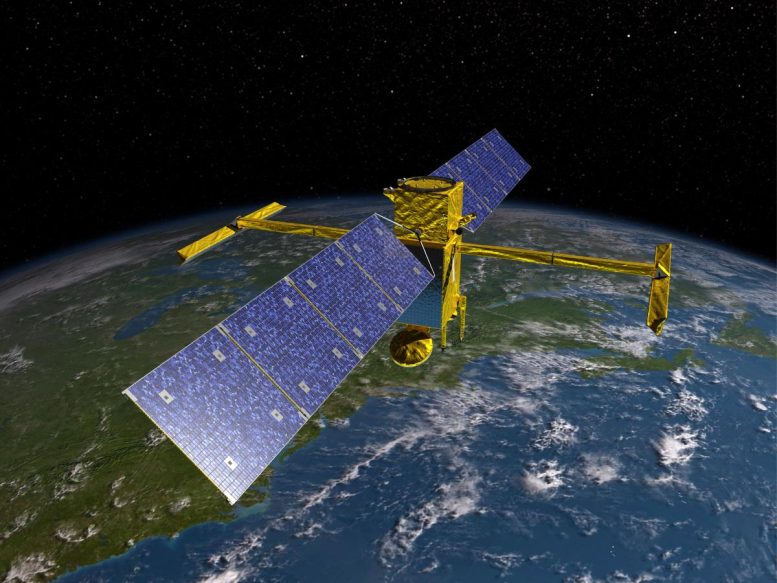
    SWOT (Surface Water and Ocean Topography) Mission
    Designed to make the first-ever global survey of Earth’s surface water, the Surface Water and Ocean Topography, or SWOT, satellite is collecting detailed measurements of how water bodies on Earth change over time. Credit: NASA/JPL-Caltech

    Data on sea surface heights around the world from the international Surface Water and Ocean Topography mission yields a mesmerizing view of the planet’s ocean.

    The Surface Water and Ocean Topography (SWOT) satellite is sending down tantalizing views of Earth’s water, including a global composite of sea surface heights. The satellite collected the data visualized above during SWOT’s first full 21-day science orbit, which it completed between July 26 and August 16.

    SWOT is measuring the height of nearly all water on Earth’s surface, providing one of the most detailed, comprehensive views yet of the planet’s oceans and freshwater lakes and rivers. The satellite is a collaboration between NASA and the French space agency, CNES (Centre National d’Études Spatiales).

    Understanding Sea Surface Heights

    The animation below shows sea surface height anomalies around the world: Red and orange indicate ocean heights that were higher than the global mean sea surface height, while blue represents heights lower than the mean. Sea level differences can highlight ocean currents, like the Gulf Stream coming off the U.S. East Coast or the Kuroshio current off the east coast of Japan. Sea surface height can also indicate regions of relatively warmer water – like the eastern part of the equatorial Pacific Ocean during an El Niño – because water expands as it warms.


    This animation shows global sea level data collected by the Surface Water and Ocean Topography satellite from July 26 to August 16. Red and orange indicate higher-than-average ocean heights, while blue represents lower-than-average heights. Credit: NASA/JPL-Caltech

    The SWOT science team made the measurements using the groundbreaking Ka-band Radar Interferometer (KaRIn) instrument. With two antennas spread 33 feet (10 meters) apart on a boom, KaRIn produces a pair of data swaths (tracks visible in the animation) as it circles the globe, bouncing radar pulses off the water’s surface to collect surface-height measurements.

    “The detail that SWOT is sending back on sea levels around the world is incredible,” said Parag Vaze, SWOT project manager at NASA’s Jet Propulsion Laboratory in Southern California. “The data will advance research into the effects of climate change and help communities around the world better prepare for a warming world.”
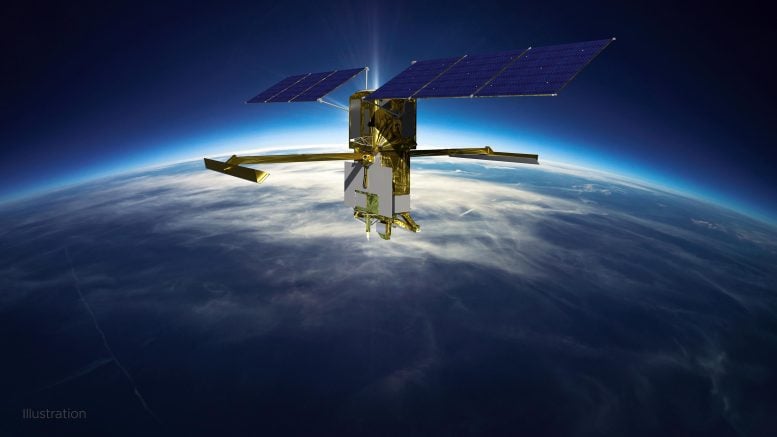
    Surface Water and Ocean Topography (SWOT) Satellite Illustration
    This illustration shows the Surface Water and Ocean Topography (SWOT) satellite in orbit with its solar panels and KaRIn instrument antennas deployed. Credit: CNES

    Surface Water and Ocean Topography (SWOT)

    Launched on December 16, 2022, from Vandenberg Space Force Base in central California, SWOT is now in its operations phase, collecting data that will be used for research and other purposes.

    SWOT was jointly developed by NASA and CNES, with contributions from CSA (Canadian Space Agency) and the UK Space Agency. The Jet Propulsion Laboratory (JPL), which is managed for the agency by Caltech in Pasadena, California, leads the U.S. component of the project. For the flight system payload, NASA provided the KaRIn instrument, a GPS science receiver, a laser retroreflector, a two-beam microwave radiometer, and NASA instrument operations. CNES provided the Doppler Orbitography and Radioposition Integrated by Satellite (DORIS) system, the dual frequency Poseidon altimeter (developed by Thales Alenia Space), the KaRIn radio-frequency subsystem (together with Thales Alenia Space and with support from the UK Space Agency), the satellite platform, and ground operations. CSA provided the KaRIn high-power transmitter assembly. NASA provided the launch vehicle and the agency’s Launch Services Program, based at Kennedy Space Center, managed the associated launch services.

    Never miss a breakthrough: Join the SciTechDaily newsletter.
    Follow us on Google and Google News.

    Climate Science JPL NASA Sea Level SWOT
    Share. Facebook Twitter Pinterest LinkedIn Email Reddit

    Related Articles

    Meet the People Behind NASA’s Incredible New SWOT Water-Tracking Satellite

    Online Visualization Tool From NASA Provide a New Window on Rising Seas

    NASA-Built Carbon Mapper Instrument Will Help to Spot Greenhouse Gas Super-Emitters

    What a Glacial River Reveals About the Greenland Ice Sheet and Global Sea Level Rise

    NISAR Spacecraft: Major New Earth Satellite to Track Disasters, Effects of Climate Change

    U.S.-European Sentinel-6 Sea Level Satellite Gears Up for Launch

    Sentinel-6 Michael Freilich Is Set for Launch in Weeks – 5 Things to Know

    NASA’s Oceans Melting Greenland Mission Maps Greenland’s Coastline

    NASA Study Reveals Oceans Temporarily Hide Global Warming

    Leave A Reply Cancel Reply

    • Facebook
    • Twitter
    • Pinterest
    • YouTube

    Don't Miss a Discovery

    Subscribe for the Latest in Science & Tech!

    Trending News

    Collapsing Plasma May Hold the Key to Cosmic Magnetism

    This Breakthrough Solar Panel Generates Power From Both Sunlight and Raindrops

    Scientists Uncover New Metabolic Effects Beyond Weight Loss of Mounjaro

    Scientists Discover Cancer Tumors Are “Addicted” to This Common Antioxidant

    1,800 Miles Down: Scientists Uncover Mysterious Movements at the Edge of Earth’s Core

    Scientists Discover Hidden “Good Fats” in Green Rice That Could Transform Nutrition

    Your Child’s Clothes Could Contain Toxic Lead, Study Finds

    Researchers Break a 150-Year-Old Math Law With a Surprising Donut Discovery

    Follow SciTechDaily
    • Facebook
    • Twitter
    • YouTube
    • Pinterest
    • Newsletter
    • RSS
    SciTech News
    • Biology News
    • Chemistry News
    • Earth News
    • Health News
    • Physics News
    • Science News
    • Space News
    • Technology News
    Recent Posts
    • Hidden Danger: Widely Used Pesticides Linked to 150% Higher Cancer Risk
    • The Mystery of the Notes: Why No One Knows How This 120-Year-Old Song Should Sound
    • Scientists Discover 132-Million-Year-Old Dinosaur Tracks on South Africa’s Coast
    • Scientists Uncover the Secret Ingredient Behind the Spark That May Have Started Life on Earth
    • Natural Oils vs. Antibiotics: The Swine Study That Could Change Farming
    Copyright © 1998 - 2026 SciTechDaily. All Rights Reserved.
    • Science News
    • About
    • Contact
    • Editorial Board
    • Privacy Policy
    • Terms of Use

    Type above and press Enter to search. Press Esc to cancel.