
Close Menu
    Facebook X (Twitter) Instagram
    SciTechDaily
    • Biology
    • Chemistry
    • Earth
    • Health
    • Physics
    • Science
    • Space
    • Technology
    Facebook X (Twitter) Pinterest YouTube RSS
    SciTechDaily
    Home»Space»Double Surprise: NASA’s Lucy Spacecraft Makes “Marvelous” Discovery During Asteroid Dinkinesh Flyby
    Space

    Double Surprise: NASA’s Lucy Spacecraft Makes “Marvelous” Discovery During Asteroid Dinkinesh Flyby

    By Katherine Kretke, Southwest Research InstituteNovember 2, 20231 Comment4 Mins Read
    Facebook Twitter Pinterest Telegram LinkedIn WhatsApp Email Reddit
    Share
    Facebook Twitter LinkedIn Pinterest Telegram Email Reddit
    Dinkinesh Asteroid Pair
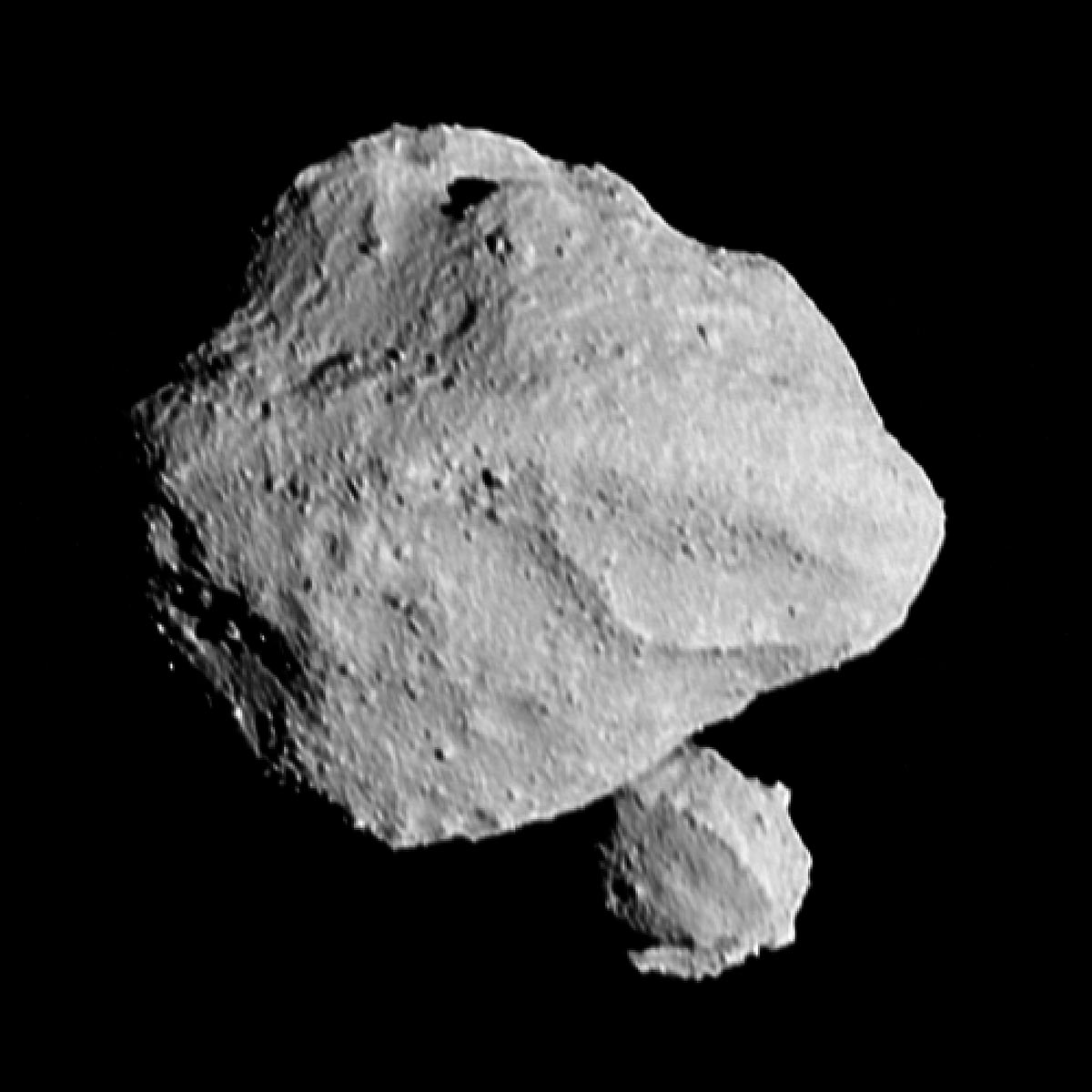
    This image shows the “moonrise” of the satellite as it emerges from behind asteroid Dinkinesh as seen by the Lucy Long-Range Reconnaissance Imager (L’LORRI), one of the most detailed images returned by NASA’s Lucy spacecraft during its flyby of the asteroid binary. This image was taken at 12:55 p.m. EDT (1655 UTC) Nov. 1, 2023, within a minute of closest approach, from a range of approximately 270 miles (430 km). From this perspective, the satellite is behind the primary asteroid. The image has been sharpened and processed to enhance contrast. Credit: NASA/Goddard/SwRI/Johns Hopkins APL/NOAO

    NASA’s Lucy spacecraft has revealed that the asteroid Dinkinesh is a binary system. The flyby tested the spacecraft’s tracking abilities and provided a preview of the mission’s ultimate goal: to explore the Jupiter Trojan asteroids.

    On November 1, NASA’s Lucy spacecraft flew by not just its first asteroid, but its first two. The first images returned by Lucy reveal that the small main belt asteroid Dinkinesh is actually a binary pair.

    “Dinkinesh really did live up to its name; this is marvelous,” said Hal Levison, referring to the meaning of Dinkinesh in the Amharic language, “marvelous.” Levison is principal investigator for Lucy from the Boulder, Colorado, branch of the San-Antonio-based Southwest Research Institute. “When Lucy was originally selected for flight, we planned to fly by seven asteroids. With the addition of Dinkinesh, two Trojan moons, and now this satellite, we’ve turned it up to 11.”

    Discovery of Binary System

    In the weeks prior to the spacecraft’s encounter with Dinkinesh, the Lucy team had wondered if Dinkinesh might be a binary system, given how Lucy’s instruments were seeing the asteroid’s brightness changing with time. The first images from the encounter removed all doubt. Dinkinesh is a close binary. From a preliminary analysis of the first available images, the team estimates that the larger body is approximately 0.5 miles (790 m) at its widest, while the smaller is about 0.15 miles (220 m) in size.

    Testing the Terminal Tracking System

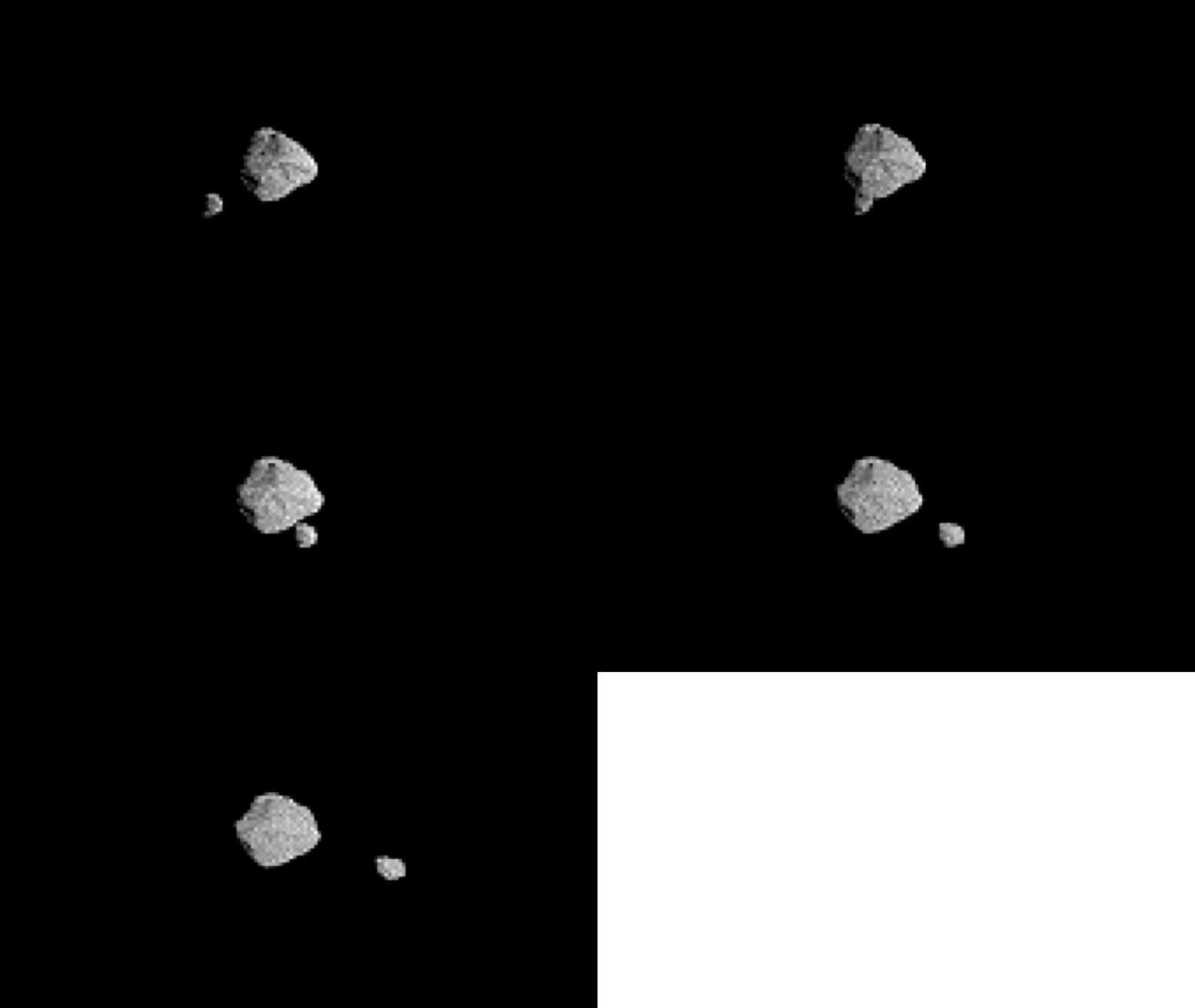
    This encounter primarily served as an in-flight test of the spacecraft, specifically focusing on testing the system that allows Lucy to autonomously track an asteroid as it flies past at 10,000 mph, referred to as the terminal tracking system.
    Dinkinesh Asteroid Pair
    A series of images of the binary asteroid pair, Dinkinesh, as seen by the terminal tracking camera (T2CAM) on NASA’s Lucy spacecraft during its closest approach on Nov. 1, 2023. The images were taken 13 seconds apart. The apparent motion of the two asteroids is due to the motion of the spacecraft as it flew past at 10,000 mph (4.5 km/s). These images have been sharpened and processed to enhance contrast. Credit: NASA/Goddard/SwRI/ASU

    Scientific Excitement and Future Missions

    “This is an awesome series of images. They indicate that the terminal tracking system worked as intended, even when the universe presented us with a more difficult target than we expected,” said Tom Kennedy, guidance and navigation engineer at Lockheed Martin in Littleton, Colorado. “It’s one thing to simulate, test, and practice. It’s another thing entirely to see it actually happen.”

    While this encounter was carried out as an engineering test, the team’s scientists are excitedly poring over the data to glean insights into the nature of small asteroids.

    “We knew this was going to be the smallest main belt asteroid ever seen up close,” said Keith Noll, Lucy project scientist from NASA’s Goddard Space Flight Center in Greenbelt, Maryland. “The fact that it is two makes it even more exciting. In some ways, these asteroids look similar to the near-Earth asteroid binary Didymos and Dimorphos that DART saw, but there are some really interesting differences that we will be investigating.”

    It will take up to a week for the team to downlink the remainder of the encounter data from the spacecraft. The team will use this data to evaluate the spacecraft’s behavior during the encounter and to prepare for the next close-up look at an asteroid, the main belt asteroid Donaldjohanson, in 2025. Lucy will then be well-prepared to encounter the mission’s main targets, the Jupiter Trojan asteroids, starting in 2027.

    Never miss a breakthrough: Join the SciTechDaily newsletter.
    Follow us on Google and Google News.

    Asteroid Lucy Mission NASA Goddard Space Flight Center Popular Southwest Research Institute
    Share. Facebook Twitter Pinterest LinkedIn Email Reddit

    Related Articles

    NASA’s Lucy Captures Ice Cream Cone–Shaped Asteroid That Defies Expectations

    Another Surprise From NASA’s Lucy Asteroid Encounter: “We Never Suspected Anything So Bizarre!”

    NASA’s Lucy Spacecraft Snaps First Images of Asteroid Dinkinesh on Its 12-Year Voyage of Discovery

    Lucy in the Sky With Asteroids: NASA’s Mission Reveals First Images of Jupiter’s Trojans

    NASA’s Record-Breaking Lucy Spacecraft Has a New Asteroid Target

    Moon Discovered Around Asteroid Polymele by NASA’s Lucy Team

    The Fascinating Story of How the Trojan Asteroids – Target of NASA’s Lucy Mission – Were Discovered and Named

    NASA’s First Mission to Explore the Trojan Asteroids Passes Critical Milestone

    NASA’s Mission to Jupiter’s Trojan Asteroids Confirms Discovery of “Bonus” Exploration Opportunity

    1 Comment

    1. Ed Stauffer on November 3, 2023 10:25 am

      I assume the sun is off the bottom of the picture as the smaller object is not orbiting the larger object’s equator..

      Reply
    Leave A Reply Cancel Reply

    • Facebook
    • Twitter
    • Pinterest
    • YouTube

    Don't Miss a Discovery

    Subscribe for the Latest in Science & Tech!

    Trending News

    Scientists Warn That This Common Pet Fish Can Wreck Entire Ecosystems

    Scientists Make Breakthrough in Turning Plastic Trash Into Clean Fuel Using Sunlight

    This Popular Supplement May Interfere With Cancer Treatment, Scientists Warn

    Scientists Finally Solved One of Water’s Biggest Mysteries

    Could This New Weight-Loss Pill Disrupt the Entire Market? Here’s What You Should Know About Orforglipron

    Earth’s Crust Is Tearing Open in Africa, and It Could Form a New Ocean

    Breakthrough Bowel Cancer Trial Leaves Patients Cancer-Free for Nearly 3 Years

    Natural Compound Shows Powerful Potential Against Rheumatoid Arthritis

    Follow SciTechDaily
    • Facebook
    • Twitter
    • YouTube
    • Pinterest
    • Newsletter
    • RSS
    SciTech News
    • Biology News
    • Chemistry News
    • Earth News
    • Health News
    • Physics News
    • Science News
    • Space News
    • Technology News
    Recent Posts
    • Kratom Use Explodes in the US, With Life-Changing Consequences
    • Scientists Uncover Fatal Weakness in “Zombie Cells” Linked to Cancer
    • World-First Study Reveals Human Hearts Can Regenerate After a Heart Attack
    • Why Your Dreams Feel So Real Sometimes and So Strange Other Times
    • Scientists Debunk 100-Year-Old Belief About Brain Cells, Rewriting Textbooks
    Copyright © 1998 - 2026 SciTechDaily. All Rights Reserved.
    • Science News
    • About
    • Contact
    • Editorial Board
    • Privacy Policy
    • Terms of Use

    Type above and press Enter to search. Press Esc to cancel.