
Close Menu
    Facebook X (Twitter) Instagram
    SciTechDaily
    • Biology
    • Chemistry
    • Earth
    • Health
    • Physics
    • Science
    • Space
    • Technology
    Facebook X (Twitter) Pinterest YouTube RSS
    SciTechDaily
    Home»Biology»Tarantula’s Pervasiveness Traced Back to the Cretaceous Period
    Biology

    Tarantula’s Pervasiveness Traced Back to the Cretaceous Period

    By Carnegie Mellon UniversityApril 18, 2021No Comments3 Mins Read
    Facebook Twitter Pinterest Telegram LinkedIn WhatsApp Email Reddit
    Share
    Facebook Twitter LinkedIn Pinterest Telegram Email Reddit
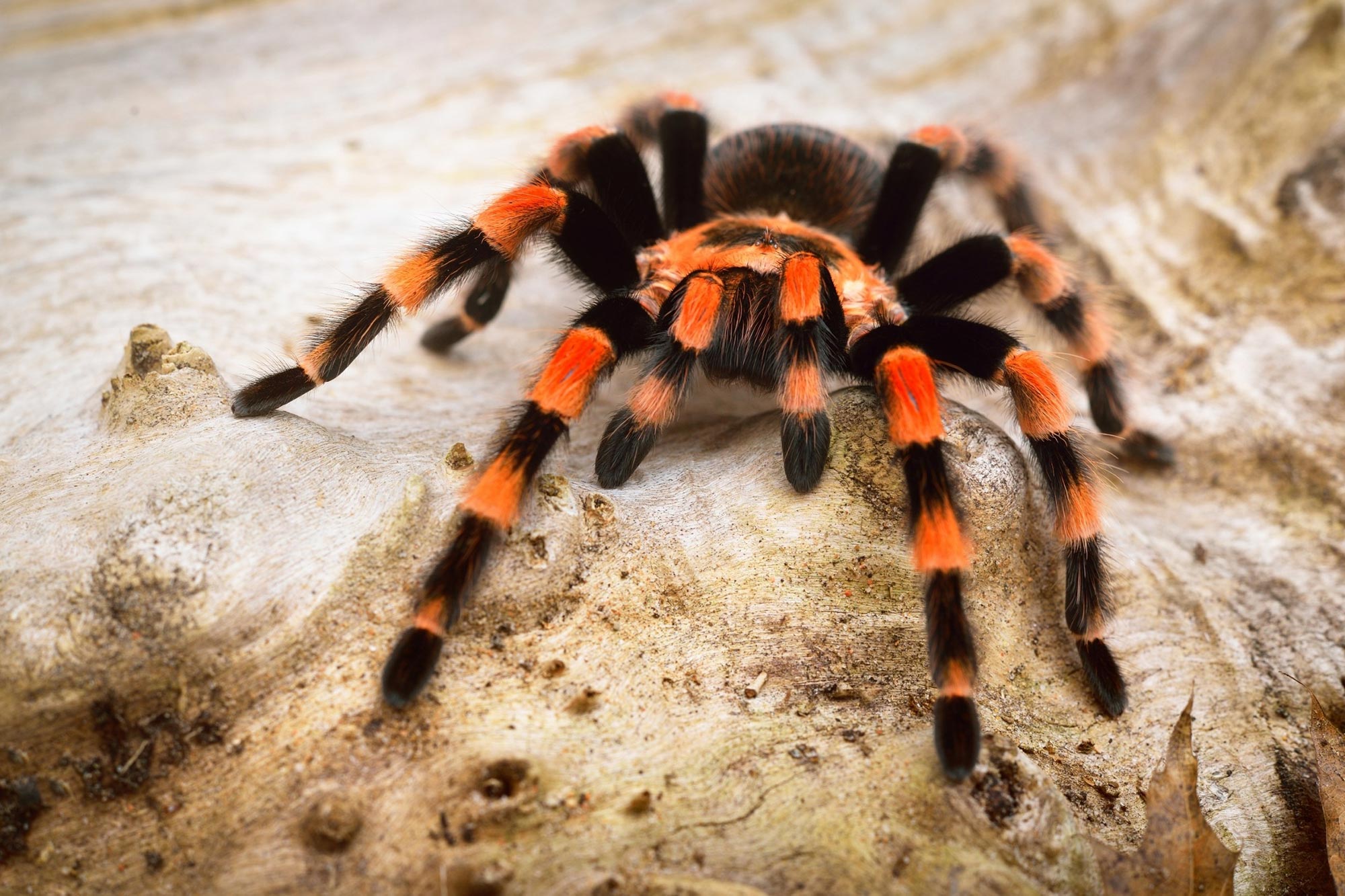
    Birdeater Tarantula Spider
    Birdeater Tarantula Spider

    A genetic study shows that tarantulas originated in the Americas about 120 million years ago and spread worldwide via continental drift and surprisingly effective dispersal, including two distinct migrations into Asia, one of which crossed the Wallace Line.

    Tarantulas are among the most notorious spiders, due in part to their size, vibrant colors, and prevalence throughout the world. But one thing most people don’t know is that tarantulas are homebodies. Females and their young rarely leave their burrows and only mature males will wander to seek out a mate. How then did such a sedentary spider come to inhabit six out of seven continents?

    An international team of researchers, including Carnegie Mellon University’s Saoirse Foley, set out on an ancestry.com-like investigation to find the answer to this question. They looked to the transcriptomes, the sum of all the transcripts from the mRNA, of many tarantulas and other spiders from different time periods. Their findings were published online by PeerJ on April 6, 2021.

    They used the transcriptomes to build a genetic tree of spiders and then time-calibrated their tree with fossil data. Tarantula fossils are extremely rare, but the software used in the study managed to estimate the ages of older tarantulas relative to the ages of fossils from other spiders.
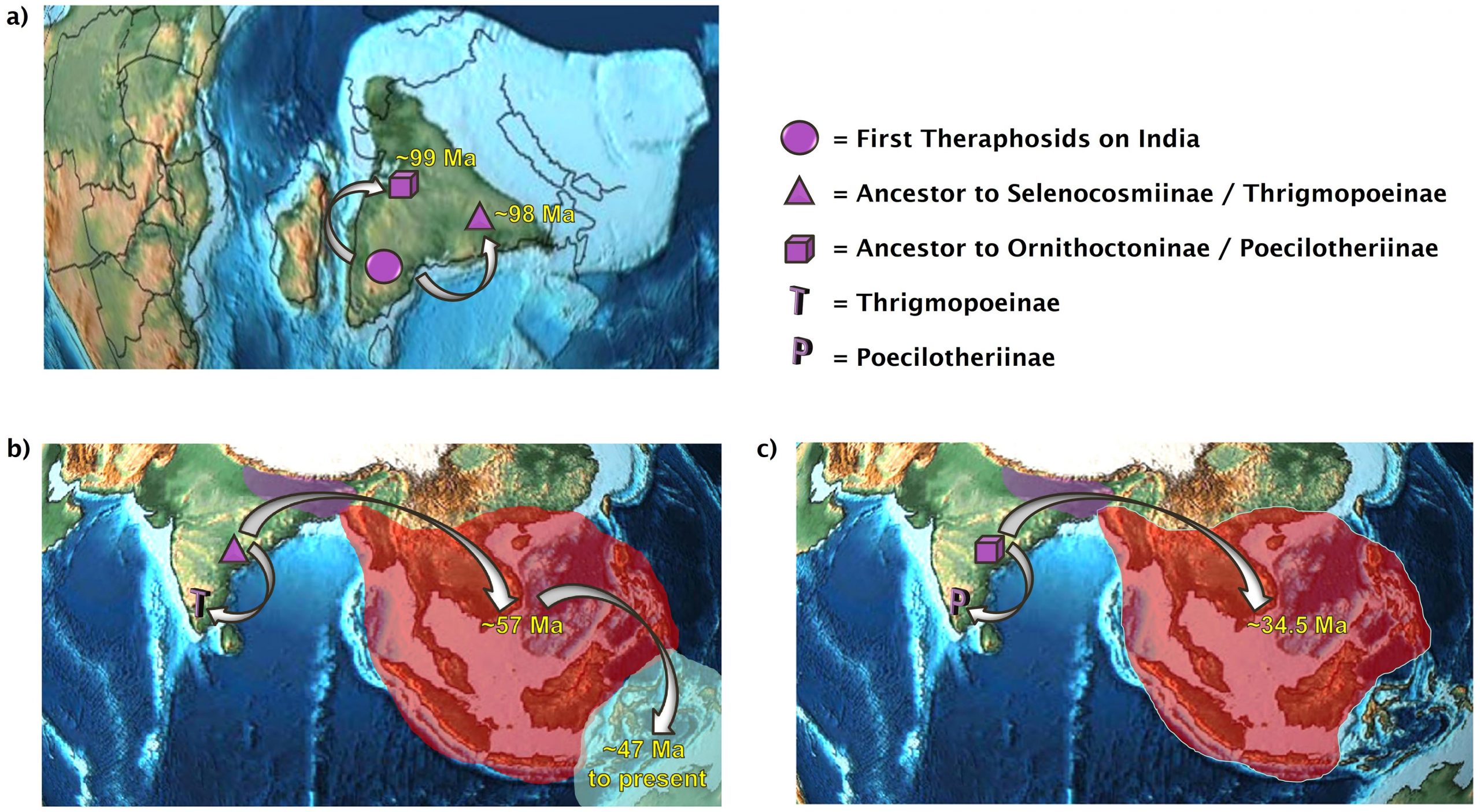
    Two Independent Tarantula Lineages Emerged From India
    Two independent tarantula lineages emerged from India. Credit: https://dinosaurpictures.org/, 2021

    Gondwana Origins and Global Dispersal

    They found that tarantulas are ancient, first emerging in the piece of land now considered the Americas about 120 million years ago during the Cretaceous period. At that time South America would have been attached to Africa, India, and Australia as part of the Gondwana supercontinent. The spiders ultimately reached their present destinations due to continental drift, with a few interesting departures.

    For example, the nature of their entry into Asia suggests tarantulas may also be surprisingly proficient dispersers. The researchers were able to establish two separate lineages of tarantulas that diverged on the Indian subcontinent before it crashed into Asia, with one lineage being predominantly ground-dwelling and the other predominantly arboreal. They found that these lineages colonized Asia about 20 million years apart. Surprisingly, the first group that reached Asia also managed to cross the Wallace Line, a boundary between Australia and the Asian islands where many species are found in abundance on one side and rarely or not at all on the other. 
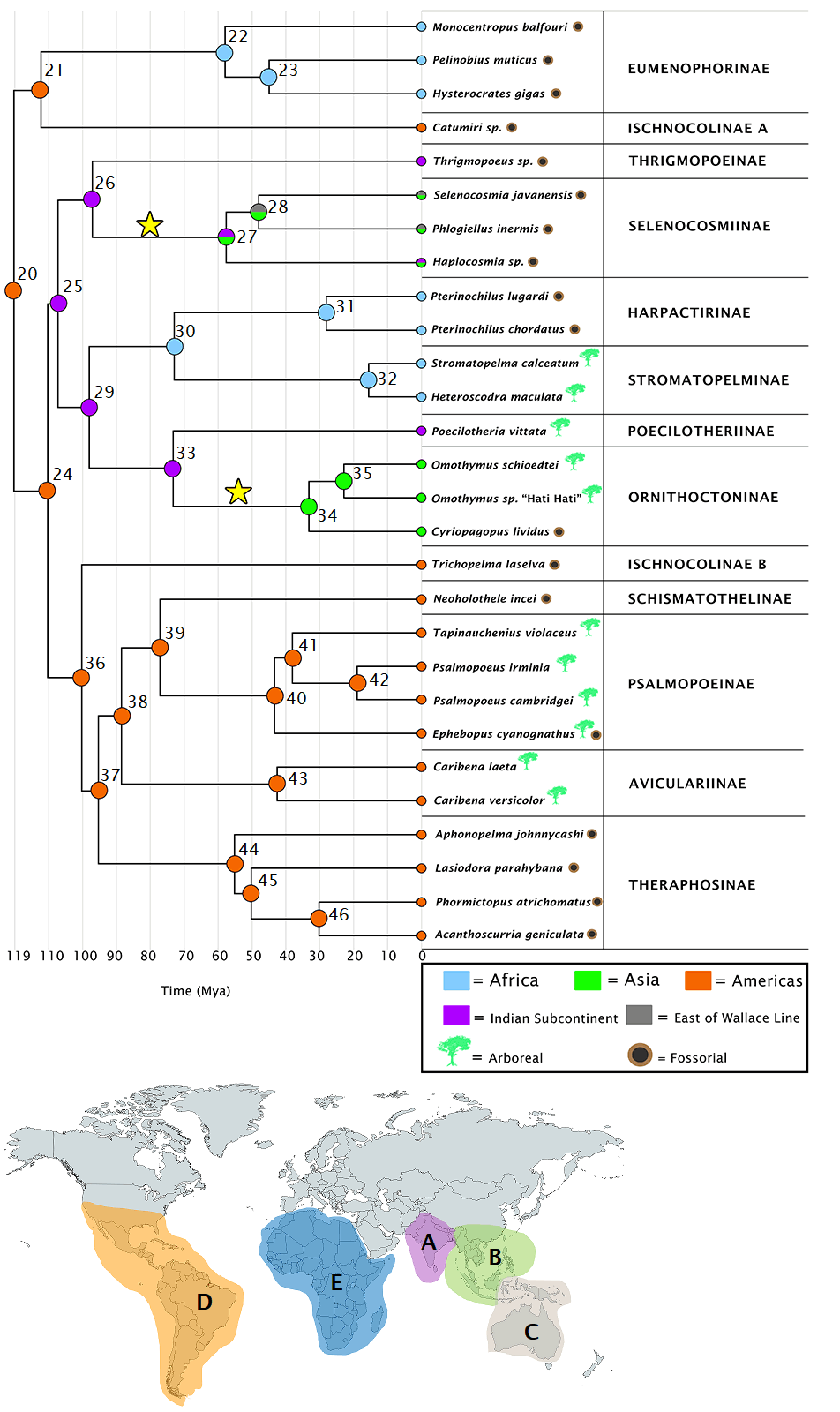
    Ancestral Ranges of Tarantulas
    Ancestral ranges of tarantulas estimated by researchers. Credit: https://mapchart.net/, 2021 (CC BY SA 4.0)

    “Previously, we did not consider tarantulas to be good dispersers. While continental drift certainly played its part in their history, the two Asian colonization events encourage us to reconsider this narrative. The microhabitat differences between those two lineages also suggest that tarantulas are experts at exploiting ecological niches, while simultaneously displaying signs of niche conservation,” said Foley.

    Reference: “Phylogenomic analyses reveal a Gondwanan origin and repeated out of India colonizations into Asia by tarantulas (Araneae: Theraphosidae)” by Saoirse Foley​, Henrik Krehenwinkel, Dong-Qiang Cheng and William H. Piel, 6 April 2021, PeerJ.
    DOI: 10.7717/peerj.11162

    Additional study authors include Willam H. Piel and Dong-Qiang Cheng of the Yale-NUS College in Singapore and Henrik Krehenwinkel of Universität Trier in Germany.

    Never miss a breakthrough: Join the SciTechDaily newsletter.
    Follow us on Google and Google News.

    Archaeology Carnegie Mellon University Evolution Paleontology Popular Spiders
    Share. Facebook Twitter Pinterest LinkedIn Email Reddit

    Related Articles

    This 500-Million-Year-Old Sea Creature Had a Brain Like a Spider

    “Astonishing” 500-Million-Year-Old Fossilized Brains Prompt a Rethink of the Evolution of Insects and Spiders

    Ancient DNA From 1,600-Year-Old Iranian Sheep Mummy Brings History to Life

    This 370 Million Year Old Monster Hunted With Massive Fangs and a Death Crush

    DNA Methylation Data Offers First Glimpse at What Ancient Denisovans May Have Looked Like

    New Insight Into the Evolution of Sight From 54 Million Year-Old Fossil

    New Dinosaur Species Discovered in Mongolia, Gobiraptor Minutus

    Newly Discovered Dinosaur (Mansourasaurus shahinae) Links Africa and Europe

    Improved Estimates of DNA’s Mutation Rate Paint Clearer Picture of Human Prehistory

    Leave A Reply Cancel Reply

    • Facebook
    • Twitter
    • Pinterest
    • YouTube

    Don't Miss a Discovery

    Subscribe for the Latest in Science & Tech!

    Trending News

    One of the Universe’s Largest Stars May Be Getting Ready To Explode

    Scientists Discover Enzyme That Could Supercharge Ozempic-Like Weight Loss Drugs

    Popular Sweetener Linked to DNA Damage – “It’s Something You Should Not Be Eating”

    Ancient “Rock” Microbes May Reveal How Complex Life Began

    Researchers Capture Quantum Interference in One of Nature’s Rarest Atoms

    “A Plague Is Upon Us”: The Mass Death That Changed an Ancient City Forever

    Scientists Discover Game-Changing New Way To Treat High Cholesterol

    This Small Change to Your Exercise Routine Could Be the Secret to Living Longer

    Follow SciTechDaily
    • Facebook
    • Twitter
    • YouTube
    • Pinterest
    • Newsletter
    • RSS
    SciTech News
    • Biology News
    • Chemistry News
    • Earth News
    • Health News
    • Physics News
    • Science News
    • Space News
    • Technology News
    Recent Posts
    • Natural Compounds Boost Bone Implant Success While Killing Bacteria and Cancer Cells
    • After 60 Years, Scientists Uncover Unexpected Brain Effects of Popular Diabetes Drug Metformin
    • New Research Uncovers Hidden Side Effects of Popular Weight-Loss Drugs
    • Scientists Rethink Extreme Warming After Surprising Ocean Discovery
    • The Surprising Role of Asteroids in the Origin of Life
    Copyright © 1998 - 2026 SciTechDaily. All Rights Reserved.
    • Science News
    • About
    • Contact
    • Editorial Board
    • Privacy Policy
    • Terms of Use

    Type above and press Enter to search. Press Esc to cancel.