
A new study examines cancer prevalence across hundreds of vertebrate species.
Every multicellular creature, whether soaring through the skies, swimming in the ocean’s depths, or roaming the earth’s surface, shares a common vulnerability: the uncontrolled growth of cells known as cancer.
A comprehensive 10-year study led by researchers at Arizona State University analyzed more than 16,000 necropsy records from 292 vertebrate species, revealing significant differences in cancer prevalence. The findings provide new insights into cancer evolution while challenging Peto’s paradox, a key concept in evolutionary biology.
Peto’s paradox suggests that larger animals, with their greater number of cells and longer lifespans, should have proportionally higher cancer rates. However, this study shows that while cancer rates increase with body size, the rise is only slight. This reinforces the idea that large animals have evolved potent cancer suppression mechanisms, but it also highlights new complexities in how cancer risks manifest across species.
The study adds nuance to Peto’s paradox by showing that cancer prevalence tends to increase with body size and cellular mutation rates but decreases with longer gestation periods. This suggests that the relationship between size, longevity, and cancer resistance is more intricate than previously understood. The results deepen our understanding of cancer evolution and could provide clues for developing more effective therapies.

“Until recently, we didn’t know cancer rates in any species beyond humans, dogs, and naked mole rats,” says Carlo Maley, lead author of the study. “I’m excited to discover all kinds of different species with extremely low cancer rates. They can show us how nature has solved the problem of preventing cancer.”
Maley is a researcher with the Biodesign Center for Biocomputing, Security and Society, a professor with ASU’s School of Life Sciences and director of the Arizona Cancer Evolution Center.
In addition to his ASU colleagues, Maley is joined by an interdisciplinary team from leading U.S. and international research institutions. The study appears in the current issue of the journal Cancer Discovery.
Species’ traits and cancer risk
The data for this study were collected from 99 zoological institutions, aquariums, and other facilities that care for animals in managed settings. Veterinary pathologists conducted necropsies on animals to identify tumors and to distinguish between benign and malignant cases, allowing the researchers to assess cancer prevalence across a wide range of species.
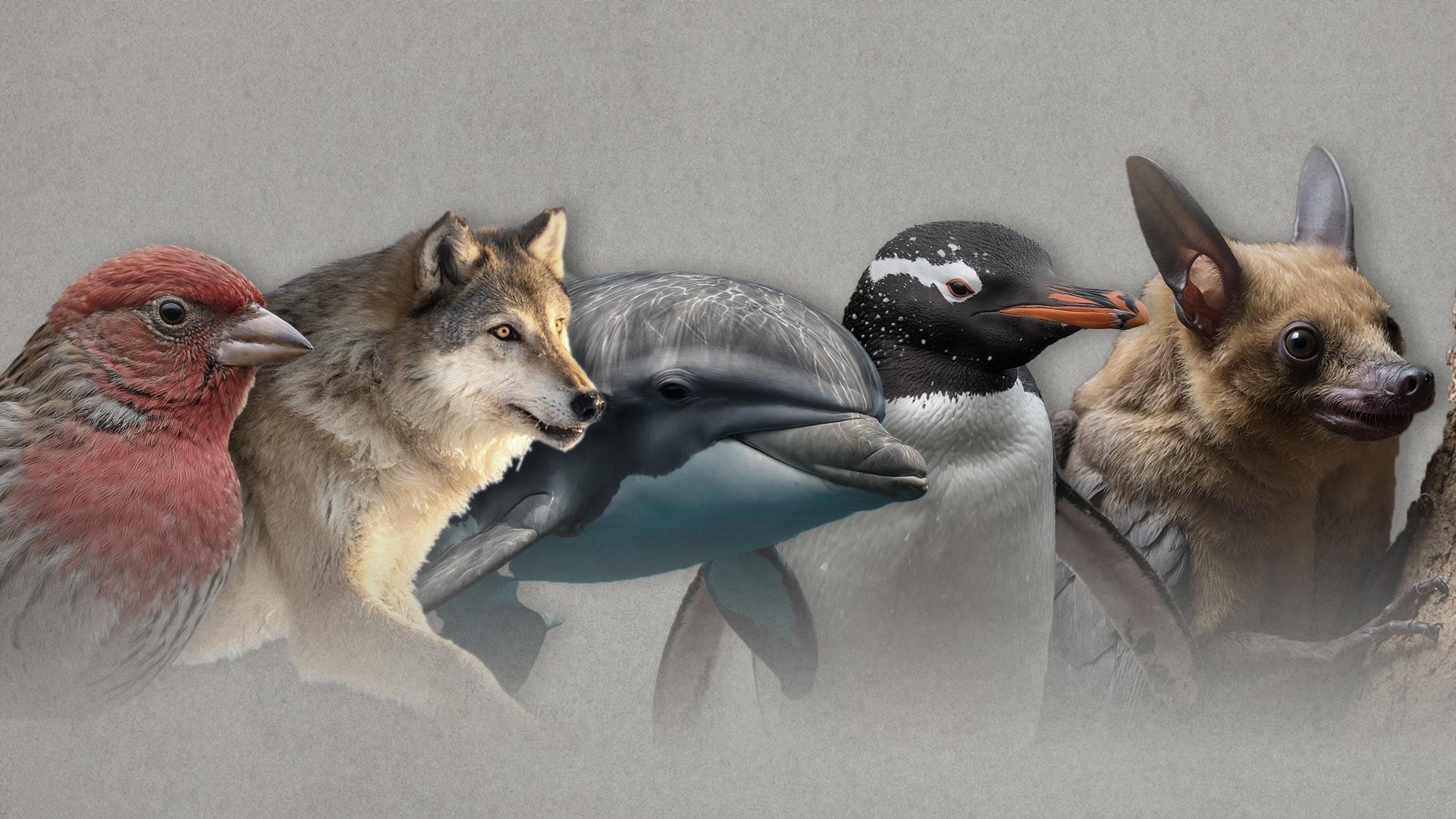
Notably, certain species exhibited unusually high cancer rates. For example, up to 63% of ferrets developed tumors, and opossums and hedgehogs showed similarly high cancer risks. The findings suggest that animals with shorter life cycles might not have had enough evolutionary pressure to develop strong cancer defenses. In contrast, species including the common porpoise, Rodrigues fruit bat and black-footed penguin had remarkably lower cancer rates, with fewer than 2% of individuals affected.
Mammals generally showed the highest rates of both benign and malignant tumors, followed by reptiles, birds, and amphibians. These results highlight the complex relationship between an animal’s traits — such as body size, lifespan, and reproductive timing — and its cancer risk.
Species such as elephants and whales, despite their large size and longevity, have surprisingly low cancer rates. This is likely due to multiple copies of cancer-suppressing genes like TP53 and other mechanisms yet to be discovered. Elephants, for example, have extra copies of TP53 but also show increased sensitivity to DNA damage, which leads to the elimination of damaged cells before they become cancerous.
Additional cancer defense mechanisms
Beyond TP53, the study found other potential cancer defense strategies. For instance, species with fewer random mutations in body cells tended to have a lower prevalence of cancer. This suggests that minimizing mutations through vigorous DNA protection and repair mechanisms may be another way certain species protect themselves from cancer.
Another key finding is that species with longer gestation periods tend to have lower cancer rates. Researchers hypothesize that longer gestational times may provide more opportunities for cells to regulate themselves properly, reducing the likelihood of high-impact mutations that could lead to cancer later in life.
The researchers also conducted DNA damage response assays across various species to further explore cancer suppression mechanisms. They measured how different animals’ cells reacted to radiation and chemotherapy, focusing on cell cycle arrest and programmed cell death (apoptosis) — methods used to terminate aberrant cells before they develop into cancer. Although these responses varied among species, they did not directly correlate with cancer prevalence. This suggests that other factors, such as immune system function or metabolic processes, may play more critical roles in cancer resistance.
“We are excited to harness nature’s strategies for combating cancer, to prevent it in humans,” says co-author Zach Compton, with the Arizona Cancer Evolution Center and the University of Arizona.
Expanding knowledge across species
Collectively, these findings highlight the discovery of species with a superpower of preventing cancer. The researchers are now turning to the question of how they do that.
Initial evidence suggests a variety of cancer-fighting tactics across species, including vigilant DNA repair mechanisms, lower mutation rates, and longer gestation periods. Understanding these natural defenses could lead to new cancer prevention strategies and treatments in humans. Conversely, understanding why some species are exceptionally susceptible to cancer may explain cancer syndromes in humans.
The researchers emphasize the need for further studies to build on these discoveries and expand our understanding of cancer across species. Collecting more data from wild populations and studying additional species could uncover new patterns of cancer resistance or susceptibility. These efforts could also lead to breakthroughs in cancer prevention, benefiting humans as well as many other animal species.
Reference: “Cancer Prevalence across Vertebrates” by Zachary T. Compton, Walker Mellon, Valerie K. Harris, Shawn Rupp, Diego Mallo, Stefania E. Kapsetaki, Mallory Wilmot, Ryan Kennington, Kathleen Noble, Cristina Baciu, Lucia N. Ramirez, Ashley Peraza, Brian Martins, Sushil Sudhakar, Selin Aksoy, Gabriela Furukawa, Orsolya Vincze, Mathieu Giraudeau, Elizabeth G. Duke, Simon Spiro, Edmund Flach, Hannah Davidson, Christopher I. Li, Ashley Zehnder, Trevor A. Graham, Brigid V. Troan, Tara M. Harrison, Marc Tollis, Joshua D. Schiffman, C. Athena Aktipis, Lisa M. Abegglen, Carlo C. Maley and Amy M. Boddy, 13 January 2025, Cancer Discovery.
DOI: 10.1158/2159-8290.CD-24-0573
Never miss a breakthrough: Join the SciTechDaily newsletter.
Follow us on Google and Google News.