

Close Menu
    Facebook X (Twitter) Instagram
    SciTechDaily
    • Biology
    • Chemistry
    • Earth
    • Health
    • Physics
    • Science
    • Space
    • Technology
    Facebook X (Twitter) Pinterest YouTube RSS
    SciTechDaily
    Home»Technology»The Key to Longer Battery Life? Engineers Solve Decades-Old Lithium-Ion Mystery
    Technology

    The Key to Longer Battery Life? Engineers Solve Decades-Old Lithium-Ion Mystery

    By University of Texas at DallasFebruary 20, 20252 Comments4 Mins Read
    Facebook Twitter Pinterest Telegram LinkedIn WhatsApp Email Reddit
    Share
    Facebook Twitter LinkedIn Pinterest Telegram Email Reddit
    Advanced Battery Research and Development
    UT Dallas researchers discovered why lithium nickel oxide (LiNiO₂) batteries degrade and are testing a solution to improve their stability for commercialization. Their approach involves reinforcing the cathode structure, and they plan to scale up battery production with robotic manufacturing.

    UT Dallas researchers have identified the cause of LiNiO₂ battery degradation and developed a structural reinforcement method that could enable its commercial use in longer-lasting lithium-ion batteries.

    Lithium nickel oxide (LiNiO₂) is a promising material for next-generation lithium-ion batteries with longer lifespans. However, its commercialization has been hindered by degradation after repeated charging cycles.

    Researchers at the University of Texas at Dallas have identified the cause of this breakdown and are testing a solution that could overcome a major obstacle to its widespread use. Their findings were recently published din the journal Advanced Energy Materials.

    The team aims to first produce LiNiO₂ batteries in the lab and eventually collaborate with an industry partner to bring the technology to market.

    “The degradation of batteries made using LiNiO2 has been a problem for decades, but the cause was not well understood,” said Dr. Kyeongjae Cho, professor of materials science and engineering in the Erik Jonsson School of Engineering and Computer Science and director of the Batteries and Energy to Advance Commercialization and National Security (BEACONS) program. “Now that we have a clear understanding of why this happens, we’re working on a solution so the technology can be used to provide longer battery life in a range of products including phones and electric vehicles.”
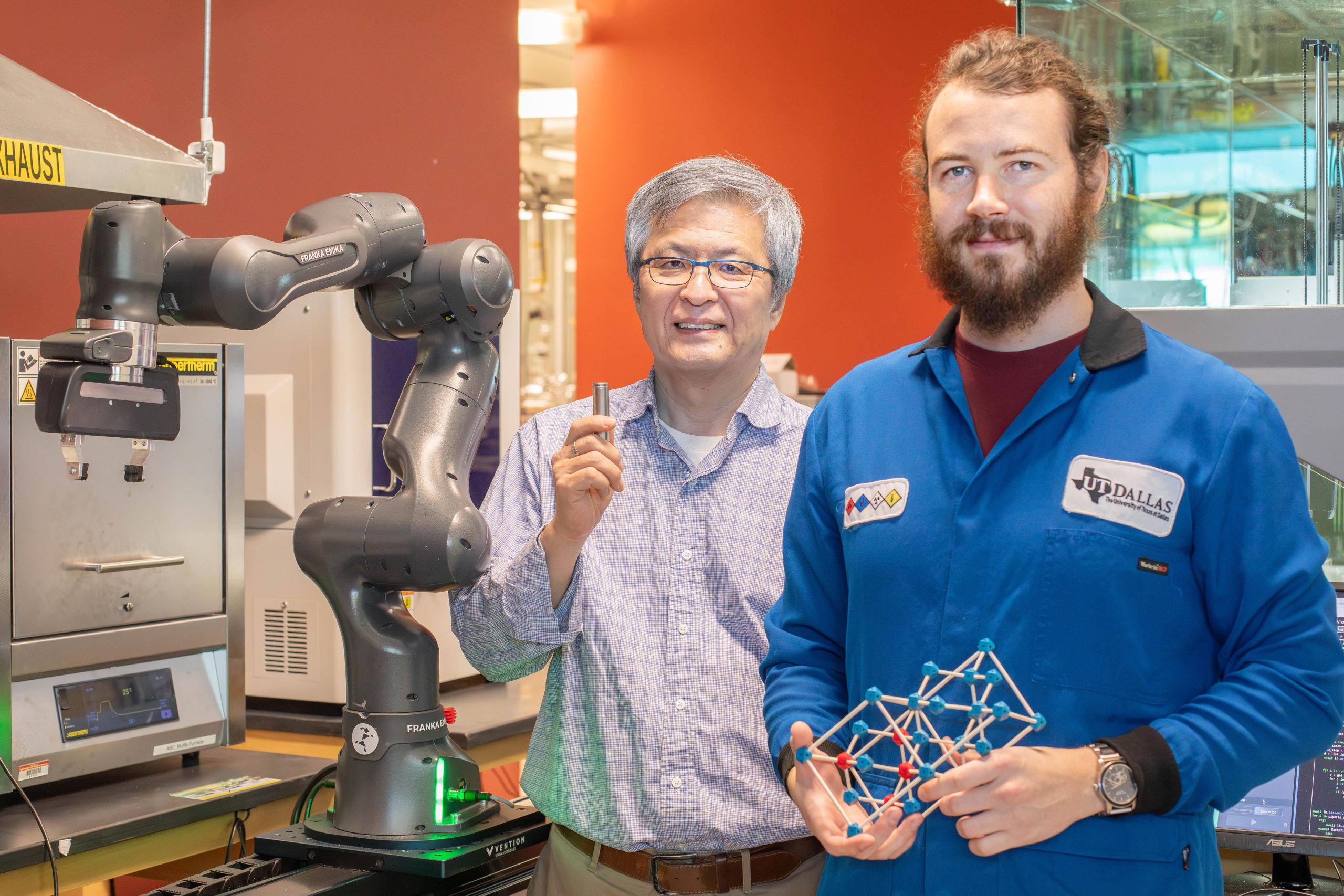
    Kyeongjae Cho and Matthew Bergschneider
    Dr. Kyeongjae Cho (left), professor of materials science and engineering, and doctoral student Matthew Bergschneider found that a chemical reaction involving oxygen atoms in lithium nickel oxide causes the material to become unstable and crack. Credit: The University of Texas at Dallas

    The research is a project of UTD’s BEACONS initiative, which launched in 2023 with $30 million from the Department of Defense. The BEACONS mission is to develop and commercialize new battery technology and manufacturing processes; enhance the domestic availability of critical raw materials; and train high-quality workers for jobs in an expanding battery-energy storage workforce.

    Computational Analysis of Battery Breakdown

    To determine why LiNiO2 batteries break down during the last phase of charging, UT Dallas researchers analyzed the process using computational modeling. The study involved understanding chemical reactions and the redistribution of electrons through materials at the atomic level.

    In lithium-ion batteries, electrical current flows out of a conductor called the cathode, which is a positive electrode, into an anode, a negative electrode. The anode typically is made of carbon graphite, which holds lithium at a higher potential.
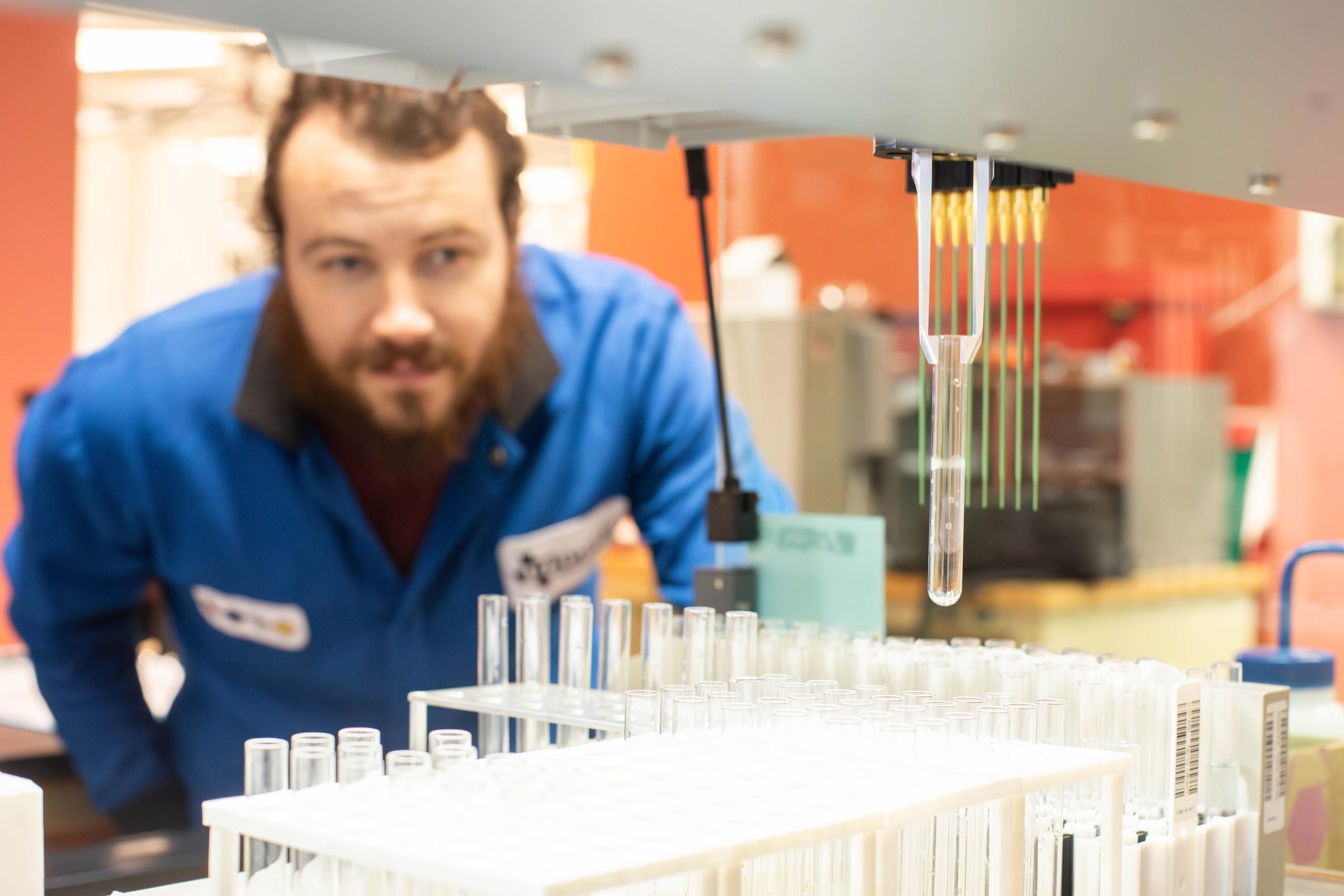
    Matthew Bergschneider
    Materials science and engineering doctoral student Matthew Bergschneider and fellow researchers have discovered why lithium nickel oxide batteries break down. They are testing a solution that could remove a key barrier to widespread use of the material. Credit: The University of Texas at Dallas

    During discharge, the lithium ions return to the cathode through the electrolyte and send electrons back to the lithium-containing cathode, as an electrochemical reaction that generates electricity. Cathodes typically are made of a mixture of materials that includes cobalt, a scarce material that scientists aim to replace with alternatives, including lithium nickel oxide.

    The UTD researchers found that a chemical reaction involving oxygen atoms in LiNiO2 causes the material to become unstable and crack. To resolve the issue, they developed a theoretical solution that reinforces the material by adding a positively charged ion, or cation, to alter the material’s properties, creating “pillars” to strengthen the cathode.

    Matthew Bergschneider, a materials science and engineering doctoral student and first author of the study, has been setting up a robotics-based lab to manufacture battery prototypes to explore high-throughput synthesis processes of the designed pillared LiNiO2 cathodes. The robotic features will assist with synthesizing, evaluating, and characterizing the materials.

    “We’ll make a small amount at first and refine the process,” said Bergschneider, a Eugene McDermott Graduate Fellow. “Then, we will scale up the material synthesis and manufacture hundreds of batteries per week at the BEACONS facility. These are all stepping stones to commercialization.”

    Reference: “Mechanical Degradation by Anion Redox in LiNiO2 Countered via Pillaring” by Matthew Bergschneider, Fantai Kong, Patrick Conlin, Taesoon Hwang, Seok-Gwang Doo and Kyeongjae Cho, 10 December 2024, Advanced Energy Materials.
    DOI: 10.1002/aenm.202403837

    Never miss a breakthrough: Join the SciTechDaily newsletter.
    Follow us on Google and Google News.

    Battery Technology Energy Engineering University of Texas at Dallas
    Share. Facebook Twitter Pinterest LinkedIn Email Reddit

    Related Articles

    A Step Closer to Limitless Energy? Scientists Have Developed a Battery That Runs on Nuclear Waste

    Electric Vehicles Now Rival Traditional Cars in Reliability and Lifespan, Study Finds

    Fully Charged in Just 12 Minutes! Korean Scientists Develop Next-Gen Lithium–Sulfur Battery

    Korean Scientists Develop Cheaper, Safer Alternative to Lithium-Ion Batteries

    300% More Capacity: New Battery Technology Could Significantly Lower Energy Storage Costs

    New Aluminum Batteries Increase the Range of UUVs Tenfold

    MIT Engineers Look Toward All-Solid Lithium Batteries

    Engineers Design Calcium-Based Multi-Element for Liquid Batteries

    Power Conserving Chip May Increase Smartphone Battery Life

    2 Comments

    1. Boba on February 21, 2025 9:15 am

      I fear that whatever they come up with is just gonna make them batteries more poisonous when they catch fire.

      Reply
    2. DavidC on February 21, 2025 1:37 pm

      This was studied and figured out about 25 years ago. The solution was to dope the nickel oxide with manganese and cobalt.
      Now known as NMC used widely in li-ion batteries.

      Reply
    Leave A Reply Cancel Reply

    • Facebook
    • Twitter
    • Pinterest
    • YouTube

    Don't Miss a Discovery

    Subscribe for the Latest in Science & Tech!

    Trending News

    Mezcal “Worm” in a Bottle Mystery: DNA Testing Reveals a Surprise

    New Research Reveals That Your Morning Coffee Activates an Ancient Longevity Switch

    This Is What Makes You Irresistible to Mosquitoes

    Shockingly Powerful Giant Octopuses Ruled the Seas 100 Million Years Ago

    Scientists Stunned by New Organic Molecules Found on Mars

    Rewriting Dinosaur Evolution: Scientists Unearth Remarkable 150-Million-Year-Old Stegosaur Skull

    Omega-3 Supplements Linked to Cognitive Decline in Surprising New Study

    First-of-Its-Kind Discovery: Homer’s Iliad Found Embedded in a 1,600-Year-Old Egyptian Mummy

    Follow SciTechDaily
    • Facebook
    • Twitter
    • YouTube
    • Pinterest
    • Newsletter
    • RSS
    SciTech News
    • Biology News
    • Chemistry News
    • Earth News
    • Health News
    • Physics News
    • Science News
    • Space News
    • Technology News
    Recent Posts
    • This Gene Tweak Turns Strawberries Into Healthier, Tastier Superfruit
    • This New Chip Could Make GPUs Far More Efficient
    • This Tiny World in the Outer Solar System Should Be Airless, but It Has an Atmosphere
    • NASA’s Webb Space Telescope Reveals a Dark Airless Super-Earth That Looks Like Mercury
    • These Simple Daily Habits Can Quickly Improve Blood Pressure and Heart Risk Factors
    Copyright © 1998 - 2026 SciTechDaily. All Rights Reserved.
    • Science News
    • About
    • Contact
    • Editorial Board
    • Privacy Policy
    • Terms of Use

    Type above and press Enter to search. Press Esc to cancel.