
Close Menu
    Facebook X (Twitter) Instagram
    SciTechDaily
    • Biology
    • Chemistry
    • Earth
    • Health
    • Physics
    • Science
    • Space
    • Technology
    Facebook X (Twitter) Pinterest YouTube RSS
    SciTechDaily
    Home»Science»The Neuroscience of Phantom Sensations: Can We Feel What’s Not Really There?
    Science

    The Neuroscience of Phantom Sensations: Can We Feel What’s Not Really There?

    By University of MalagaAugust 31, 2024No Comments3 Mins Read
    Facebook Twitter Pinterest Telegram LinkedIn WhatsApp Email Reddit
    Share
    Facebook Twitter LinkedIn Pinterest Telegram Email Reddit
    Touch Sensation Concept
    Researchers have identified how phantom sensations, where individuals feel a touch that isn’t physically there, can be scientifically manipulated. This discovery has implications for enhancing technologies in virtual reality, providing cost-effective solutions and realistic experiences. Credit: SciTechDaily

    New research has established the parameters needed for inducing phantom sensations, enhancing technologies like virtual reality and devices for the hearing impaired.

    Individuals can experience the sense of touch without actual tactile stimulation. This phenomenon, known as “phantom sensation,” occurs when the nervous system perceives a tactile illusion that does not correspond to any real physical touch, effectively creating a sensation that does not exist.

    Researchers from the “Electronics for Instrumentation and Systems” group at UMA have recently made significant advancements in understanding this phenomenon. For the first time, they have identified the minimum distance a vibrating point must travel for a person to perceive this moving phantom sensation.

    Mechanism of Phantom Sensations

    Professor Andrés Trujillo from the Department of Electronics, a co-author of the study, describes how the illusion of motion is created using two vibrating devices, known as vibrotactile actuators, placed at different locations on the skin. “With proper stimulation, an individual, instead of perceiving two isolated vibrations, can experience the feeling that there is a vibrating point moving between these two devices, although this point does not really exist, it is illusory,” he states.

    According to Trujillo, the research conducted at UMA has allowed them to refine the configuration parameters previously used to induce phantom sensations. “We have developed an instruction manual to know the operating limits of this tactile illusion,” he says.

    The researchers found that individuals can perceive the phantom motion of a vibrating point when the traveled distance is at least 20 percent of the gap between the actuators.
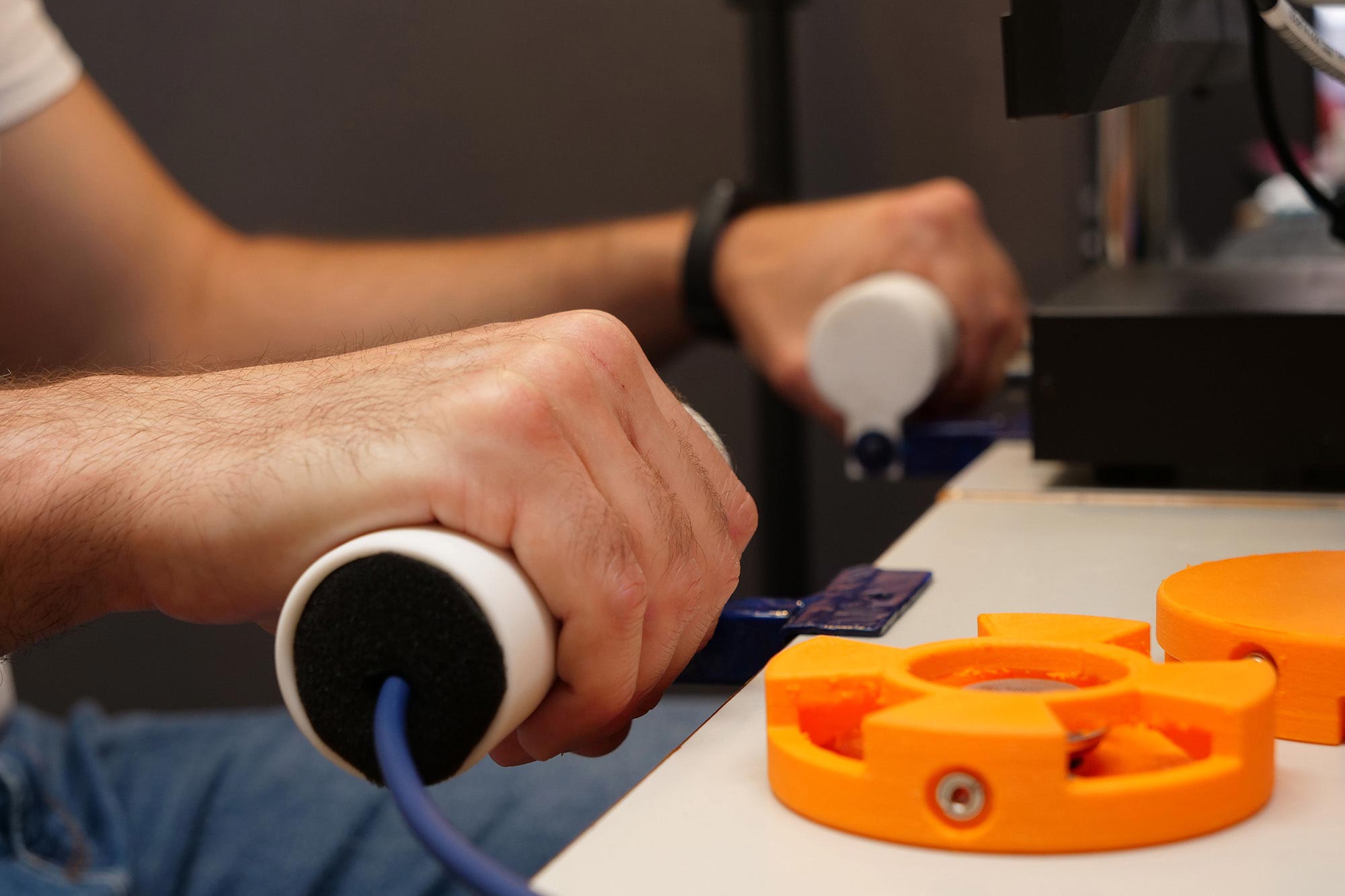
    Phantom Sensation Experiment
    According to this engineer, thanks to the experiments carried out at the UMA, they have managed to modify the configuration parameters of the “phantom sensation” that have been used until now. “We have developed an instruction manual to know the operating limits of this tactile illusion,” explains Trujillo. Credit: University of Malaga

    Potential Applications

    One of the main applications of these tactile illusions is in virtual and augmented reality. The ability to create moving sensations with just a few actuators offers a major advantage, potentially leading to the development of cost-effective, lighter, and higher-resolution devices. “The conventional application would be to place a series of actuators, not just two, and systematically switch them on and off to create the feeling of movement,” says Trujillo.

    Additionally, this technology could enhance haptic vests, video games, touch screens for the blind, and even concerts, providing users with enhanced realism and new sensations.
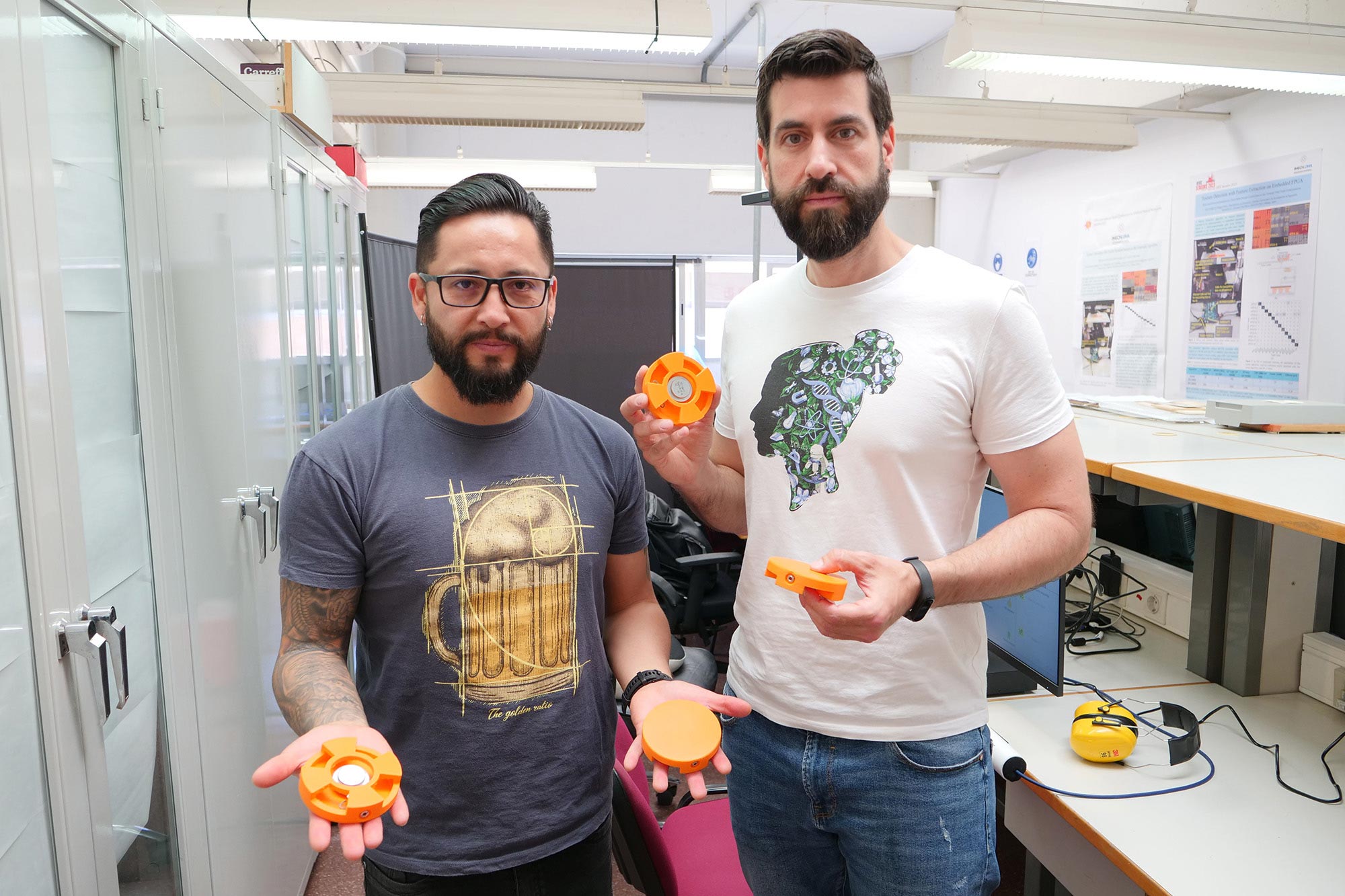
    UMA Phantom Sensation Researchers
    The scientific paper “Phantom sensation: Threshold and quality indicators of a tactile illusion of motion,” published in Displays, is the result of the doctoral thesis of researcher Paul Byron Remache-Vinueza, directed by the Professor of the School of Industrial Engineering Fernando Vidal and Andrés Trujillo. Credit: University of Malaga

    This study, published in Displays, is the result of the doctoral thesis of researcher Paul Byron Remache-Vinueza, directed by the Professor of the School of Industrial Engineering Fernando Vidal and Andrés Trujillo. Their research aims to transmit musical sensations through the skin to assist people with hearing impairments.

    Reference: “Phantom sensation: Threshold and quality indicators of a tactile illusion of motion” by Byron Remache-Vinueza, Andrés Trujillo-León and Fernando Vidal-Verdú, 13 March 2024, Displays.
    DOI: 10.1016/j.displa.2024.102676

    Never miss a breakthrough: Join the SciTechDaily newsletter.
    Follow us on Google and Google News.

    Industrial Engineering Nervous System Sense Perception University of Malaga Video Games
    Share. Facebook Twitter Pinterest LinkedIn Email Reddit

    Related Articles

    New Research Reveals Humans Have a Remote Touch “Seventh Sense”

    The Surprising Point Where Video Gaming Stops Being Harmless

    How a Minecraft Game Unlocked the Secret to Smarter Thinking

    1.4 Million-Year-Old Human Activity Unearthed at Orce’s Quicksand Trap

    Harnessing the Sun: Innovative Thermal Trap Reaches Over 1000 °C Using Sunlight

    Improved Attention and Memory: Scientists Uncover New Cognitive Benefits of Video Games

    The Science Behind ASMR: First-of-Its-Kind Research Sheds New Light

    Billion-Dollar Secrets: What Your Video Games Aren’t Telling You

    Not Just Fun: New Study Indicates Video Games Can Improve Career Prospects

    Leave A Reply Cancel Reply

    • Facebook
    • Twitter
    • Pinterest
    • YouTube

    Don't Miss a Discovery

    Subscribe for the Latest in Science & Tech!

    Trending News

    Largest-Ever Study Finds Medicinal Cannabis Ineffective for Anxiety, Depression, PTSD

    250-Million-Year-Old Egg Solves One of Evolution’s Biggest Mysteries

    Living With Roommates Might Be Changing Your Gut Microbiome Without You Knowing

    Century-Old Cleaning Chemical Linked to 500% Increased Risk of Parkinson’s Disease

    What if Your Memories Never Happened? Physicists Take a New Look at the Boltzmann Brain Paradox

    One of the Universe’s Largest Stars May Be Getting Ready To Explode

    Scientists Discover Enzyme That Could Supercharge Ozempic-Like Weight Loss Drugs

    Popular Sweetener Linked to DNA Damage – “It’s Something You Should Not Be Eating”

    Follow SciTechDaily
    • Facebook
    • Twitter
    • YouTube
    • Pinterest
    • Newsletter
    • RSS
    SciTech News
    • Biology News
    • Chemistry News
    • Earth News
    • Health News
    • Physics News
    • Science News
    • Space News
    • Technology News
    Recent Posts
    • Scientists Say This Overlooked Organ Could Hold the Key to Longer Life
    • Want Less Stress? Landmark Study Points to a Simple Habit
    • Scientists Reveal Eating Fruits and Vegetables May Increase Your Risk of Lung Cancer
    • AI Reveals Explosive Growth of Floating Algae Across the World’s Oceans
    • 5.5 Million Bees Discovered Living Beneath a New York Cemetery
    Copyright © 1998 - 2026 SciTechDaily. All Rights Reserved.
    • Science News
    • About
    • Contact
    • Editorial Board
    • Privacy Policy
    • Terms of Use

    Type above and press Enter to search. Press Esc to cancel.