
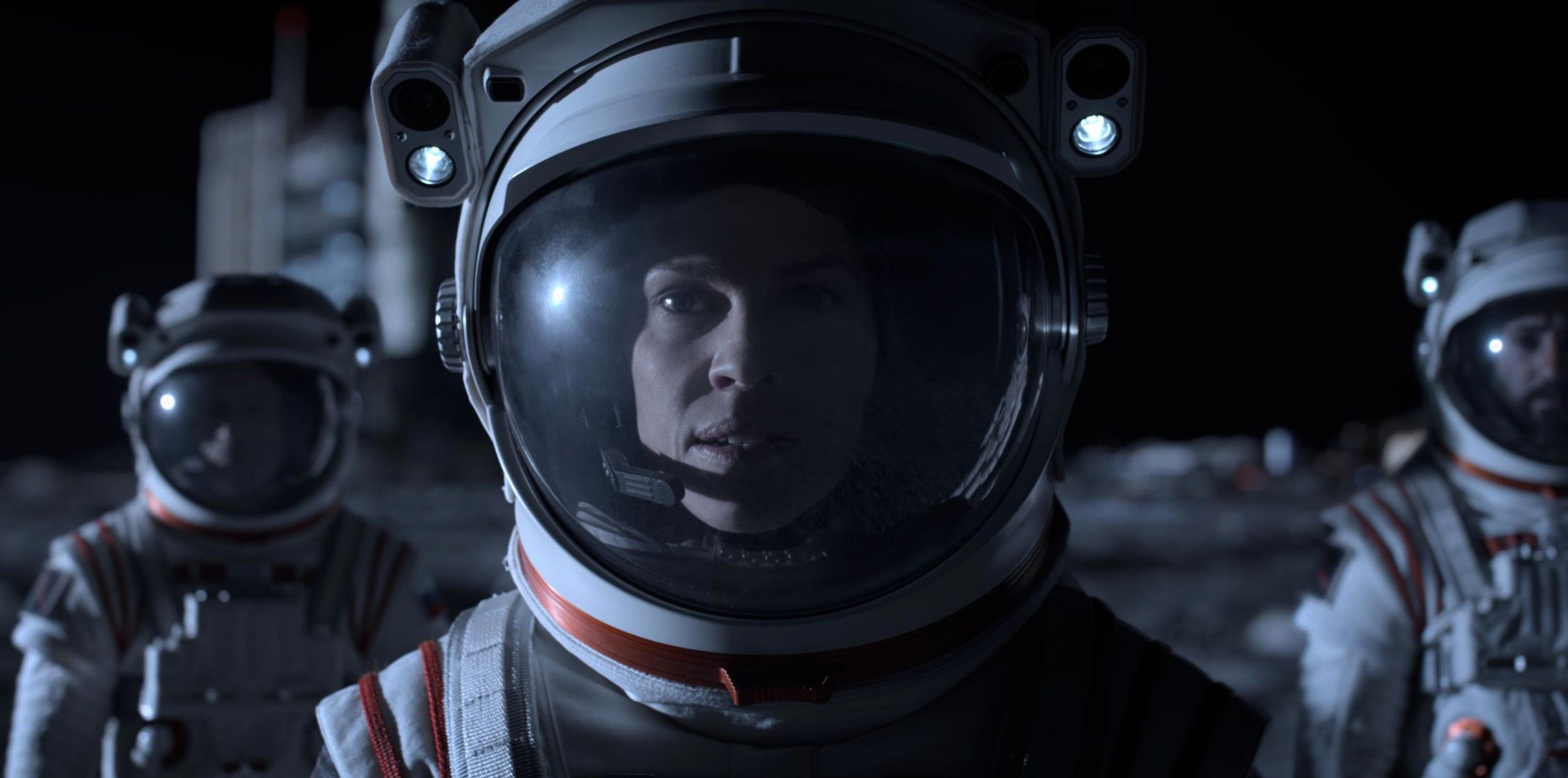
Unfolding spacecraft, artificial gravity, and space disease all feature on Netflix’s series ‘Away’, but how much of the action is true to life?
Do you feel like you’ve been locked in a small room for months on end, isolated from the people that you love? Welcome to Netflix’s Away and ‘the bubble’ of five scientists on the world’s first manned mission to Mars.
Enduring a life very similar to our Melbourne COVID-19 lockdown, the international team of scientists travel 45.697 million miles (73.542 million kilometers) to Mars, not from Earth, but from the Moon, experiencing space difficulties while trying to focus on hope, humanity and how we need one another if we are to achieve impossible things.
Official trailer for Netflix’s series ‘Away.’ Credit: Netflix
What crises do they solve? And is the science behind the solutions and the pursuit to Mars, sound?
Spoiler alert: If you are intending to watch it, you may want to read this afterward.
Burning sweat
The series begins with a terrifying accident. Blobs of black-green goo leak from a metallic panel. When mission commander Emma Green (Hilary Swank) tries to soak up this chemical with her shirt, droplets of sweat cause it to ignite, creating rising spheres of flame.
Two other astronauts manage to contain the fire by capturing the fireballs in a bucket of wet towels.
This has actually happened in space. The chemical in question is called “pre-treat.” Its exact chemical composition is a trade-secret, but it is used to treat urine before water purification.
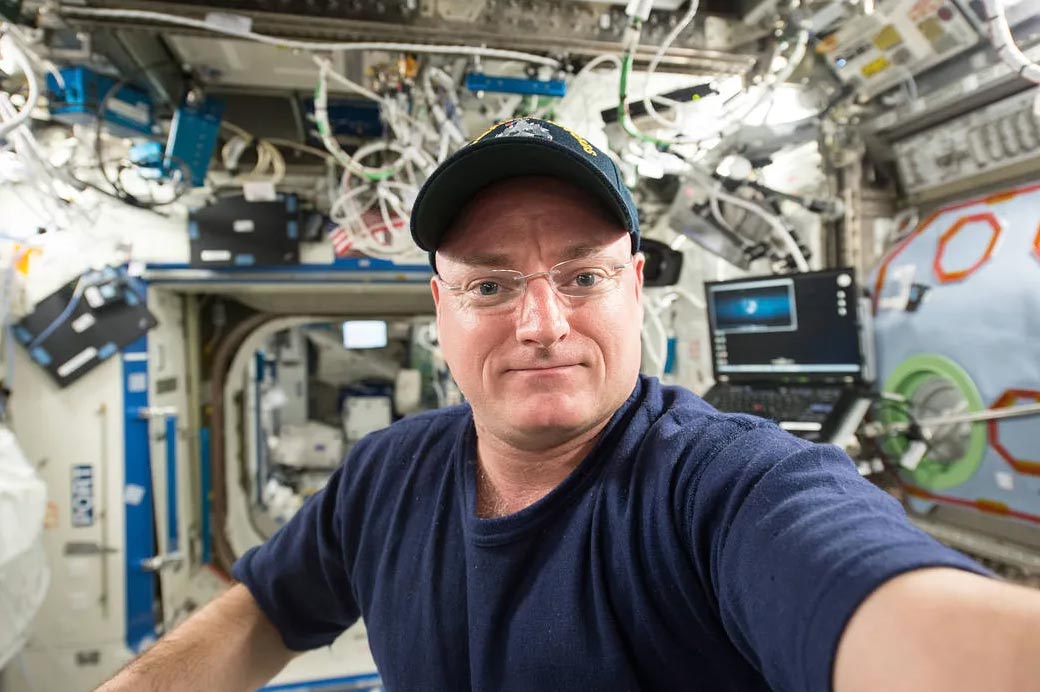
In 2010, NASA astronaut Scott Kelly discovered a pre-treat leak aboard the International Space Station (ISS) and tried to soak it up with his shirt — things went about as well then as they did in the show.
Without gravity, fire doesn’t keep its tear-drop shape – hot air can’t rise when no one way is up. Instead, it spreads out equally in all directions, forming balls that look like mini-suns.
Interplanetary internet
Astronauts aboard the show’s ATLAS mission are frequently making phone and video calls to loved ones. After the crew passes the halfway point on their mission, this communication is restricted to texts and voice messages, with a half-hour delay between sending and receiving.
Having internet in space is, surprisingly, possible. Astronauts aboard the ISS have access to it but it’s patchy and slow.
The moon is a lot higher up than the ISS – would it be possible to perform a high-definition video call from there? As the moon is 380,000 kilometers (236,000 miles) above the Earth, and light travels at about 300,000 kilometers (186,000 miles) per second, it’s technically possible, with a two-and-a-half-second delay.
Artificial gravity
“Ready to make anti-gravity happen?” asks Ram in Episode 2.
“Yes I am. Let’s deploy those sleeping pods,” replies Commander Green.
Chunk. Two massive metallic arms shoot out of the sides of the ship, with two crew capsules attached on the end. They begin to spin like a ride at Luna Park.
“The crew quarters now have gravity.” But could anti-gravity systems like this really work?
The simple answer is yes. While they haven’t been tested yet, anti-gravity systems have been an ongoing consideration for long-term space missions, and they might look something like the one in the show.
This machine works because of Einstein’s Equivalence Principle, which states that it is impossible for the human body (or anything else) to tell gravity from acceleration.
Water as a radiation shield
Away makes many references about the hull being lined with one inch of water, to protect the crew from harmful cosmic radiation – high energy particles that move through space at nearly the speed of light.
Could this work? How much water would you need? And what is cosmic radiation, anyway?
Cosmic radiation is real and virtually any cell in the body is susceptible to radiation damage. So while water could in theory be used to shield this sort of radiation, issues arise when you try to calculate just how much water is needed.
In order to provide adequate shielding, a bladder of water one meter thick is required around the hull. ATLAS’s one inch of water shielding doesn’t cut it.
Space blindness, floating heels, and on-board pandemics
Between the technical troubles and personal traumas, the crew have to deal with a litany of health issues.
Ram, the crew’s medic, gets a resurgence of mononucleosis (glandular fever) and has fevers, hallucinations, bloodshot eyes, and irrational behavior, forcing the crew to quarantine him while they clean the ship donned in PPE.
Misha, the engineer, contracts space blindness, reducing his vision to blurry splashes of color. And Kwesi, the botanist, loses a part of a heel, it just floats right off. On his return to Earth, Scott Kelly commented that due to lack of gravity, “The calluses on your feet in space will eventually fall off.”
All of these things have happened in space before. Humans, it seems, weren’t designed to live in space.
That static electricity thing
After the crew’s backup water recycling system breaks down, ground control gives the astronauts directions for a daring stunt to extract water from the hull of the ship.
By charging their suits with static electricity and then piercing the hull, they can bend the frozen flakes of water to become attracted to their suits, where they can then be captured in waterproof bags.
This is Hollywood fantasy – water within the hull of the ship won’t be frozen into perfect little snowflakes; it will be one solid block of ice which wouldn’t fit through a screwdriver-sized hole.
The inspiration
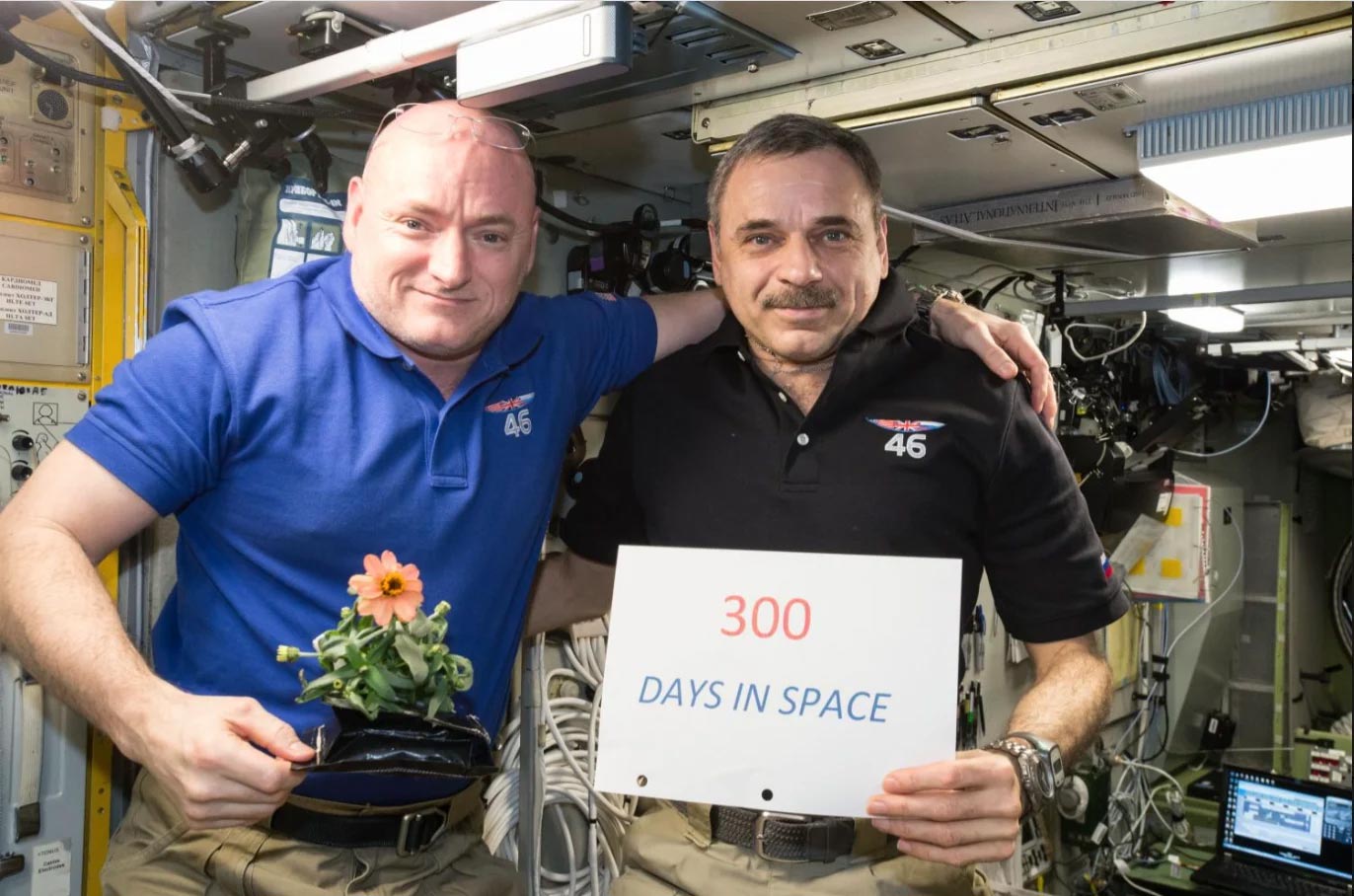
While three rovers are heading to Mars this year and Mars has been closer to Earth this month than it will be for another 15 years, Away was inspired by Scott Kelly’s year-long expedition aboard the ISS where scientists measured the effects on his body before comparing them with his twin, Mark, back on Earth.
Kelly holds the American record for the single-longest mission and was in space when a gunman shot his Congressman sister-in-law, Gabby Giffords, in the head in January 2011.
Kelly has spoken of how he tried to comfort his twin brother while almost 250 miles above Earth saying, “I hope the show makes people think more about the sacrifices astronauts make.
“Video conferences and calls are your only link to home and if something happens, that’s challenging.”
Last words
So what do I think of Away? Sure, there were a couple of moments that put aesthetics above realism; but that’s okay, because this is a science fiction show, not a how-to guide.
After watching 10 episodes of this show, my final thoughts are the same as the final thoughts of the ship’s chemist, Wang Lu: “It was worth it.”
Never miss a breakthrough: Join the SciTechDaily newsletter.
Follow us on Google and Google News.
4 Comments
I am sorry to hear there will not be a renewal of the series. Let’s all get behind an email campaign to press Netflix for a second season. The acting was teerrific and the plot lines riveting.
You forgot to talk about misha’s pupets show and about tears falling down that could’t work in 0g
I can barely stand to watch this show due to the depiction of physics in space. On real spacecraft hatches do not open outward into a vacuum. When on an EVA astronauts do not pull themselves over an umbilical hand over hand. This really destroyes my suspension of disbelief. It’s really awful.
What REALLY gets my goat with this programme is how thy use feet not metres and temperature in Fahrenheit not Celsius; one detail that Star Trek, to its great credit, always got right. The idea that all the non Americans would discuss body temp in F not C is a terrible piece of writing.