
Close Menu
    Facebook X (Twitter) Instagram
    SciTechDaily
    • Biology
    • Chemistry
    • Earth
    • Health
    • Physics
    • Science
    • Space
    • Technology
    Facebook X (Twitter) Pinterest YouTube RSS
    SciTechDaily
    Home»Science»These Foods Contain Nutrients That Can Inhibit a Key SARS-CoV-2 Enzyme Needed for the COVID Virus to Replicate
    Science

    These Foods Contain Nutrients That Can Inhibit a Key SARS-CoV-2 Enzyme Needed for the COVID Virus to Replicate

    By North Carolina State UniversityDecember 2, 20203 Comments3 Mins Read
    Facebook Twitter Pinterest Telegram LinkedIn WhatsApp Email Reddit
    Share
    Facebook Twitter LinkedIn Pinterest Telegram Email Reddit
    Muscadine Grapes
    Chemical compounds in muscadine grapes effectively inhibit an important SARS-CoV-2 protease. Credit: De-Yu Xie, NC State University

    Chemical compounds in foods or beverages like green tea, muscadine grapes, and dark chocolate can bind to and block the function of a particular enzyme, or protease, in the SARS-CoV-2 coronavirus (the virus that causes COVID-19), according to a new study by plant biologists at North Carolina State University.

    Proteases are important to the health and viability of cells and viruses, says De-Yu Xie, professor of plant and microbial biology at NC State and the corresponding author of the study. If proteases are inhibited, cells cannot perform many important functions – like replication, for example.

    “One of our lab’s focuses is to find nutraceuticals in food or medicinal plants that inhibit either how a virus attaches to human cells or the propagation of a virus in human cells,” Xie said.

    In the study, the NC State researchers performed both computer simulations and lab studies showing how the so-called “main protease” (Mpro) in the SARS-CoV-2 virus reacted when confronted with a number of different plant chemical compounds already known for their potent anti-inflammatory and antioxidant properties.

    “Mpro in SARS-CoV-2 is required for the virus to replicate and assemble itself,” Xie said. “If we can inhibit or deactivate this protease, the virus will die.”
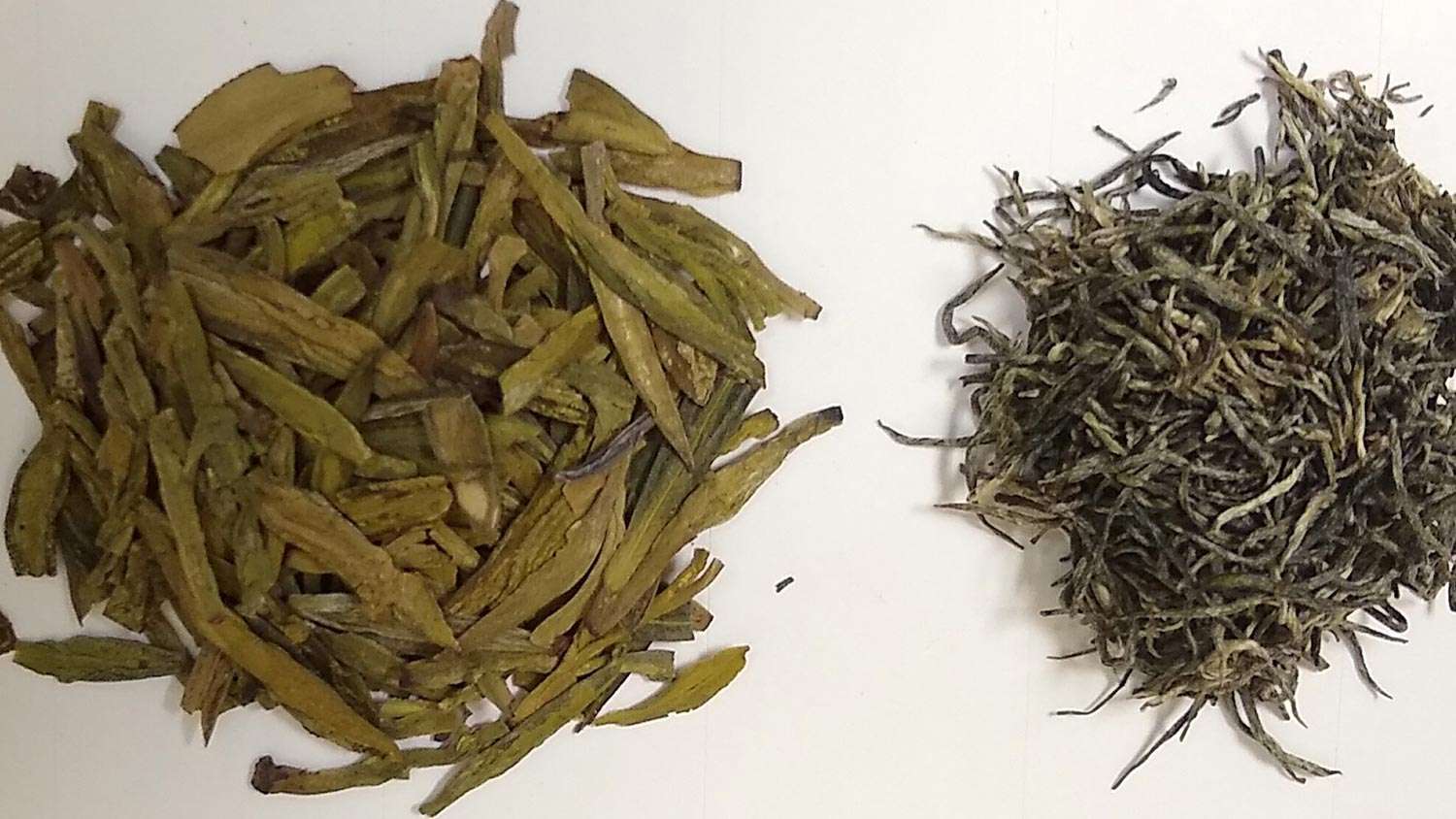
    Green Tea Leaves
    Green tea has chemical compounds that effectively blocked an important SARS-CoV-2 enzyme. Credit: De-Yu Xie, NC State University.

    Computer simulations showed that the studied chemical compounds from green tea, two varieties of muscadine grapes, cacao powder and dark chocolate were able to bind to different portions of Mpro.

    “Mpro has a portion that is like a ‘pocket’ that was ‘filled’ by the chemical compounds,” Xie said. “When this pocket was filled, the protease lost its important function.”

    In vitro lab experiments completed by Yue Zhu, an NC State Ph.D. student in Xie’s lab, showed similar results. The chemical compounds in green tea and muscadine grapes were very successful at inhibiting Mpro’s function; chemical compounds in cacao powder and dark chocolate reduced Mpro activity by about half.

    “Green tea has five tested chemical compounds that bind to different sites in the pocket on Mpro, essentially overwhelming it to inhibit its function,” Xie said. “Muscadine grapes contain these inhibitory chemicals in their skins and seeds. Plants use these compounds to protect themselves, so it is not surprising that plant leaves and skins contain these beneficial compounds.”

    The paper appears in Frontiers in Plant Science. Zhu is the paper’s first author. The research was supported by the U.S. Department of Agriculture.

    Reference: “Docking Characterization and in vitro Inhibitory Activity of Flavan-3-ols and Dimeric Proanthocyanidins Against the Main Protease Activity of SARS-Cov-2″ by Yue Zhu and De-Yu Xie, 30 November 2020, Frontiers in Plant Science.
    DOI: 10.3389/fpls.2020.601316

    Never miss a breakthrough: Join the SciTechDaily newsletter.
    Follow us on Google and Google News.

    Biochemistry Cell Biology COVID-19 Food Science North Carolina State University Nutrition Plant Science Popular Public Health
    Share. Facebook Twitter Pinterest LinkedIn Email Reddit

    Related Articles

    Scientists Discover Potent Anti-Diabetic Compounds Hidden in Roasted Coffee

    For Decades, Scientists Believed These Common Food Thickeners Were Indigestible. They Were Wrong

    Meeting the Meat Needs of the Future: Innovative Biofabrication of Beef Muscle Tissue in the Lab

    How Lasers and Vibrations Could Guarantee the Perfect Avocado

    Researchers Identify Specific Cells in Body Likely Targeted by COVID-19 Virus

    Space Lettuce – Growing Nutritious and Safe Crops for Long-Distance Space Missions

    Discovering What Makes Durian Stink – “King of Fruits” Is Known for Its Pungent Odor

    Game Changer: New Chemical Could Protect Crops From Drought

    Nanostructure of Wood Revealed – Strength Gains Could Lead to Wooden Skyscrapers

    3 Comments

    1. Nenslo on December 3, 2020 4:30 pm

      It is not made clear here whether oral consumption actually makes these compounds available to the virus to inhibit infection. This seems to be a technical simulation only, not a study of application of the substances’ effectiveness in an organism.

      Reply
      • RF Smith on December 6, 2020 3:00 pm

        I agree, it’s interesting to know, and may be helpful if infection as progressed to your intestines, but otherwise it seems unlikely to benefit an infected individual.

        Reply
    2. xABBAAA on December 6, 2020 10:56 am

      … Some people would argue and say that Pomegranate is good, too!
      However, on this one I have no verification, though…

      Reply
    Leave A Reply Cancel Reply

    • Facebook
    • Twitter
    • Pinterest
    • YouTube

    Don't Miss a Discovery

    Subscribe for the Latest in Science & Tech!

    Trending News

    These Toads Are Surviving a Deadly Fungus – Scientists May Finally Know Why

    These Brain Cells May Explain Why We Eventually Have To Sleep

    Tomatoes Contain an Invisible Ingredient With Surprising Effects on Liver Health

    World’s First Heat-Powered Cooling System Turns Waste Heat Into Cold

    Antarctica Gained a Record 695 Billion Tons of Ice in Just Two Years

    Don’t Miss: A Brilliant Venus and Glowing Harvest Moon Light Up the Sky

    New Twist on the Einstein Problem Reveals Unexpected Physics

    JWST Captures Stunning Evidence of How Supermassive Black Holes Feed

    Follow SciTechDaily
    • Facebook
    • Twitter
    • YouTube
    • Pinterest
    • Newsletter
    • RSS
    SciTech News
    • Biology News
    • Chemistry News
    • Earth News
    • Health News
    • Physics News
    • Science News
    • Space News
    • Technology News
    Recent Posts
    • Scientists Discover a Hidden Defect That Could Explain Why IBD Keeps Coming Back
    • Millions Take Blood Pressure Drugs, but Many May Be Missing Their Heart-Protective Benefits
    • Could Alien Life Be Conscious in Ways We Can’t Imagine?
    • Scientists Develop a Fruit Wash That Removes Pesticide Residues and Keeps Produce Fresh Longer
    • Scientists May Have Finally Explained Why Astronauts Get Constipated in Space
    Copyright © 1998 - 2026 SciTechDaily. All Rights Reserved.
    • Science News
    • About
    • Contact
    • Editorial Board
    • Privacy Policy
    • Terms of Use

    Type above and press Enter to search. Press Esc to cancel.