
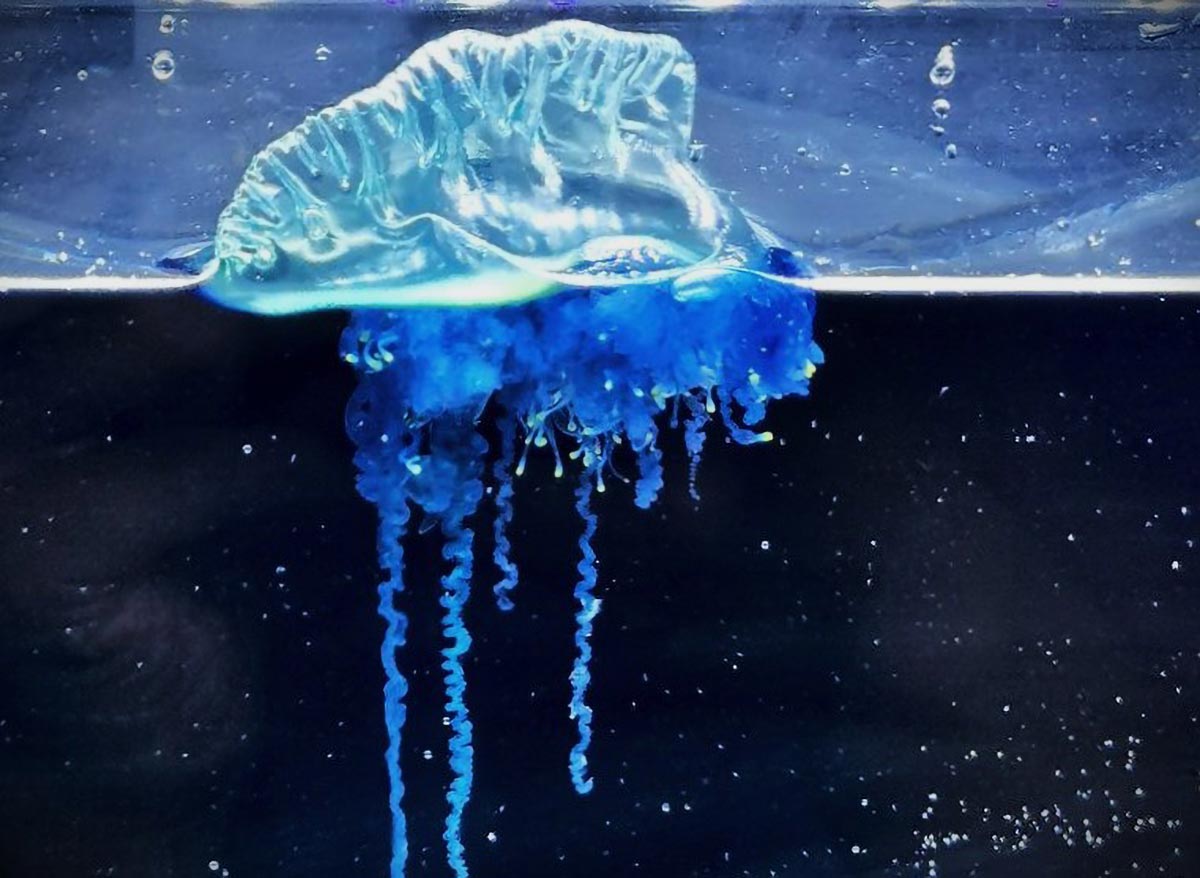
A new species of venomous Portuguese man-of-war, Physalia mikazuki, has been discovered in northern Japan.
Genetic evidence confirmed it as distinct from tropical relatives and likely carried north by warming ocean currents.
New Jellyfish Species Emerges in Northern Japan
A student research team at Tohoku University has identified a previously unknown species of the venomous Physalia (commonly called the Portuguese man-of-war) in the waters of northeastern Japan. The discovery marks the first recorded appearance of this type of jellyfish in the region and suggests that rising sea temperatures and changing ocean currents are reshaping where marine life can survive.
Published on October 30, 2025, in Frontiers in Marine Science (Marine Molecular Biology and Ecology), the study provides the first formal description of a Physalia species native to Japan.
An Accidental Discovery in Sendai Bay
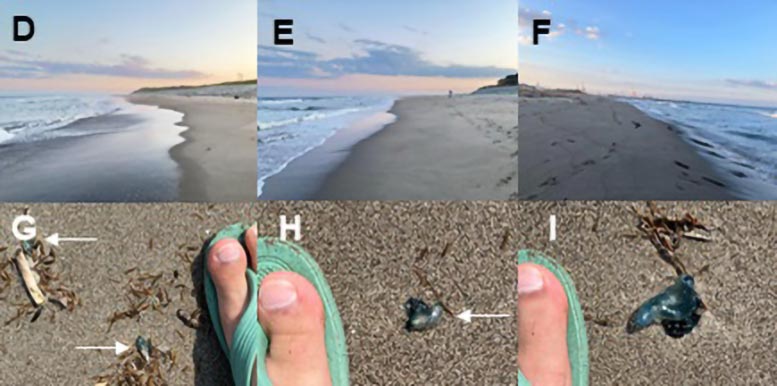
“I was working on a completely different research project around Sendai Bay in the Tohoku region, when I came across this unique jellyfish I had never seen around here before,” remarks second author Yoshiki Ochiai. “So I scooped it up, put it in a ziplock bag, hopped on my scooter, and brought it back to the lab!”
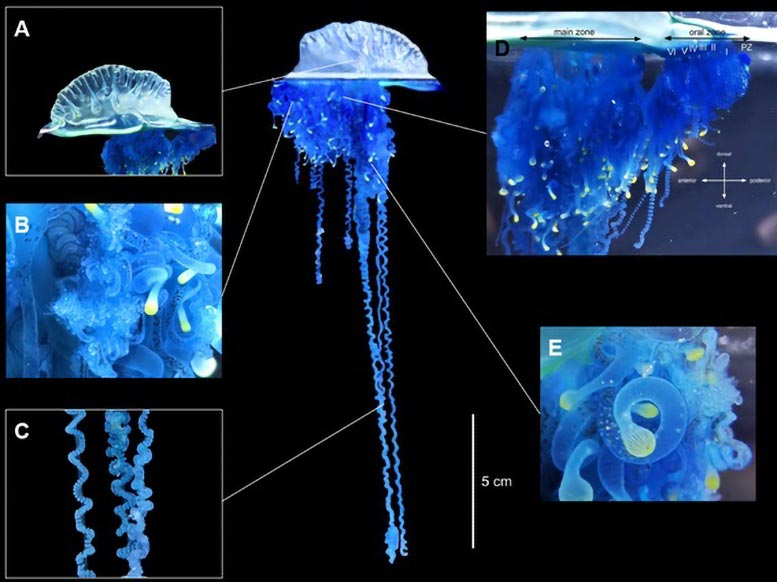
That spontaneous moment led to the identification of a striking cobalt-blue man-of-war previously unknown to science. Professor Cheryl Ames of the Graduate School of Agricultural Science and the Advanced Institute for Marine Ecosystem Change (WPI-AIMEC) explained that the new species was named Physalia mikazuki (“crescent helmet man-o-war”) in honor of Sendai’s historic figure Date Masamune, the samurai lord recognized for the crescent moon on his helmet.
Physalia mikazuki sp. nov., a newly described Portuguese man-of-war filmed alive in Sendai Bay, Japan. The footage shows distinct clusters of zooids (feeding, reproductive, and defensive units) arranged beneath the translucent, crescent-shaped float. Their coordinated motion highlights the colony’s intricate organization characteristic of the genus Physalia. Credit: © Tohoku University
Unraveling a Tangled Anatomy
“It was a very involved process recording all the unique body structures that distinguish it from the other four species of Physalia,” says first author Chanikarn Yongstar, “I looked at each individual part, comparing its appearance to old tomes where scholars drew out the jellyfish anatomy by hand. A real challenge when you look at just how many tangled parts it has.”
Previously, scientists believed that Physalia utriculus was the only member of this genus inhabiting Japan’s waters, ranging from Okinawa to Sagami Bay. However, genetic comparisons using public DNA databases revealed that its distribution overlaps with that of the newly identified P. mikazuki. This means that two distinct species have long existed in the region, but the second went unnoticed until it was found in the colder waters of Tohoku.
Riding the Warm Currents Northward
“Our morphological and DNA analyses confirmed that these specimens represent a new species, distinct from its tropical relatives,” says Kei Chloe Tan, who did the DNA analysis, “Which is an exciting finding in and of itself, but we still had questions about how it got here.”
The appearance of Physalia mikazuki in Tohoku marks the northernmost record of the genus to date. To investigate how it reached such a high latitude, researchers simulated how ocean surface currents transport floating organisms. Their models suggest that the northward extension of the Kuroshio Current, accompanied by unusually high sea-surface temperatures, likely carried the jellyfish colonies to Sendai Bay. These results provide new evidence that climate-related changes in ocean circulation are influencing where marine species drift and thrive.
Simulating Ocean Drift Paths
“I ran a particle simulation – which is like dropping bright red beach balls in the water, then making data-based estimations to track where they will end up days or months later,” explains Muhammad Izzat Nugraha, “We were excited to find that in our simulation, all the beach balls essentially made a trail from Sagami Bay up to right where we found the “crescent helmet man-o-war” in the Tohoku region.”
The discovery also highlights the importance of coastal observation and public awareness. With tentacles that can extend several meters and cause painful and debilitating stings, continued monitoring can help keep beachgoers safe while also improving our ecological understanding.
“These jellyfish are dangerous and perhaps a bit scary to some, but also beautiful creatures that are deserving of continued research and classification efforts,” adds Ayane Totsu.
Reference: “Physalia mikazuki sp. nov. (Phylum Cnidaria; class Hydrozoa) blown into Japan’s northeast (Tohoku) at the whim of marine ecosystem change” by Chanikarn Yongstar, Yoshiki Ochiai, Muhammad Izzat Nugraha, Kei Chloe Tan, Ayane Totsu, Waka Sato-Okoshi and Cheryl Lewis Ames, 6 October 2025, Frontiers in Marine Science.
DOI: 10.3389/fmars.2025.1653958
This research was made possible through funding from WPI-AIMEC (Advanced Institute for Marine Ecosystem Change) and the paper was made open access thanks to the APC Support Project for the Promotion of Open Access at Tohoku University in 2025.
Never miss a breakthrough: Join the SciTechDaily newsletter.
Follow us on Google and Google News.