
Close Menu
    Facebook X (Twitter) Instagram
    SciTechDaily
    • Biology
    • Chemistry
    • Earth
    • Health
    • Physics
    • Science
    • Space
    • Technology
    Facebook X (Twitter) Pinterest YouTube RSS
    SciTechDaily
    Home»Space»This Week @NASA: Webb Finds Black Hole in Early Universe, Mars Helicopter, Parker Solar Probe
    Space

    This Week @NASA: Webb Finds Black Hole in Early Universe, Mars Helicopter, Parker Solar Probe

    By NASAJuly 9, 2023No Comments3 Mins Read
    Facebook Twitter Pinterest Telegram LinkedIn WhatsApp Email Reddit
    Share
    Facebook Twitter LinkedIn Pinterest Telegram Email Reddit
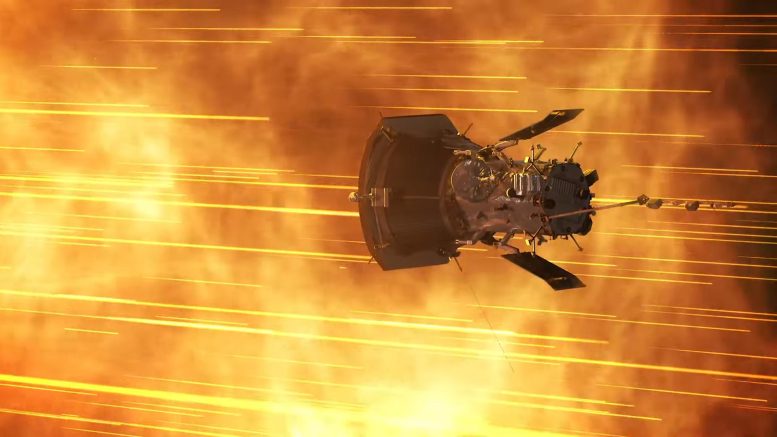
    Parker Solar Probe Close to Sun
    NASA’s Parker Solar Probe completed its 16th Sun orbit on June 27, 2023, coming within 5.3 million miles during its perihelion. Credit: NASA GSFC/CIL/Brian Monroe

    What the Webb telescope found way back in the early Universe …

    Another hot trip around the Sun for NASA’s Parker Solar Probe …

    And we’re back in touch with NASA’s helicopter on Mars …

    A few of the stories to tell you about – This Week at NASA!

    Webb Detects Most Distant Active Supermassive Black Hole to Date

    Researchers have used NASA’s James Webb Space Telescope to discover the most distant active supermassive black hole to date. The black hole, which is less massive than any other black hole yet identified in the early universe, was discovered in a galaxy that existed just over 570 million years after the big bang. Find out more at nasa.gov/webb.
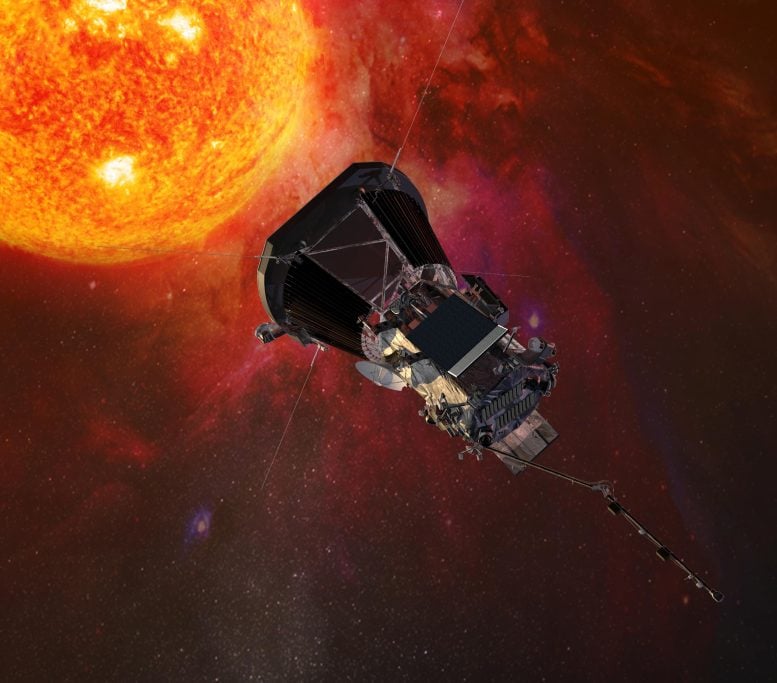
    Parker Solar Probe Spacecraft Approaching Sun
    Illustration of the Parker Solar Probe spacecraft approaching the sun. Credit: Johns Hopkins University Applied Physics Laboratory

    Parker Solar Probe Completes 16th Orbit of the Sun

    NASA’s Parker Solar Probe recently completed its 16th orbit of the Sun. This included a close approach, known as perihelion, during which the spacecraft came within 5.3 million miles of the solar surface. In August, Parker Solar Probe will fly by Venus – using the planet’s gravity to help set up an even closer perihelion in the future. These close approaches will help us learn more about heliophysics.
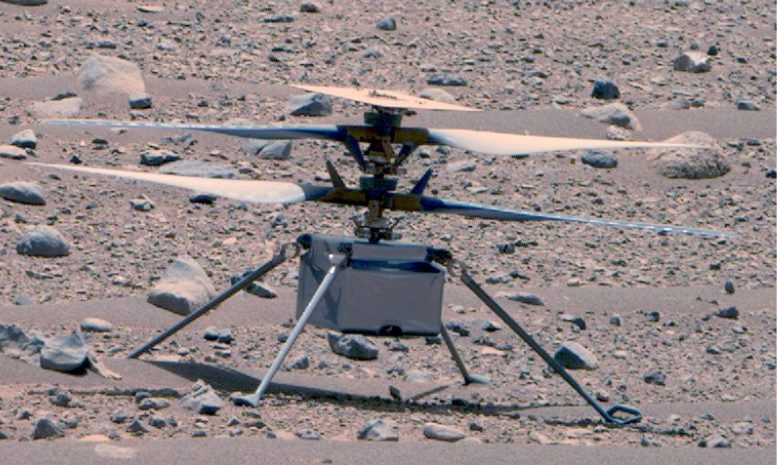
    Ingenuity Two Years
    NASA’s Ingenuity Mars Helicopter was captured by the Perseverance rover’s Mastcam-Z on April 16, not long after the rotorcraft’s 50th flight. The helicopter would soon fall silent for 63 days due hilly terrain that interrupted communications between the rover and aircraft. Credit: NASA/JPL-Caltech/ASU/MSSS

    Ingenuity Mars Helicopter Phones Home

    The Ingenuity Mars Helicopter team recently re-established contact with the helicopter after about 63 days of being incommunicado. Ingenuity’s most recent flight took it behind a hill, which blocked communications between Ingenuity and the Perseverance rover – which acts as a radio relay between the helicopter and Earth. Contact was re-established when Perseverance drove up the hill and back into Ingenuity’s line of sight.
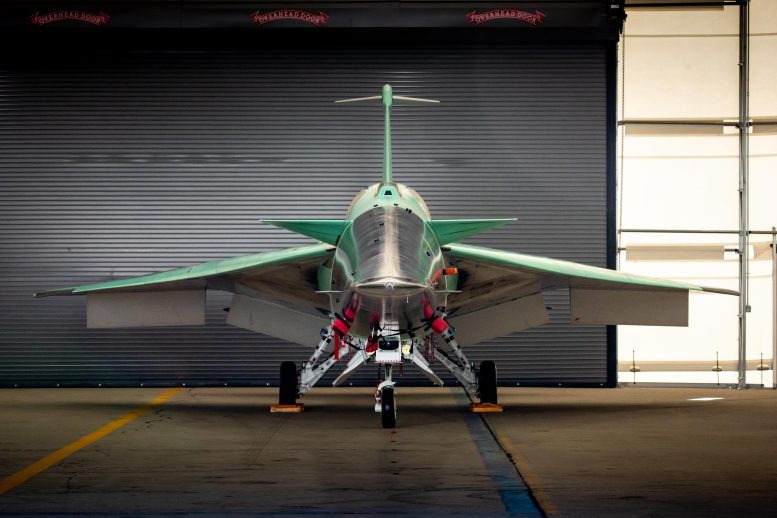
    NASA X-59 Aircraft Parked Near Runway at Lockheed Martin Skunk Works
    NASA’s X-59 aircraft is parked near the runway at Lockheed Martin Skunk Works in Palmdale, California, on June 19, 2023. This is where the X-59 will be housed during ground and initial flight tests. Credit: Lockheed Martin

    NASA’s X-59 Moves Closer to Runway

    NASA’s X-59 aircraft was recently moved from its construction site to the flight line at Lockheed Martin Skunk Works in Southern California. The move is one of many milestones in preparing the plane for its first flight. The X-59 is designed to demonstrate the ability to fly supersonic while producing just a quiet sonic thump instead of the loud sonic boom typically associated with supersonic flight.

    That’s what’s up this week @NASA

    Never miss a breakthrough: Join the SciTechDaily newsletter.
    Follow us on Google and Google News.

    NASA
    Share. Facebook Twitter Pinterest LinkedIn Email Reddit

    Related Articles

    Blue Origin’s New Moon Lander Passes a Crucial Test for NASA Missions

    NASA Fires Up Record-Breaking Plasma Thruster for Future Mars Missions

    Artemis II Just Proved NASA Is Closer Than Ever to Returning to the Moon

    NASA Powers Down Voyager 1 Instrument As It Fights To Survive Deep Space

    Scientists Stunned by New Organic Molecules Found on Mars

    Scientists Discover a New Meteor Shower From a Mysterious Crumbling Asteroid

    NASA Artemis II Splashdown and Astronaut Recovery Operation [Image Gallery]

    Splashdown! NASA Artemis II Returns From Record-Breaking Moon Mission

    NASA’s Artemis II: Humans Just Left Earth Orbit for the First Time Since 1972

    Leave A Reply Cancel Reply

    • Facebook
    • Twitter
    • Pinterest
    • YouTube

    Don't Miss a Discovery

    Subscribe for the Latest in Science & Tech!

    Trending News

    The Secret to Healthy Aging May Be More Protein and More Exercise

    These 567-Million-Year-Old Fossils Are Rewriting the Story of Life on Earth

    The Spider-Like Creatures Helping Scientists Decode the Origins of Fatherhood

    Scientists Baffled by a Sudden Reversal Deep Inside Earth’s Core

    This Strange Sea Creature Can Survive Five Years Without Food – Scientists Finally Know Why

    New Quantum Sensor Opens a Window Into the Invisible Universe

    Stanford Scientists Reverse Age-Related Memory Loss by Targeting the Gut

    James Webb Uncovers the Atmosphere of a Hellish Lava World 41 Light-Years Away

    Follow SciTechDaily
    • Facebook
    • Twitter
    • YouTube
    • Pinterest
    • Newsletter
    • RSS
    SciTech News
    • Biology News
    • Chemistry News
    • Earth News
    • Health News
    • Physics News
    • Science News
    • Space News
    • Technology News
    Recent Posts
    • The Future of Obesity Care Goes Far Beyond Ozempic, Wegovy, and Zepbound
    • Endless Supply of Cancer-Fighting Immune Cells Unlocked by USC Scientists
    • A Simple Twist Gives Scientists New Control Over Quantum Light
    • XRISM Reveals Galaxy-Shaping Winds Erupting From a Supermassive Black Hole
    • A Tiny Chemical Trick Could Lead to Much More Powerful Computer Chips
    Copyright © 1998 - 2026 SciTechDaily. All Rights Reserved.
    • Science News
    • About
    • Contact
    • Editorial Board
    • Privacy Policy
    • Terms of Use

    Type above and press Enter to search. Press Esc to cancel.