

Close Menu
    Facebook X (Twitter) Instagram
    SciTechDaily
    • Biology
    • Chemistry
    • Earth
    • Health
    • Physics
    • Science
    • Space
    • Technology
    Facebook X (Twitter) Pinterest YouTube RSS
    SciTechDaily
    Home»Earth»Turbulence Below: Scientists Discover Key to Deep Sea Health
    Earth

    Turbulence Below: Scientists Discover Key to Deep Sea Health

    By Bangor UniversityJuly 23, 2024No Comments3 Mins Read
    Facebook Twitter Pinterest Telegram LinkedIn WhatsApp Email Reddit
    Share
    Facebook Twitter LinkedIn Pinterest Telegram Email Reddit
    Prince Madog
    Bangor University’s research vessel, the Prince Madog. Credit: Bangor University

    New research shows that summer storms play a vital role in replenishing deep-water oxygen levels in the UK, which is crucial for maintaining marine health as global warming progresses.

    Recent research conducted by oceanographers at the School of Ocean Sciences, Bangor University, has demonstrated the critical role of oxygen ‘mixing down’ in sustaining healthy deep-water environments around the UK and beyond.

    The groundbreaking research, published in Nature Communications, demonstrates that the mixing down of oxygen by summer storms is an important process in topping up the deep water oxygen levels in summer, and so in keeping these seas healthy.

    Lead author Professor Tom Rippeth of Bangor University explains, “There is growing concern for the health of our coastal oceans as the climate warms because warmer water holds less oxygen. Living creatures in the ocean are reliant on oxygen to survive in the same way as animals on land are. Oxygen is also used up as rotting matter decomposes in the depths of the ocean. This creates a summer oxygen deficit in the deep seas around the UK. Unfortunately, as our climate warms, this deficit is forecast to grow.”

    Oxygen Stratification and Research Techniques

    The formation of stratification in the summer in the deeper water around the UK isolates the deep water from the atmosphere, which is the main source of oxygen.

    The research team, from the School of Oceans Sciences at Bangor University, the University of Liverpool, and the National Oceanography Centre, used novel new techniques developed at Bangor University to estimate oxygen fluxes in the ocean. These new results show that the mixing down of oxygen by summer storms can slow the development of the deepwater oxygen deficit by as much as 50%.
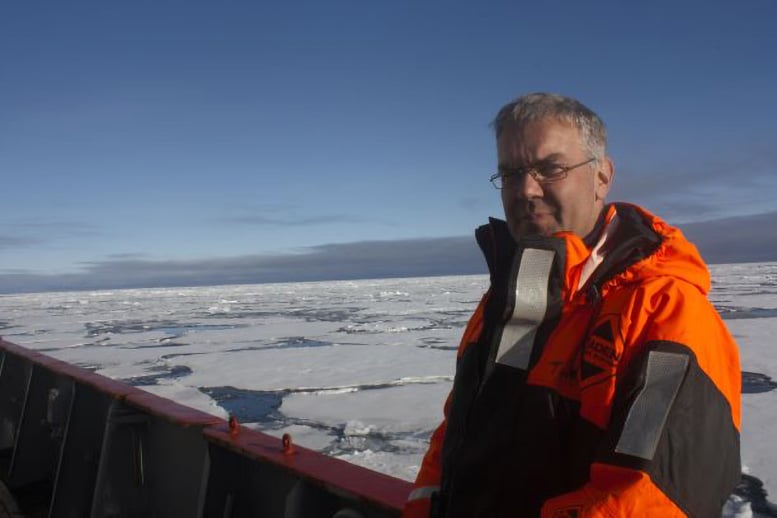
    Tom Rippeth
    Professor Tom Rippeth. Credit: Bangor University

    These new results also have important implications for the proposed mass development of floating wind farms, in places like the Celtic Sea and northern North Sea, in pursuance of NetZero:

    “The tidal flow passed from the proposed floating wind turbines will generate a turbulent wake which will mix down oxygen in the summer. This positive impact will improve ocean health. However, this new research highlights the need for the potential impacts of this modified mixing to be considered in the design of turbine foundations and in the spatial planning of new wind farms,” says Professor Rippeth.

    Reference: “The deepwater oxygen deficit in stratified shallow seas is mediated by diapycnal mixing” by Tom Rippeth, Sijing Shen, Ben Lincoln, Brian Scannell, Xin Meng, Joanne Hopkins and Jonathan Sharples, 11 April 2024, Nature Communications.
    DOI: 10.1038/s41467-024-47548-2

    The observations were collected as part of the United Kingdom (UK) Natural Environment Research Council (NERC) Carbon and Nutrient Dynamics and Fluxes over Shelf Systems (CaNDyFloSS) project, which forms part of the Shelf Sea Biogeochemistry research program co-funded by the Department for Environment, Food and Rural Affairs (Defra) through UK Research and Innovation grants.

    Never miss a breakthrough: Join the SciTechDaily newsletter.
    Follow us on Google and Google News.

    Climate Change Environment Marine Biology Oceanography
    Share. Facebook Twitter Pinterest LinkedIn Email Reddit

    Related Articles

    Startling Findings: According to Scientists, the Ocean Is Becoming More Toxic

    100 Years of Microscopic Shells Reveal a “Double Whammy” for Waters off California

    Ocean Acidification From Climate Change Is Damaging Shark Scales

    Unprecedented and Worrying Rise in Sea Levels Poses Serious Threat to Coastal Cities

    Animals Including Sharks, Penguins and Turtles Can Help Humans Monitor Oceans

    Rutgers Study Shows Previous Climate Change Was Caused by the Ocean and the Atmosphere

    New Chinese Survey Reveals Extensive Coastal Pollution

    Tropical Oceans Role in Climate Change

    Southern Ocean Research Shows Decrease in Dense Antarctic Bottom Water

    Leave A Reply Cancel Reply

    • Facebook
    • Twitter
    • Pinterest
    • YouTube

    Don't Miss a Discovery

    Subscribe for the Latest in Science & Tech!

    Trending News

    Enormous Prehistoric Insects Puzzle Scientists

    Scientists Develop Bioengineered Chewing Gum That Could Help Fight Oral Cancer

    After 37 Years, the World’s Longest-Running Soil Warming Experiment Uncovers a Startling Climate Secret

    NASA Satellite Captures First-Ever High-Res View of Massive Pacific Tsunami

    ADHD Isn’t Just a Deficit: Study Reveals Powerful Hidden Strengths

    Scientists Discover Stem Cells That Could Regrow Teeth and Bone

    Early Cannabis Use May Stall Key Brain Skills in Teens

    Popular Vitamin D Supplement Has “Previously Unknown” Negative Effect, Study Finds

    Follow SciTechDaily
    • Facebook
    • Twitter
    • YouTube
    • Pinterest
    • Newsletter
    • RSS
    SciTech News
    • Biology News
    • Chemistry News
    • Earth News
    • Health News
    • Physics News
    • Science News
    • Space News
    • Technology News
    Recent Posts
    • Rewriting Dinosaur Evolution: Scientists Unearth Remarkable 150-Million-Year-Old Stegosaur Skull
    • Scientists Identify Two Simple Treatments for Cancer-Related Cognitive Impairment
    • Omega-3 Supplements Linked to Cognitive Decline in Surprising New Study
    • One in Five at Risk: Scientists Identify a Hidden Blood Particle Linked to Higher Risk of Stroke and Death
    • Darwin’s Islands Still Evolving: Giant Daisies Rewrite the Rules of Evolution
    Copyright © 1998 - 2026 SciTechDaily. All Rights Reserved.
    • Science News
    • About
    • Contact
    • Editorial Board
    • Privacy Policy
    • Terms of Use

    Type above and press Enter to search. Press Esc to cancel.