
Close Menu
    Facebook X (Twitter) Instagram
    SciTechDaily
    • Biology
    • Chemistry
    • Earth
    • Health
    • Physics
    • Science
    • Space
    • Technology
    Facebook X (Twitter) Pinterest YouTube RSS
    SciTechDaily
    Home»Earth»100 Years of Microscopic Shells Reveal a “Double Whammy” for Waters off California
    Earth

    100 Years of Microscopic Shells Reveal a “Double Whammy” for Waters off California

    By NOAAJanuary 16, 2020No Comments3 Mins Read
    Facebook Twitter Pinterest Telegram LinkedIn WhatsApp Email Reddit
    Share
    Facebook Twitter LinkedIn Pinterest Telegram Email Reddit
    Emily Osborne NOAA
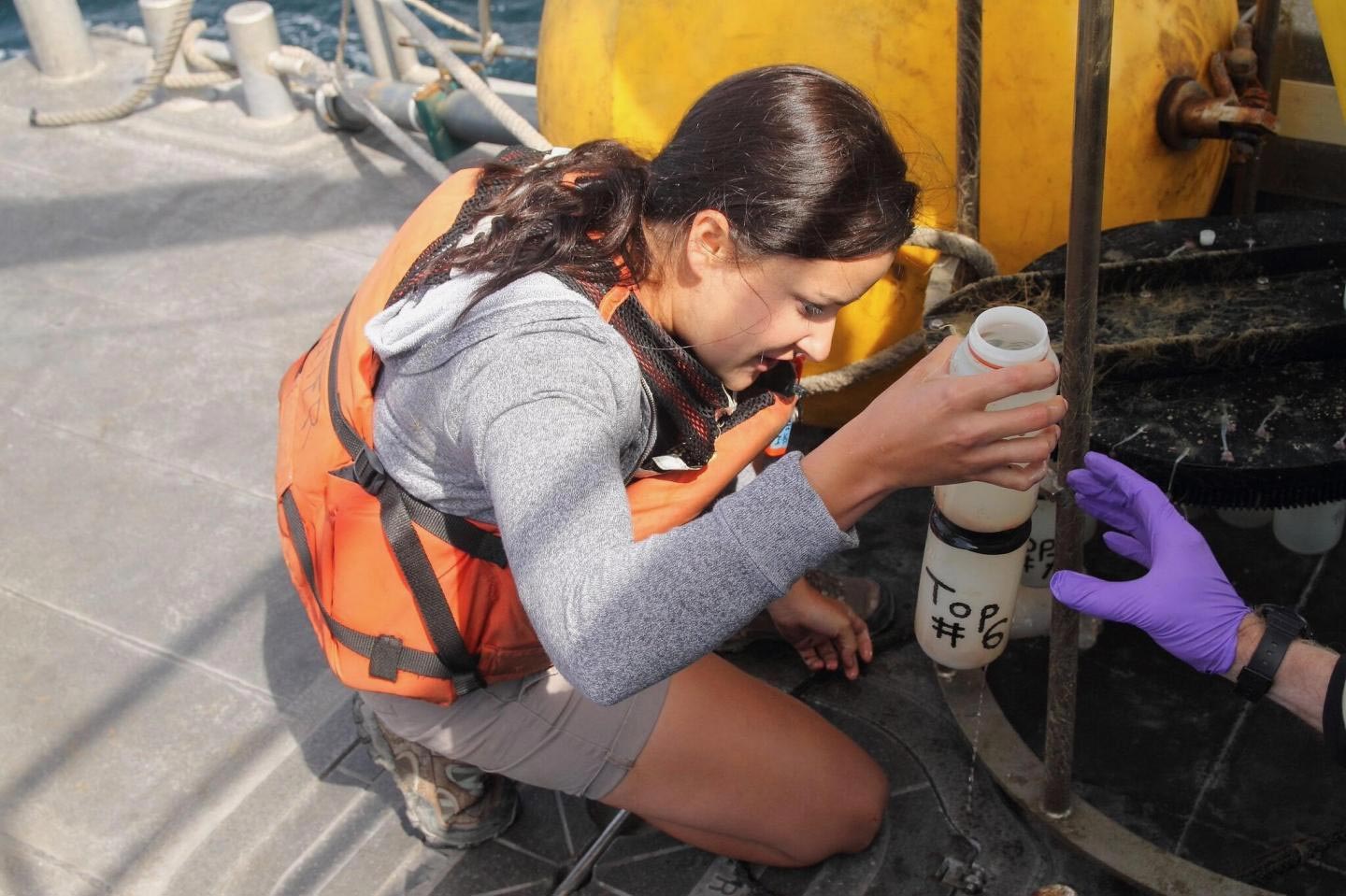
    Emily Osborne, a marine scientist with NOAA’s Ocean Acidification Program, examines a sediment sample taken from the Santa Barbara Basin off California which contains recently deposited microscopic foraminifera shells. Credit: NOAA

    In first-of-its-kind research, NOAA scientists and academic partners used 100 years of microscopic shells to show that the coastal waters off California are acidifying twice as fast as the global ocean average — with the seafood supply in the crosshairs.

    California coastal waters contain some of our nation’s more economically valuable fisheries, including salmon, crabs, and shellfish. Yet, these fisheries are also some of the most vulnerable to the potential harmful effects of ocean acidification on marine life. That increase in acidity is caused by the ocean absorbing excess carbon dioxide from the atmosphere.

    100 years and 2,000 shells later

    In the new study published in the journal Nature Geoscience, scientists examined nearly 2,000 shells of microscopic animals called foraminifera by taking core samples from the seafloor off Santa Barbara and measuring how the shells of these animals have changed over a century.
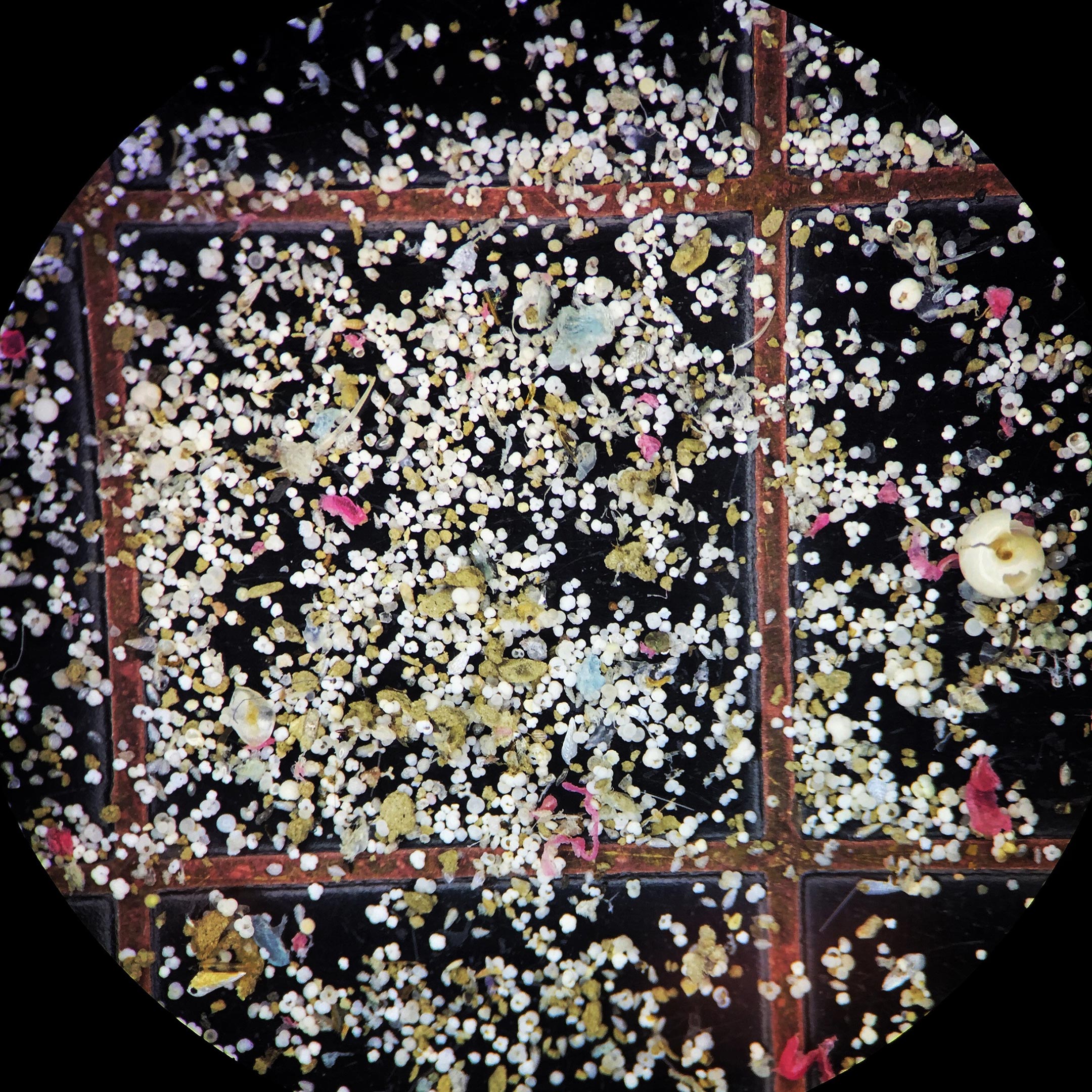
    Tiny Shells Reveal Change
    (Click image for full view.) These colorful spots are tiny foraminifera shells taken from the mud of core samples as seen under a microscope. Credit: NOAA

    Every day, the shells of dead foraminifera rain down on the ocean floor and are eventually covered by sediment. Layers of sediment containing shells form a vertical record of change. The scientists looked back through time, layer by layer, and measured changes in thickness of the shells.

    “By measuring the thickness of the shells, we can provide a very accurate estimate of the ocean’s acidity level when the foraminifera were alive,” said lead author Emily Osborne, who used this novel technique to produce the longest record yet created of ocean acidification using directly measured marine species. She measured shells within cores that represented deposits dating back to 1895.
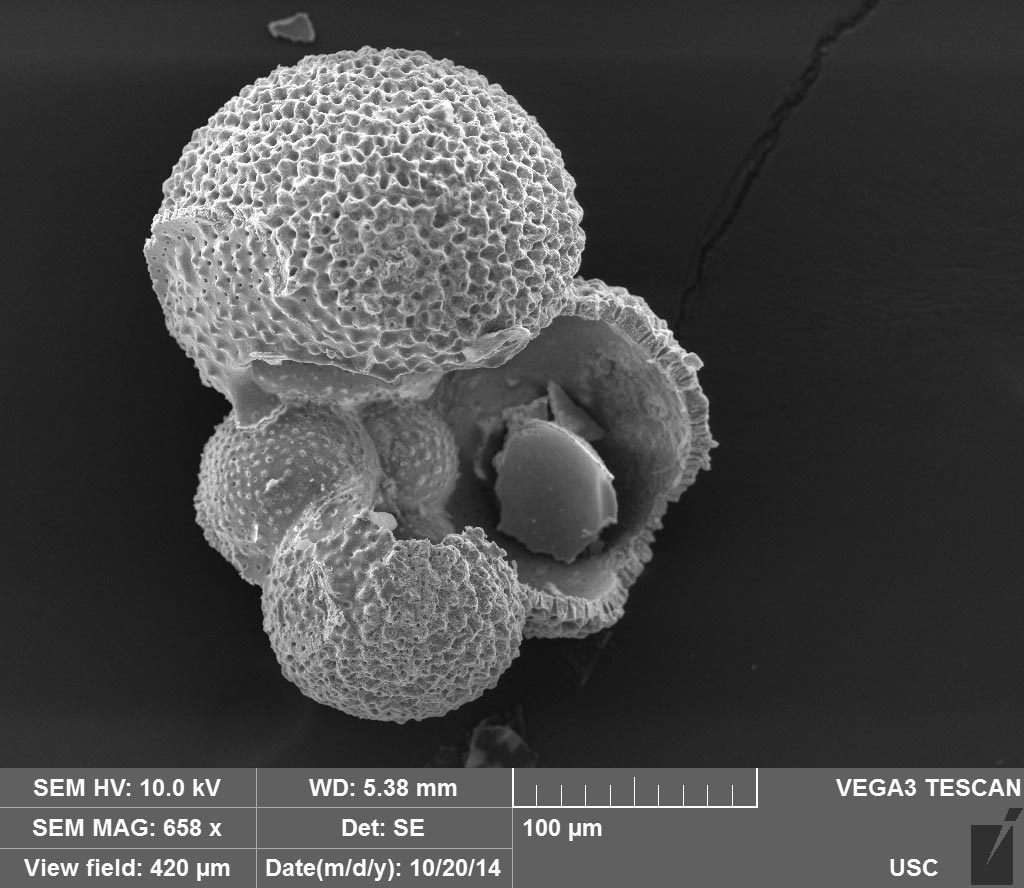
    Foraminifera Shell
    This image of a foraminifera shell has been magnified 650 times its size by a scanning electron microscope. Credit: NOAA

    The fossil record also revealed an unexpected cyclical pattern: Though the waters increased their overall acidity over time, the shells revealed decade-long changes in the rise and fall of acidity. This pattern matched the Pacific Decadal Oscillation, a natural warming and cooling cycle. Human-caused carbon dioxide emissions are driving ocean acidification, but this natural variation also plays an important role in alleviating or amplifying ocean acidification.

    “During the cool phases of the Pacific Decadal Oscillation, strengthened winds across the ocean drive carbon dioxide-rich waters upward toward the surface along the West Coast of the U.S.,” said Osborne, a scientist with NOAA’s Ocean Acidification Program. “It’s like a double whammy, increasing ocean acidification in this region of the world.”

    Scientists hope to build on the new research to learn more about how changes in ocean acidification may be affecting other aspects of the marine ecosystem.

    Reference: “Decadal variability in twentieth-century ocean acidification in the California Current Ecosystem” by Emily B. Osborne, Robert C. Thunell, Nicolas Gruber, Richard A. Feely and Claudia R. Benitez-Nelson, 16 December 2019, Nature Geoscience.
    DOI: 10.1038/s41561-019-0499-z

    Never miss a breakthrough: Join the SciTechDaily newsletter.
    Follow us on Google and Google News.

    Acidification Climate Change Marine Biology NOAA Oceanography
    Share. Facebook Twitter Pinterest LinkedIn Email Reddit

    Related Articles

    Deep Impact: Heat Waves Happen at the Bottom of the Ocean Too

    Robot Fleet Dives in “Marine Snow” for Climate Answers

    Pumping Up Cold Water From Deep Within the Ocean to Halt Coral Bleaching

    First Active Methane Seep in Antarctica Discovered Thanks to “Microbial Waterfall” and “Dumb Luck”

    Key to Past & Future Habitat of West Coast Marine Species Is Ocean ‘Breathability’

    Harmful Algal Blooms in Arabian Sea Fueled by Shrinking Snowcaps

    Decades of Knowledge of Marine Protected Areas Ruined by Climate Change

    New and Strange Climate Pattern Includes More Violent El Nino Swings

    Sea Cucumbers Counter Negative Effects of Ocean Acidification

    Leave A Reply Cancel Reply

    • Facebook
    • Twitter
    • Pinterest
    • YouTube

    Don't Miss a Discovery

    Subscribe for the Latest in Science & Tech!

    Trending News

    First-of-Its-Kind Discovery: Homer’s Iliad Found Embedded in a 1,600-Year-Old Egyptian Mummy

    Beyond Inflammation: Scientists Uncover New Cause of Persistent Rheumatoid Arthritis

    A Simple Molecule Could Unlock Safer, Easier Weight Loss

    Scientists Just Built a Quantum Battery That Charges Almost Instantly

    Researchers Unveil Groundbreaking Sustainable Solution to Vitamin B12 Deficiency

    Millions of People Have Osteopenia Without Realizing It – Here’s What You Need To Know

    Researchers Discover Boosting a Single Protein Helps the Brain Fight Alzheimer’s

    World-First Study Reveals Human Hearts Can Regenerate After a Heart Attack

    Follow SciTechDaily
    • Facebook
    • Twitter
    • YouTube
    • Pinterest
    • Newsletter
    • RSS
    SciTech News
    • Biology News
    • Chemistry News
    • Earth News
    • Health News
    • Physics News
    • Science News
    • Space News
    • Technology News
    Recent Posts
    • After Decades, MIT Researchers Capture the First 3D Atomic View of a Mysterious Material
    • Your Favorite Fishing Spot Is Turning Brown – and the Fish Are Changing
    • 380-Million-Year-Old Fish Fossil Reveals Secrets of Life’s First Steps Onto Land
    • Mezcal “Worm” in a Bottle Mystery: DNA Testing Reveals a Surprise
    • Scientists Turn Red Lettuce Green, Unlocking Hidden Nutrients
    Copyright © 1998 - 2026 SciTechDaily. All Rights Reserved.
    • Science News
    • About
    • Contact
    • Editorial Board
    • Privacy Policy
    • Terms of Use

    Type above and press Enter to search. Press Esc to cancel.