
Close Menu
    Facebook X (Twitter) Instagram
    SciTechDaily
    • Biology
    • Chemistry
    • Earth
    • Health
    • Physics
    • Science
    • Space
    • Technology
    Facebook X (Twitter) Pinterest YouTube RSS
    SciTechDaily
    Home»Space»Turbulent Plasma: Uncovering the Source of the Universe’s Magnetic Fields
    Space

    Turbulent Plasma: Uncovering the Source of the Universe’s Magnetic Fields

    By Columbia UniversityAugust 19, 20231 Comment3 Mins Read
    Facebook Twitter Pinterest Telegram LinkedIn WhatsApp Email Reddit
    Share
    Facebook Twitter LinkedIn Pinterest Telegram Email Reddit
    Galactic Magnetic Field Concept Art
    Columbia researchers have found that magnetic fields across the universe may originate in turbulent plasma. Their study demonstrates that these plasmas, present in various environments, can spontaneously create and amplify magnetic fields, revealing the process through which magnetic fields can stretch over immense distances.

    The source of magnetic fields has long been debated. New research offers clues on their origins.

    It isn’t just your refrigerator that has magnets on it. The earth, the stars, galaxies, and the space between galaxies are all magnetized, too. The more places scientists have looked for magnetic fields across the universe, the more they’ve found them. But the question of why that is the case and where those magnetic fields originate from has remained a mystery and a subject of ongoing scientific inquiry.
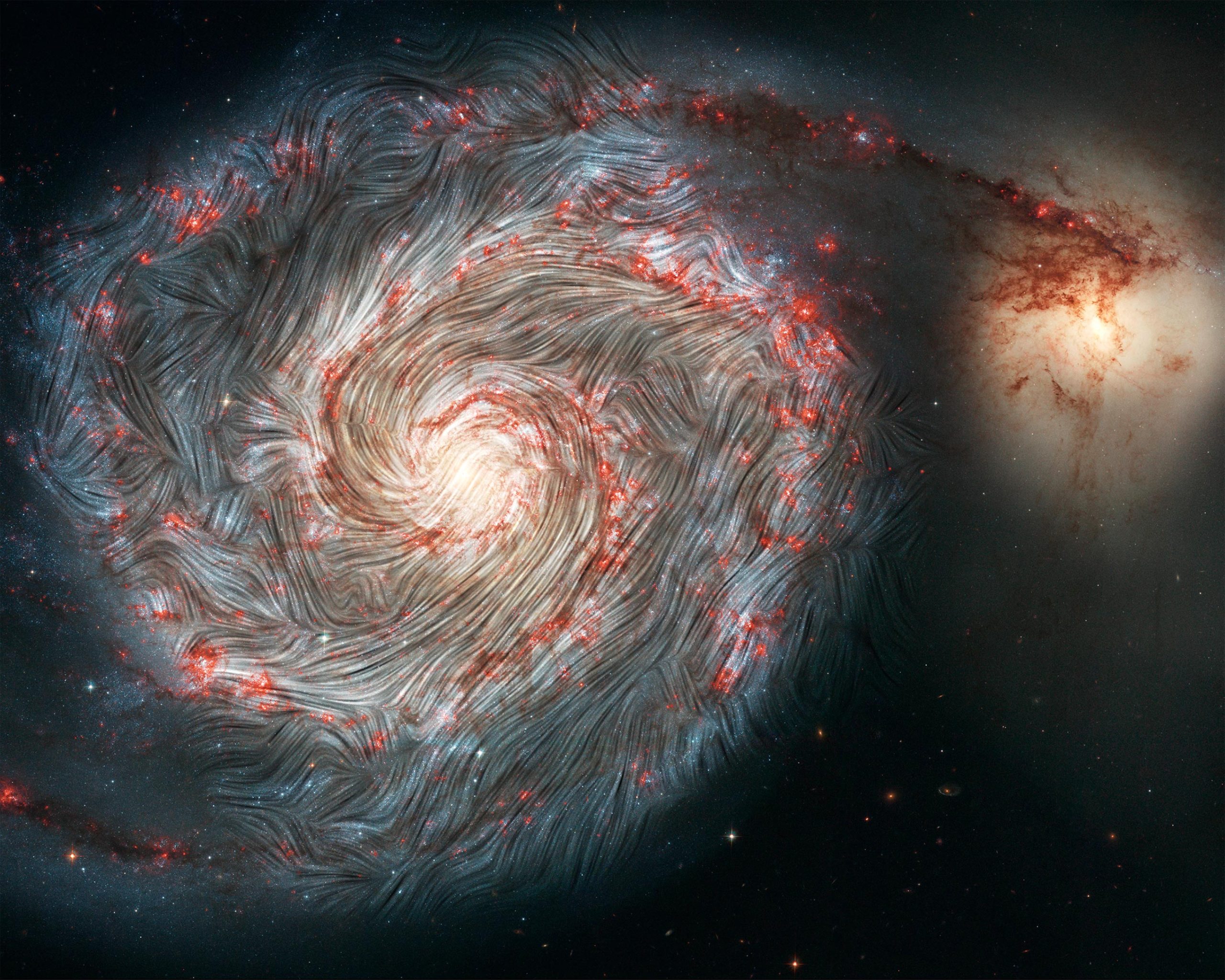
    M51 Whirlpool Galaxy Magnetic Field
    The magnetic field in the Whirlpool Galaxy (M51), captured by NASA’s flying Stratospheric Observatory for Infrared Astronomy (SOFIA) observatory superimposed on a Hubble telescope picture of the galaxy. The image shows infrared images of grains of dust in the M51 galaxy. Their magnetic orientation largely follows the spiral shape of the galaxy, but it is also being pulled in the direction of the neighboring galaxy at the right of the frame. Credit: NASA, the SOFIA science team, A. Borlaff; NASA, ESA, S. Beckwith (STScI) and the Hubble Heritage Team (STScI/AURA)

    Insights Into Magnetic Field Origins

    A new research paper by Columbia scientists offers insight into the source of these fields. The research team used models to show that magnetic fields may spontaneously arise in turbulent plasma.

    Plasma is a kind of matter often found in ultra-hot environments like that near the surface of the sun, but plasma is also scattered across the universe in low-density environments, like the expansive space between galaxies; the team’s research focused on those low-density environments.

    Their simulations showed that, in addition to generating new magnetic fields, the turbulence of those plasmas can also amplify magnetic fields once they’ve been generated. This helps explain how magnetic fields that originate on small scales can sometimes eventually reach to stretch across vast distances.
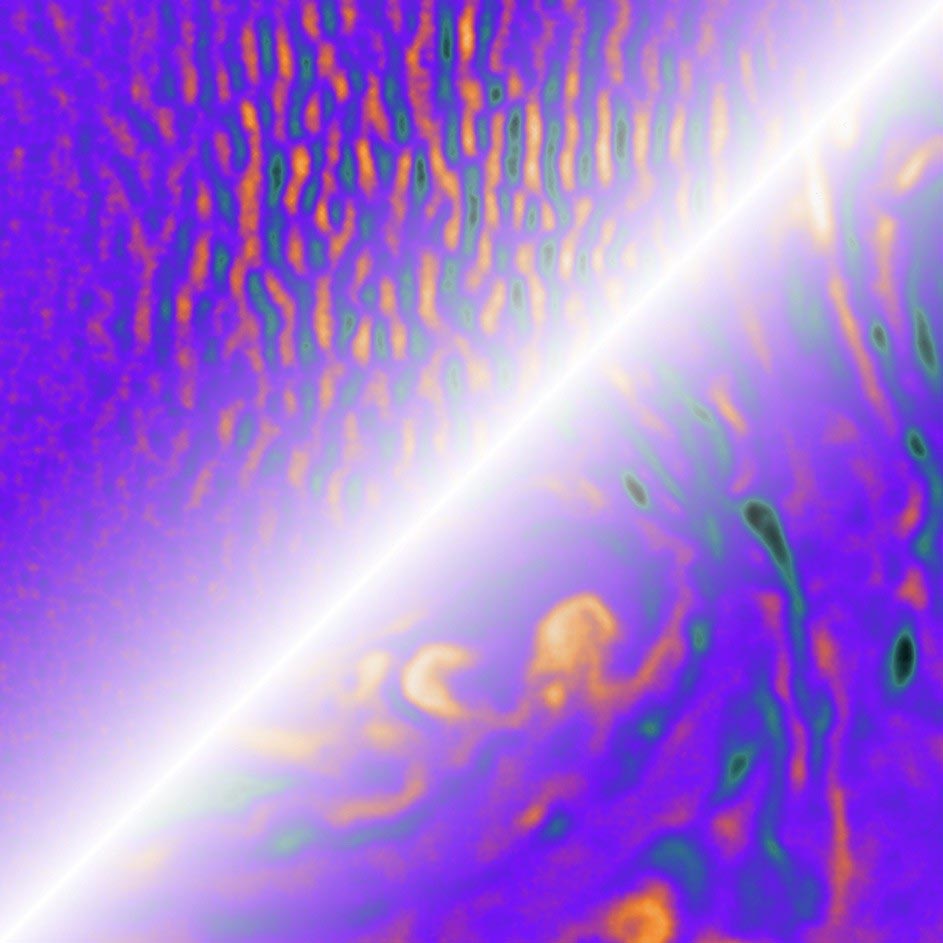
    Birth and Growth of Magnetic Fields in Turbulent Plasmas
    A composite image illustrating the birth and growth of magnetic fields in turbulent plasmas, from weak fields on small scales (top left) to strong fields on large scales (bottom right). Credit: Columbia University

    “This new research allows us to imagine the kinds of spaces where magnetic fields are born: even in the most pristine, vast, and remote spaces of our universe, roiling plasma particles in turbulent motion can spontaneously give birth to new magnetic fields,” Sironi said.

    “The search for the ‘seed’ that can sow a new magnetic field has been long, and we’re excited to bring new evidence of that original source, as well as data on how a magnetic field, once born, can grow.”

    Reference: “Generation of Near-Equipartition Magnetic Fields in Turbulent Collisionless Plasmas” by Lorenzo Sironi, Luca Comisso and Ryan Golant, 31 July 2023, Physical Review Letters.
    DOI: 10.1103/PhysRevLett.131.055201

    The paper was written by astronomy professor Lorenzo Sironi, astronomy research scientist Luca Comisso, and astronomy doctoral candidate Ryan Golant.

    Never miss a breakthrough: Join the SciTechDaily newsletter.
    Follow us on Google and Google News.

    Astrophysics Columbia University Popular
    Share. Facebook Twitter Pinterest LinkedIn Email Reddit

    Related Articles

    Something Is Ticking Near the Milky Way’s Supermassive Black Hole

    Hawking Was Right: New Data Confirms Black Holes Never Shrink

    The Magnetar That Forged a Planet’s Worth of Gold in Half a Second

    Physicists Create New Model of Ringing Black Holes

    A New Cosmic Model To Reveal What’s Inside Colliding Black Holes

    Astronomers Show How Colliding Galaxies May Seed Future Stars

    Astrophysicists Discover a Dozen Black Holes Orbiting Sgr A*

    Astronomers Show Radiation Helped Fuel The First Massive Black Holes

    GALEX and the Hubble Reveal New Details on Colliding Black Holes

    1 Comment

    1. Caryn Fodera on August 21, 2023 4:08 pm

      The space between you and me is purely electric. And obviously there’s no apparent ground lol… trying to explain that is impossible but it’s energy that comprises everything.

      Reply
    Leave A Reply Cancel Reply

    • Facebook
    • Twitter
    • Pinterest
    • YouTube

    Don't Miss a Discovery

    Subscribe for the Latest in Science & Tech!

    Trending News

    Scientists Recreate a Nuclear Fireball and Uncover Fallout’s Hidden Chemistry

    These Tiny Gut Particles Could Be Accelerating Aging Throughout the Body

    Doctors Changed One Thing and Weight Gain Stopped

    Magnetic Fields May Solve a Longstanding Binary Star Mystery

    The Probiotic Breakthrough for Natural Anxiety Relief and Better Mental Health

    Animal vs. Plant Protein: Scientists Found a Surprising Nutritional Difference

    According to Scientists, This Simple Dietary Change Is Linked to Lower Depression Scores

    Researchers Discover a Hidden Vitamin D Problem That Persists Year-Round

    Follow SciTechDaily
    • Facebook
    • Twitter
    • YouTube
    • Pinterest
    • Newsletter
    • RSS
    SciTech News
    • Biology News
    • Chemistry News
    • Earth News
    • Health News
    • Physics News
    • Science News
    • Space News
    • Technology News
    Recent Posts
    • Astronomers Find Strongest Evidence Yet for Magnetic Fields on Alien Worlds
    • Astronomers Unveil Record-Breaking Haul of 161 New Black Hole Collisions
    • Ancient Meteorite Reveals a Forgotten Planet That Existed 4.5 Billion Years Ago
    • Mini Brain Organoids Expose Hidden Biological Differences in Alzheimer’s Disease
    • Scientists Recommend Doing This To Reduce Anxiety During Pregnancy
    Copyright © 1998 - 2026 SciTechDaily. All Rights Reserved.
    • Science News
    • About
    • Contact
    • Editorial Board
    • Privacy Policy
    • Terms of Use

    Type above and press Enter to search. Press Esc to cancel.