
Close Menu
    Facebook X (Twitter) Instagram
    SciTechDaily
    • Biology
    • Chemistry
    • Earth
    • Health
    • Physics
    • Science
    • Space
    • Technology
    Facebook X (Twitter) Pinterest YouTube RSS
    SciTechDaily
    Home»Space»Two Close-Approaching Asteroids Will Safely Pass Earth This Week
    Space

    Two Close-Approaching Asteroids Will Safely Pass Earth This Week

    By DC Agle, Jet Propulsion LaboratoryFebruary 7, 2018No Comments2 Mins Read
    Facebook Twitter Pinterest Telegram LinkedIn WhatsApp Email Reddit
    Share
    Facebook Twitter LinkedIn Pinterest Telegram Email Reddit
    Two Small Asteroids Safely Pass Earth This Week
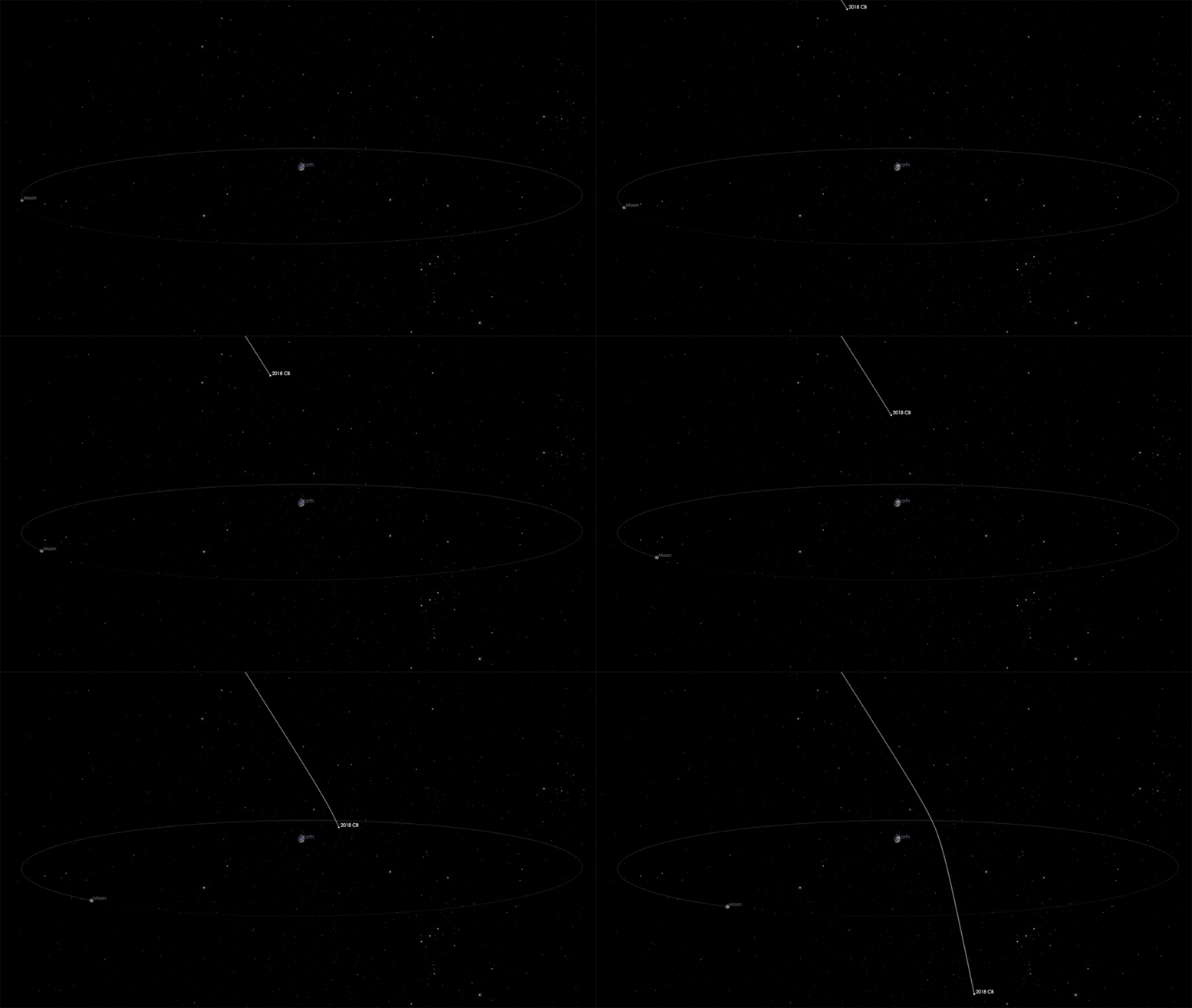
    Asteroid 2018 CB will pass closely by Earth on Friday, February 9, at a distance of about 39,000 miles.
    Credit: NASA/JPL-Caltech

    Two small asteroids recently discovered by astronomers at the NASA-funded Catalina Sky Survey (CSS) near Tucson, Arizona, are safely passing by Earth within one lunar distance this week.

    The first of this week’s close-approaching asteroids — discovered by CSS on February 4 — is designated asteroid 2018 CC. Its close approach to Earth came Tuesday (February 6) at 12:10 p.m. PST (3:10 p.m. EST) at a distance of about 114,000 miles (184,000 kilometers). The asteroid is estimated to be between 50 and 100 feet (15 and 30 meters) in size.

    Of potentially greater interest is asteroid 2018 CB, which will also pass closely by Earth on Friday, February 9, at around 2:30 p.m. PST (5:30 p.m. EST), at a distance of about 39,000 miles (64,000 kilometers), which is less than one-fifth the distance of Earth to the Moon). The asteroid, which is estimated to be between 50 and 130 feet (15 and 40 meters) in size, was also discovered by CSS on February 4.

    “Although 2018 CB is quite small, it might well be larger than the asteroid that entered the atmosphere over Chelyabinsk, Russia, almost exactly five years ago, in 2013,” said Paul Chodas, manager of the Center for Near-Earth Object Studies at NASA’s Jet Propulsion Laboratory in Pasadena, California. “Asteroids of this size do not often approach this close to our planet — maybe only once or twice a year.”

    JPL hosts the Center for Near-Earth Object Studies for NASA’s Near-Earth Object Observations Program, an element of the Planetary Defense Coordination Office within the agency’s Science Mission Directorate.

    Never miss a breakthrough: Join the SciTechDaily newsletter.
    Follow us on Google and Google News.

    Asteroid Astronomy NEO
    Share. Facebook Twitter Pinterest LinkedIn Email Reddit

    Related Articles

    NEOWISE Asteroid-Hunting Spacecraft Releases Fourth Year of Data

    Astronomers Prepare for Asteroid 2002 AJ129 Flyby of Earth

    Arecibo Radar Views Near-Earth Asteroid 3200 Phaethon

    International Team of Astronomers Completes First Asteroid Tracking Exercise

    Large Near-Earth Asteroid Florence to Pass Earth on September 1

    Near-Earth Asteroid 2014 JO25 Set to Fly Past Earth on April 19

    Asteroid 2013 TX68 to Pass Earth on March 5

    Updated Radar Images Provide New Details on Asteroid 2015 TB145

    “Skull Shaped” Asteroid 2015 TB145 Will Flyby Earth This Halloween

    Leave A Reply Cancel Reply

    • Facebook
    • Twitter
    • Pinterest
    • YouTube

    Don't Miss a Discovery

    Subscribe for the Latest in Science & Tech!

    Trending News

    Giant Crocodylians Ruled South America’s Ancient Food Chain

    Breakthrough in a Bizarre Galaxy Could Help Unlock the Mystery of Dark Matter

    Just 4 Minutes of Daily Strength Training Can Quadruple Fitness in Older Adults

    Almost All Plant-Based Meat Alternatives Contain Mycotoxins, Study Finds

    Astronomers Detect a Record-Breaking “Cosmic Laser” From 8 Billion Light-Years Away

    A 47-Year-Old Scientist Tracked Himself for Months – His Biological Age Fell to 32

    Construction Crew Uncovers Giant 20-Meter Dinosaur in Brazil

    30 Years of Hurricane Data Reveal 4 Warning Signs Before Storms Strengthen

    Follow SciTechDaily
    • Facebook
    • Twitter
    • YouTube
    • Pinterest
    • Newsletter
    • RSS
    SciTech News
    • Biology News
    • Chemistry News
    • Earth News
    • Health News
    • Physics News
    • Science News
    • Space News
    • Technology News
    Recent Posts
    • A 20-Year Study Finds Preschool Can Influence Success for Years
    • 55-Million-Year-Old Penguin Fossils Preserve Clues to a Warmer Antarctica
    • A 35,000-Year-Old Neanderthal Pelvis May Explain Why Men and Women Walk Differently
    • Hidden Brain Wiring May Help Preserve Thinking As Gray Matter Shrinks
    • Dual Stem Cell Treatment Restores Vision in First Human Trial
    Copyright © 1998 - 2026 SciTechDaily. All Rights Reserved.
    • Science News
    • About
    • Contact
    • Editorial Board
    • Privacy Policy
    • Terms of Use

    Type above and press Enter to search. Press Esc to cancel.