
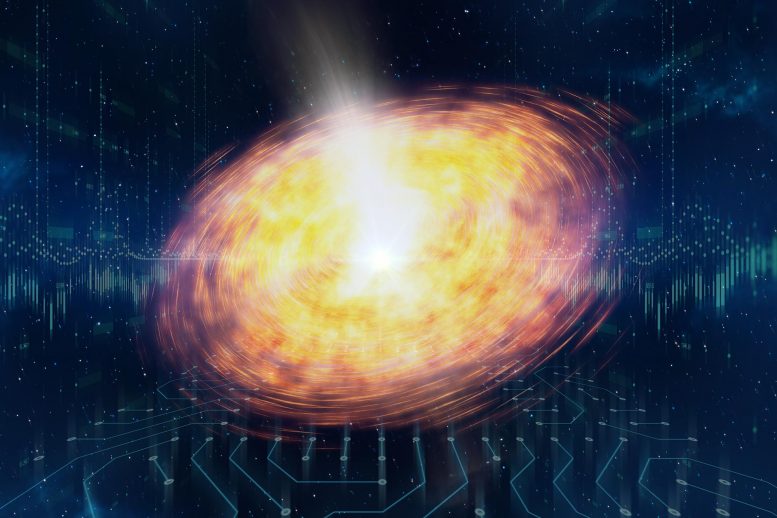
An artificial intelligence (AI) system analyzing data from the Gaia space telescope has identified more than 2,000 large protostars, young stars that are still forming and could hold clues to the origin of the stars in our Milky Way.
Scientists had previously cataloged only 100 of these stars and investigating them has generated much of the knowledge underpinning star formation studies.
The project was led by Miguel Vioque, a Ph.D. researcher at the University of Leeds, and the findings — New catalog of Herbig AE/BE and classical Be stars: A machine learning approach to Gaia DR2 — have been published in the journal Astronomy and Astrophysics.
He believes studying these newly identified stars has the potential to change scientists’ understanding of massive star formation and their approach to studying the galaxy.
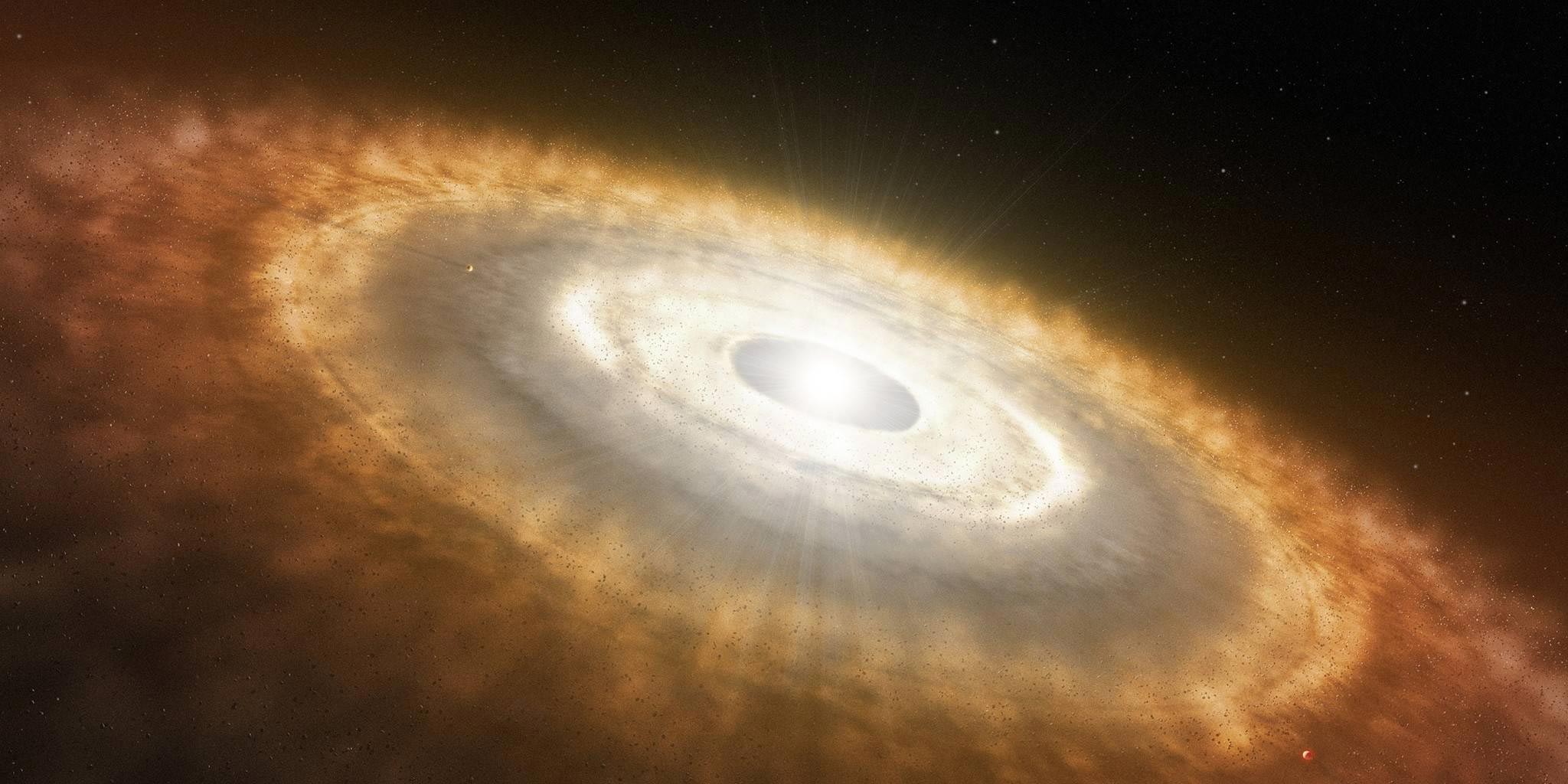
Mr. Vioque and his colleagues were interested in what are known as Herbig Ae/Be stars, stars that are still forming and have a mass that is at least twice that of the Sun. They are also involved in the birth of other stars.
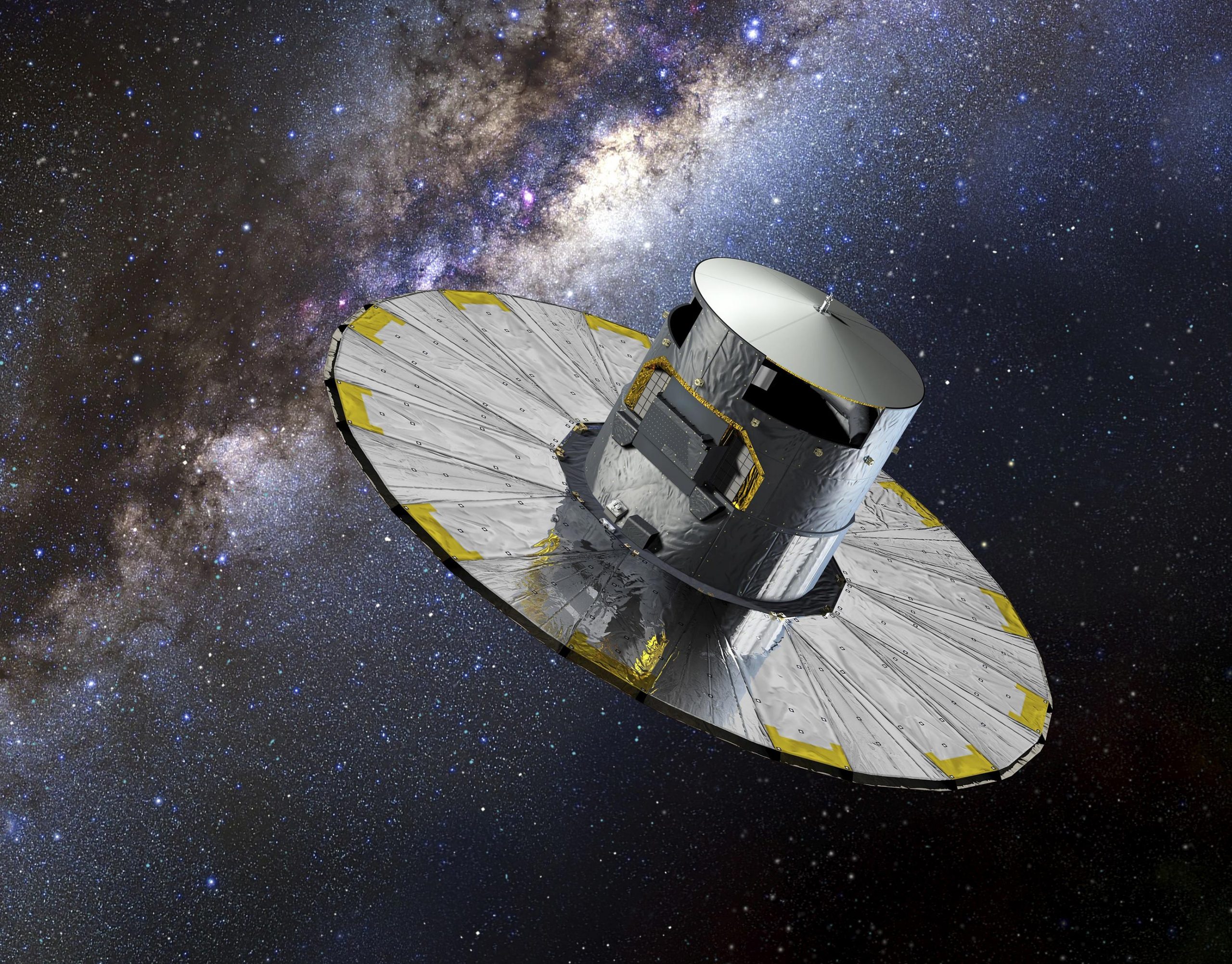
The researchers took the vast quantity of data being collected by the Gaia space-borne telescope as it maps the galaxy. Launched in 2013, data collected by the telescope has enabled distances to be determined for about one billion stars, about one percent of the total that are thought to exist in the galaxy.
The researchers cleaned that data and reduced it to a subset of 4.1 million stars which were likely to contain the target protostars.
The AI system sifted the data and generated a list of 2,226 stars with around an 85 percent chance of being a Herbig Ae/Be protostar.
Mr. Vioque, from the School of Physics and Astronomy, said: “There is a huge amount of data being produced by Gaia — and AI tools are needed to help scientists make sense of it.”
“We are combining new technologies in the way researchers survey and map the galaxy with ways of interrogating the mountain of data produced by the telescope — and it is revolutionizing our understanding of the galaxy.”
“This approach is opening an exciting, new chapter in astronomy.”
Mr. Vioque and his colleagues then validated the findings of the AI tool by investigating 145 of the stars identified by the AI system at ground observatories in Spain and Chile where they were able to measure the light, recorded as spectra, coming from the stars.
He said: “The results from the ground-based observatories show that the AI tool made very accurate predictions about stars that were likely to fall into the Herbig Ae/Be classification.”
One of the target stars is known as Gaia DR2 428909457258627200.
It is 8,500 light years away and has a mass 2.3 times that of the sun. Its surface temperature is 9,400 degrees Celsius (17,000 degrees Fahrenheit) — the sun is about 5,500 degrees Celsius (9,900 degrees Fahrenheit) — and it has a radius that is twice that of the sun. It has existed around six million years, which in astronomical terms makes it a young star that is still forming.
Professor René Oudmaijer, from the School of Physics and Astronomy at Leeds, supervised the research. He said: “This research is an excellent example of how the analysis of the Big Data collected by modern scientific instruments, such as the Gaia telescope, will shape the future of astrophysics.
“AI systems are able to identify patterns in vast quantities of data — and it is likely that in those patterns, scientists will find clues that will lead to new discoveries and fresh understanding.”
The research was funded by the European Union’s Horizon 2020 research and innovation program, under the STARRY project.
Reference: “Catalogue of new Herbig Ae/Be and classical Be stars. A machine learning approach to Gaia DR2” by M. Vioque, R.D. Oudmaijer, M. Schreiner, I. Mendigutia, D. Baines, N. Mowlavi and R. Perez-Martinez, 4 June 2020, Astronomy and Astrophysics.
DOI: 10.
The research was carried out for the STARRY (STARs that ‘R Young) project, which has received funding from the European Union’s Horizon 2020 research and innovation program under MSCA ITN-EID grant agreement No 676036.
Never miss a breakthrough: Join the SciTechDaily newsletter.
Follow us on Google and Google News.