
Close Menu
    Facebook X (Twitter) Instagram
    SciTechDaily
    • Biology
    • Chemistry
    • Earth
    • Health
    • Physics
    • Science
    • Space
    • Technology
    Facebook X (Twitter) Pinterest YouTube RSS
    SciTechDaily
    Home»Health»Unlocking How Amyloid and Tau Proteins Drive Brain Changes Before Alzheimer’s Symptoms
    Health

    Unlocking How Amyloid and Tau Proteins Drive Brain Changes Before Alzheimer’s Symptoms

    By McGill UniversitySeptember 18, 2024No Comments3 Mins Read
    Facebook Twitter Pinterest Telegram LinkedIn WhatsApp Email Reddit
    Share
    Facebook Twitter LinkedIn Pinterest Telegram Email Reddit
    Alzheimer's Brain Scan Art Concept
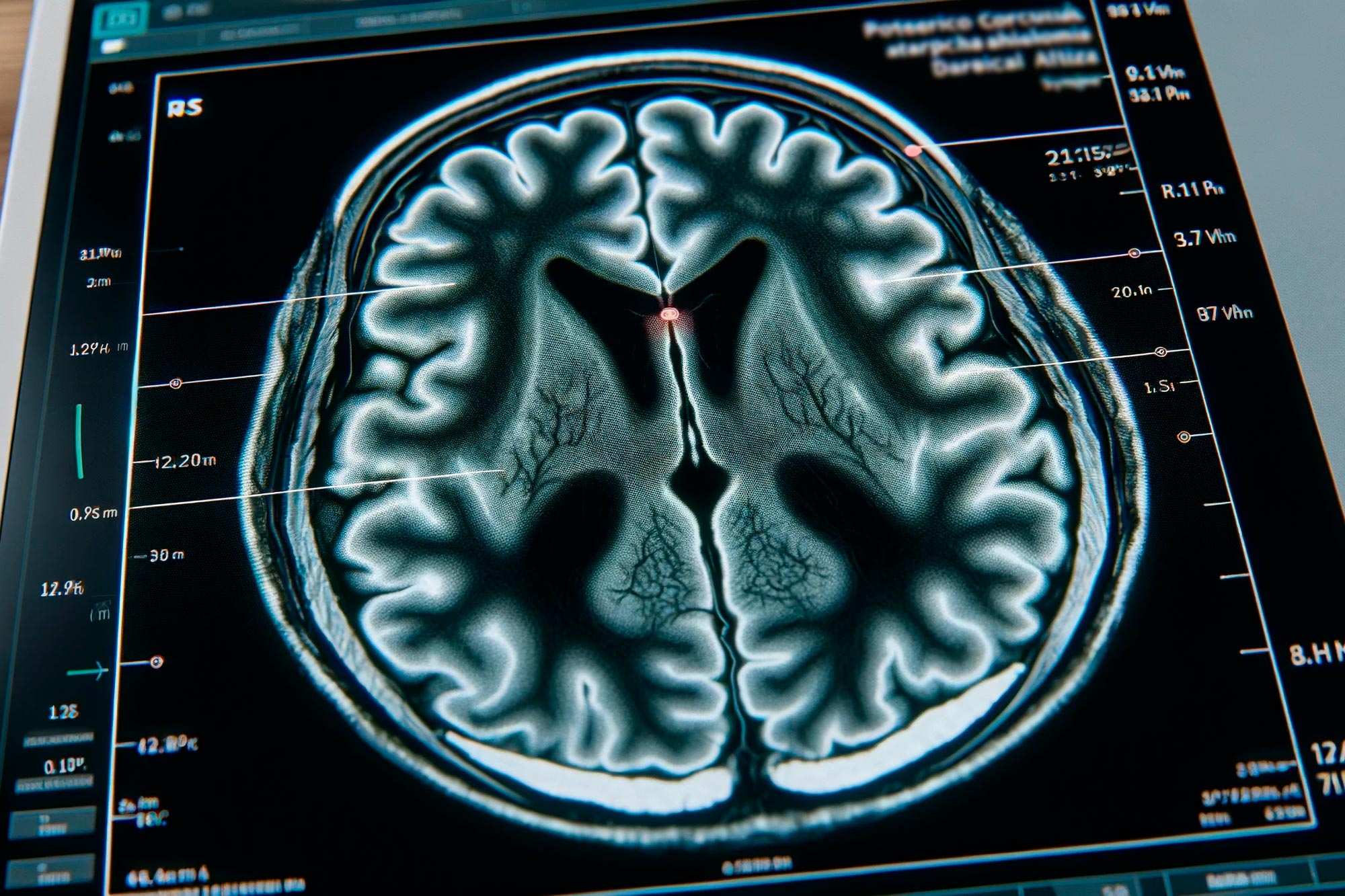
    New research indicates that amyloid-beta and tau proteins cause shifts in brain activity from hyperactivity to hypoactivity in Alzheimer’s patients, leading to memory and attention declines. This understanding helps trace the early progression of Alzheimer’s disease. Credit: SciTechDaily.com

    Researchers have shed new light on how amyloid-beta and tau proteins influence brain activity and cognitive decline in Alzheimer’s patients.

    Through a study involving brain scans and cognitive tests of individuals predisposed to Alzheimer’s, they found that the presence of these proteins alters brain activity. This change, transitioning from hyperactivity to hypoactivity, correlates with a decline in cognitive functions such as memory and attention. This study provides valuable insights into the early stages of Alzheimer’s and sets the stage for further research to track these changes over time.

    Understanding Alzheimer’s: Amyloid-Beta and Tau Proteins

    Amyloid-beta and tau proteins have long been associated with Alzheimer’s disease. The pathological buildup of these proteins leads to cognitive decline in people with the disease. How it does that, though, remains poorly understood.

    A new study from the labs of Sylvain Baillet at The Neuro and Sylvia Villeneuve at the Douglas Research Centre provides important insight into how these proteins impact brain activity and possibly contribute to cognitive decline.

    Magnetoencephalography Records Magnetic Fields in the Brain
    Magnetoencephalography records magnetic fields produced by electrical currents occurring naturally in the brain. Credit: Jonathan Gallego Rudolf

    Innovative Research Methods and Initial Findings

    The team led by Jonathan Gallego Rudolf, a Ph.D. candidate in Baillet and Villeneuve’s labs, recruited 104 people with a family history of Alzheimer’s. They scanned the participants’ brains using a combination of positron emission tomography (PET) to detect the presence and location of the proteins and magnetoencephalography (MEG) to record brain activity in these regions.

    The scientists compared the results of the two scans and found that brain areas with increased levels of amyloid-beta showed macroscopic expressions of brain hyperactivity, reflected by increased fast- and decreased slow-frequency brain activity. For people with both amyloid-beta and tau in their brain, the pattern shifted towards hypoactivity, with higher levels of pathology leading to brain activity slowing.
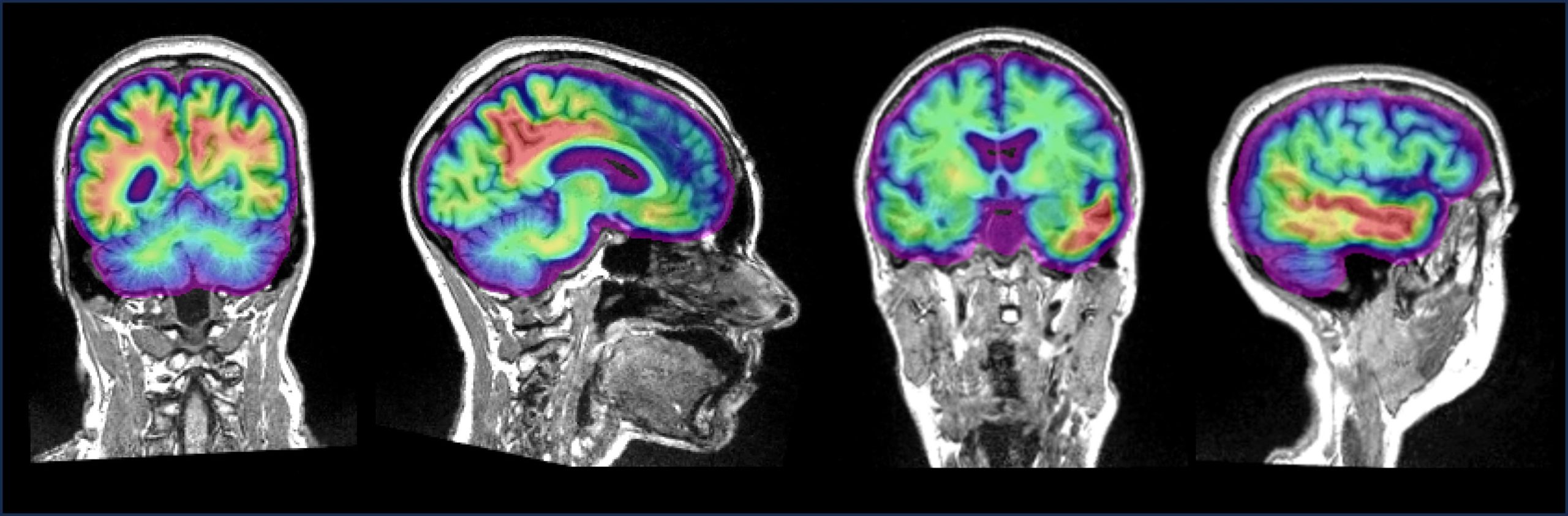
    PET Scans Showing Amyloid-Beta and Tau
    PET scans showing amyloid-beta (two images on the left) and tau (two images on the right). Credit: Jonathan Gallego Rudolf

    Link Between Brain Activity and Cognitive Decline

    Using cognitive tests, the team discovered that participants with higher rates of this amyloid-tau-related brain slowing showed higher levels of decline in attention and memory.

    The findings suggest that the interplay between amyloid-beta and tau lead to altered brain activity before noticeable cognitive symptoms appear. In a follow-up study, Rudolf plans to rescan the same participants over time to prove whether the accumulation of the two proteins promotes further slowing of brain activity, and whether this accurately predicts the cognitive evolution of the participants.

    Future Directions and Implications

    “Our study provides direct evidence in humans for the hypothesized shift in neurophysiological activity, from neural hyper- to hypo-activity, and its association with longitudinal cognitive decline. These results parallel findings from animal and computational models and contribute to the advancement of our understanding of the pathological mechanisms underlying the preclinical stage of Alzheimer’s disease,” says Rudolf.

    Their findings were published today (September 18, 2024) in a paper titled “Synergistic association of Aβ and tau pathology with cortical neurophysiology and cognitive decline in asymptomatic older adults” in the journal Nature Neuroscience.

    Reference: “Synergistic association of Aβ and tau pathology with cortical neurophysiology and cognitive decline in asymptomatic older adults” by Jonathan Gallego-Rudolf, Alex I. Wiesman, Alexa Pichet Binette, Sylvia Villeneuve, Sylvain Baillet and PREVENT-AD Research Group, 18 September 2024, Nature Neuroscience.
    DOI: 10.1038/s41593-024-01763-8

    Never miss a breakthrough: Join the SciTechDaily newsletter.
    Follow us on Google and Google News.

    Alzheimer's Disease McGill University Neurology Neuroscience
    Share. Facebook Twitter Pinterest LinkedIn Email Reddit

    Related Articles

    Study Shows Poor Sleep Linked to Alzheimer’s Disease

    Proper Copper Levels Essential to Spontaneous Neural Activity

    Noninvasive Arterial Spin Labeling MRI Detects Evidence of Cognitive Decline Before Symptoms Appear

    New Drug Compound Reverses the Brain Deficits of Alzheimer’s Disease in Mice

    Neurobiologists Reveal Age-Related Changes that Answer Key Questions about Alzheimer’s Disease

    UCLA Researchers Image Abnormal Brain Proteins in Retired NFL Players

    Galactic Cosmic Radiation Poses Significant Threat to Astronauts, Could Accelerate the Onset of Alzheimer’s

    Test for Alzheimer’s May Be Undermining Drug Trials

    Disrupted Sleep Patterns Linked to Alzheimer’s

    Leave A Reply Cancel Reply

    • Facebook
    • Twitter
    • Pinterest
    • YouTube

    Don't Miss a Discovery

    Subscribe for the Latest in Science & Tech!

    Trending News

    Your Blood Pressure Reading Could Be Wrong Because of One Simple Mistake

    Astronomers Stunned by Ancient Galaxy With No Spin

    Physicists May Be on the Verge of Discovering “New Physics” at CERN

    Scientists Solve 320-Million-Year Mystery of Reptile Skin Armor

    Scientists Say This Daily Walking Habit May Be the Secret to Keeping Weight Off After Dieting

    New Therapy Rewires the Brain To Restore Joy in Depression Patients

    Giant Squid Detected off Western Australia in Stunning Deep-Sea Discovery

    Popular Sugar-Free Sweetener Linked to Liver Disease, Study Warns

    Follow SciTechDaily
    • Facebook
    • Twitter
    • YouTube
    • Pinterest
    • Newsletter
    • RSS
    SciTech News
    • Biology News
    • Chemistry News
    • Earth News
    • Health News
    • Physics News
    • Science News
    • Space News
    • Technology News
    Recent Posts
    • New Stroke Study Challenges Decades-Old Medical Beliefs
    • These Simple Plant Foods Are Linked to Lower Blood Pressure
    • Common Blood Pressure Drug Supercharges Cancer Treatment in Surprising New Study
    • Key Magic Mushroom Ingredient Increases Laziness and Reduces Aggression
    • Researchers Solve 15-Year Mystery Behind Cancer-Causing Gut Toxin
    Copyright © 1998 - 2026 SciTechDaily. All Rights Reserved.
    • Science News
    • About
    • Contact
    • Editorial Board
    • Privacy Policy
    • Terms of Use

    Type above and press Enter to search. Press Esc to cancel.