
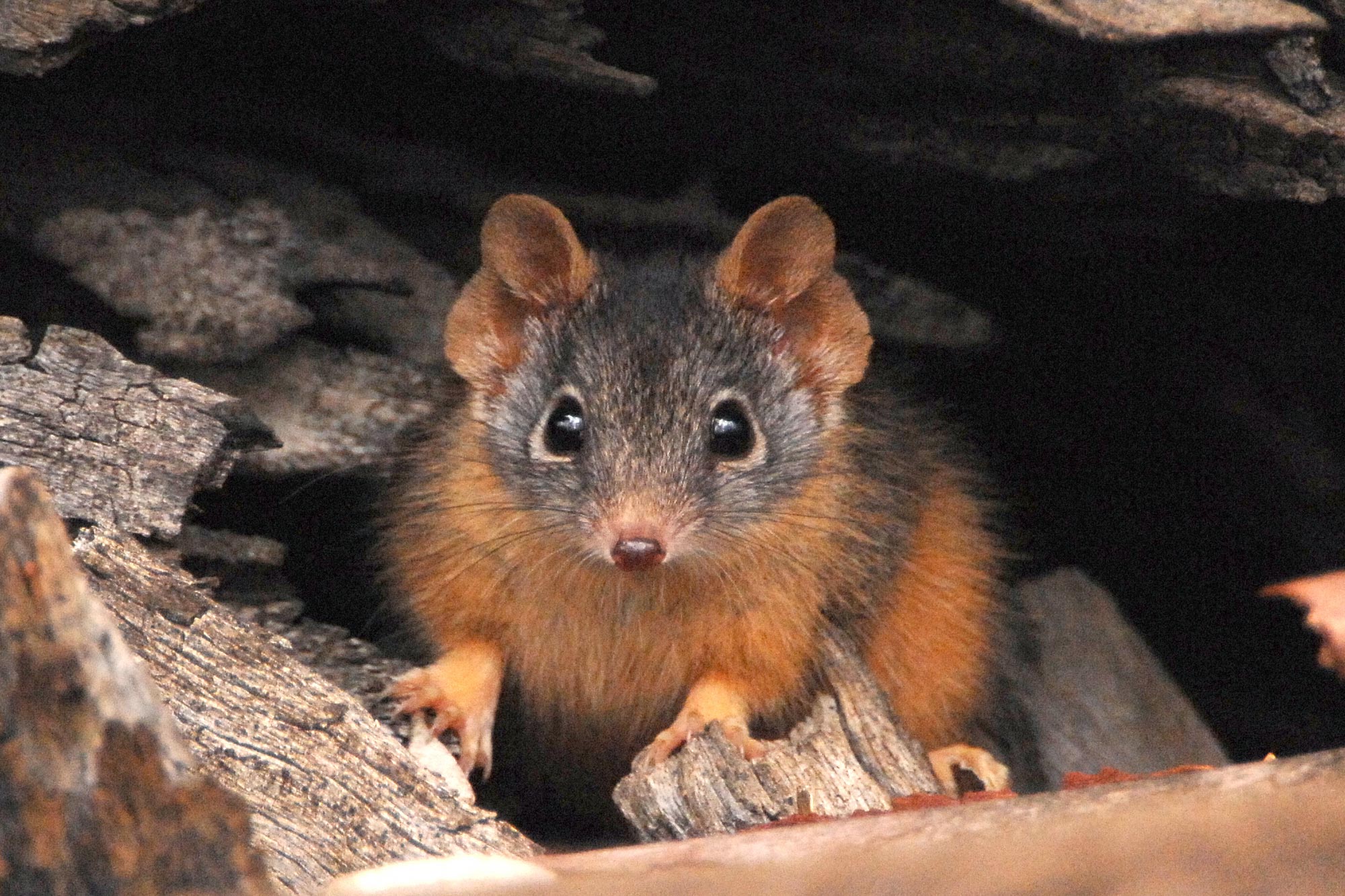
Temperature experiments found that a shrew-like species may not be able to adequately respond physiologically to prolonged heat waves.
Numerous questions remain unanswered as to how the planet’s species will respond to climate change. A new paper in the journal Frontiers in Physiology suggests that at least one species of marsupial “mice” may struggle to adapt to a warming world.
The study found that changes in ambient temperatures experienced during the development and growth of yellow-footed antechinus (Antechinus flavipes) can influence their behavioral and physiological traits.
“This has important implications in terms of how this species will respond to changes in the climate,” said lead author Dr. Clare Stawski, associate professor at Norwegian University of Science and Technology. “Individuals raised in warm conditions appear to have less phenotypic flexibility, suggesting that they may not be able to respond effectively to prolonged increases in temperature.”
Phenotypic flexibility refers to the ability of an organism to adjust to a new type of environmental stress. In this case, Stawski and colleague Dr. Fritz Geiser, a professor at the University of New England in Australia, wanted to see how antechinus might respond to temperature swings for varying time periods.
The experiment involved 19 juvenile antechinus, which were split into two groups and subjected to different temperature regimes ranging from 16.7 degrees Celsius (62.1 degrees Fahrenheit) to 24.7 degrees Celsius (76.5 degrees Fahrenheit). Infrared sensors attached to individual cage lids measured their activity and custom-made data loggers recorded their behavior.
Once the miniature marsupials reached adult age, the scientists measured metabolic rates, body mass and other physiological parameters across another set of experiments. These included putting them into temperature-controlled chambers where they experienced further variations in temperatures.
Overall, the yellow-footed antechinus were more active with lower metabolic rates at warmer temperatures. This is typical for many mammals shifting from winter to summer. However, the results from the experiments also suggested that while individuals can withstand short periods of warmer temperatures, they don’t have a particularly effective strategy to endure prolonged heat waves.
That’s not good news, considering that Australia’s national science agency, the Commonwealth Scientific and Industrial Research Organisation (CSIRO), projects “very high confidence” that hot days will become more frequent and hotter in the future.
Australia is home to at least ten species of insect-munching antechinus. While they superficially resemble rodents, these marsupial carnivores behave much differently. For example, their love lives: The animals engage in a short but frenzied period of mating, after which the males die from stress-induced immune system breakdown. Another difference is that antechinus can enter a state of decreased physiological activity, or torpor, in response to colder temperatures or other environmental factors.
Stawski noted that the results of the current study can likely be used to make broad assumptions about all antechinus species, as they share a similar ecology in terms of reproduction and habitats.
“Further, I do think our results could also be applicable to other small marsupials that employ daily torpor,” she said.
In previous studies, Stawski, Geiser, and their colleagues have investigated how small marsupials might respond to wildfires. They found that torpor can be a very effective means for surviving a wildfire, both during a fire if the animals are in a safe refuge and after the fire when resources are limited.
However, the recent fires that have enveloped vast regions of Australia is another story entirely. Some estimates claim the fires have killed more than one billion animals.
“Torpor during a fire is only beneficial if the refuge protects the torpid animal,” Stawski noted. “It is likely that many torpid animals perished during the current wildfires in Australia due to their severity. Further, as these wildfires are occurring during summer and heatwaves, many animals would be unable to effectively employ torpor due to the high temperatures.”
Reference: “Growing Up in a Changing Climate: How Temperature Affects the Development of Morphological, Behavioral and Physiological Traits of a Marsupial Mammal” by Clare Stawski and Fritz Geiser, 12 February 2020, Frontiers in Physiology.
DOI: 10.3389/fphys.2020.00049
Never miss a breakthrough: Join the SciTechDaily newsletter.
Follow us on Google and Google News.