
Close Menu
    Facebook X (Twitter) Instagram
    SciTechDaily
    • Biology
    • Chemistry
    • Earth
    • Health
    • Physics
    • Science
    • Space
    • Technology
    Facebook X (Twitter) Pinterest YouTube RSS
    SciTechDaily
    Home»Space»Watch What Happens to Astronauts on the Space Station During an Orbital Reboost
    Space

    Watch What Happens to Astronauts on the Space Station During an Orbital Reboost

    By Nancy Atkinson, Universe TodayMay 13, 2022No Comments4 Mins Read
    Facebook Twitter Pinterest Telegram LinkedIn WhatsApp Email Reddit
    Share
    Facebook Twitter LinkedIn Pinterest Telegram Email Reddit
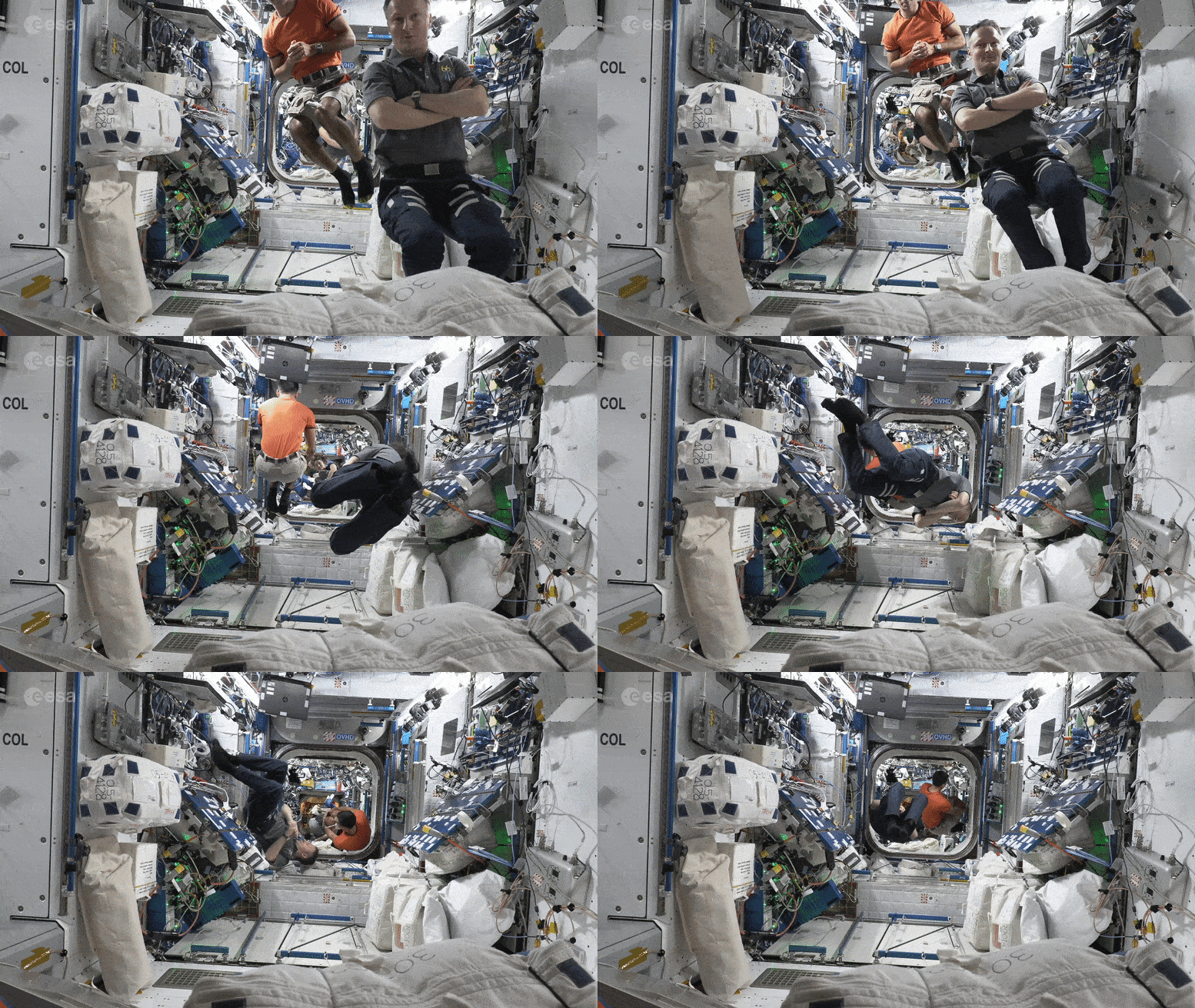
    Matthias Maurer Expedition 66 ISS Reboost
    Video clip of ESA astronaut Matthias Maurer and his Expedition 66 crewmates experiencing a reboost of the International Space Station. While the video at the bottom of this article is sped up by 8 times, this GIF is sped up by 32 times.

    This is reminiscent of going down a slide on the playground – and then immediately getting back in line to go down again. Except in space.

    Here’s what it looks like on board the International Space Station when thrusters fire for an orbital reboost. While it seems like the astronauts are moving inside the station, in reality it is the Space Station that is moving around them. And in actuality, the acceleration doesn’t happen this fast – the video is sped up eight times (GIF on top is sped up 32 times). But it still looks like fun!

    The data for the acceleration rate/change for this particular burn was not available, but for a previous burn with a duration of 12 minutes, 17 seconds had a Delta-V of 1.34 meters/second (4.4 feet/second).

    The crew seen here is Expedition 66, which includes NASA astronauts Raja Chari, Thomas Marshburn Kayla Barron, and Mark Vande Hei; ESA (European Space Agency) astronaut Matthias Maurer; Roscosmos cosmonauts Anton Shkaplerov and Pyotr Dubrov.
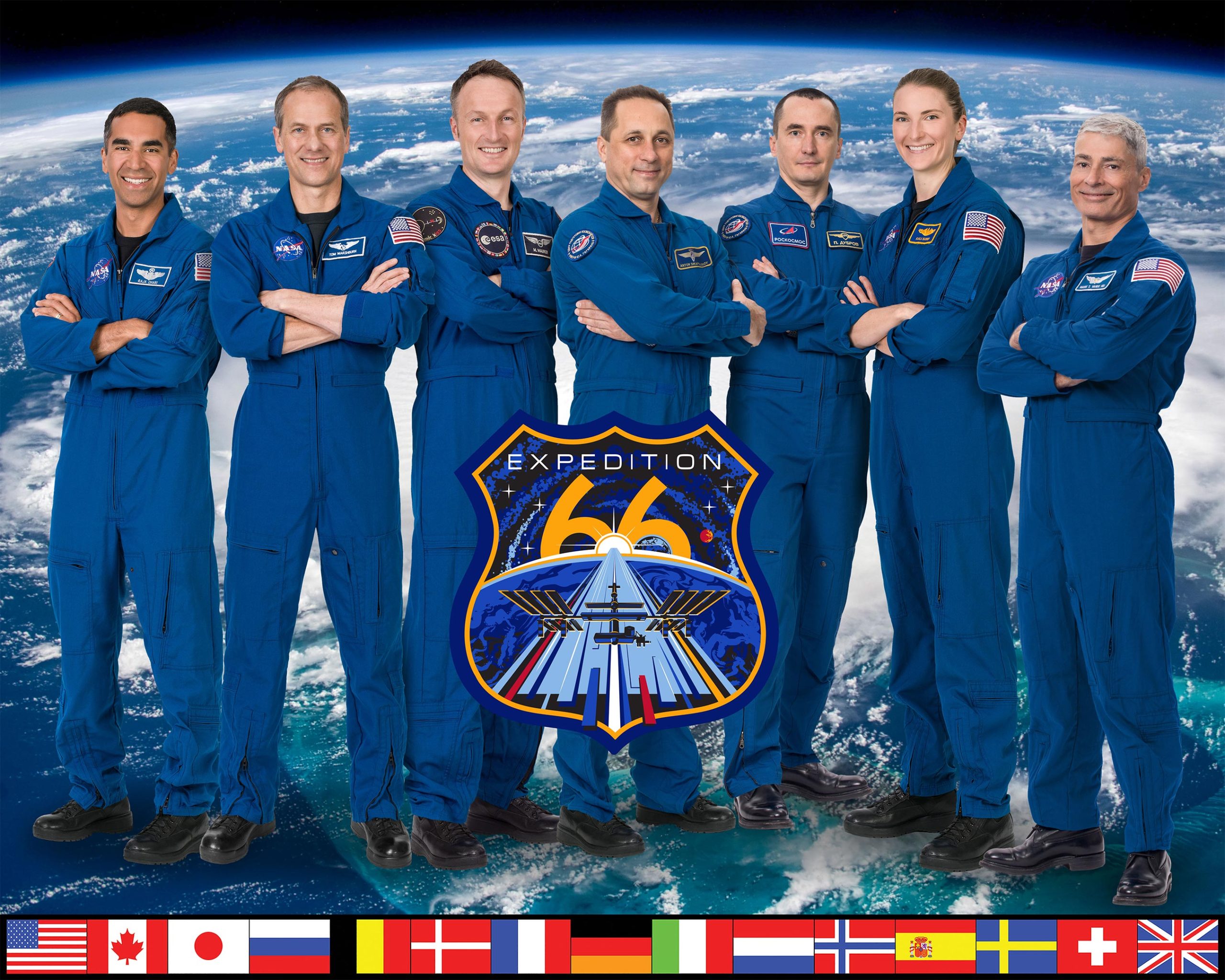
    ISS Expedition 66 Crew Official Portrait
    The official portrait of the seven-member Expedition 66 crew. From left are, NASA astronauts Raja Chari and Thomas Marshburn; ESA (European Space Agency) astronaut Matthias Maurer; Roscosmos cosmonauts Anton Shkaplerov and Pyotr Dubrov; and NASA astronauts Kayla Barron and Mark Vande Hei. Credit: NASA

    The astronauts are obviously enjoying the experience. It must feel somewhat similar to when a car or airplane accelerates – it feels like you are being pushed back into the seat, when in reality, the seat is being pushed into you by the acceleration of the vehicle.

    The ISS usually orbits about 400 km (250 miles) above the Earth. But the effects of atmospheric drag can cause the station to lose as much as 100 meters a day in altitude. Therefore, regular reboosts are required, usually about once a month. There’s no real schedule for when a reboost is done, as the density of Earth’s atmosphere at those altitudes constantly changes, depending on how much energy is being fed into it by the Sun. Therefore, the orbital decay rate is not consistent. But the ISS orbits decays faster than other satellites at a similar altitude due to its massive size and surface area.
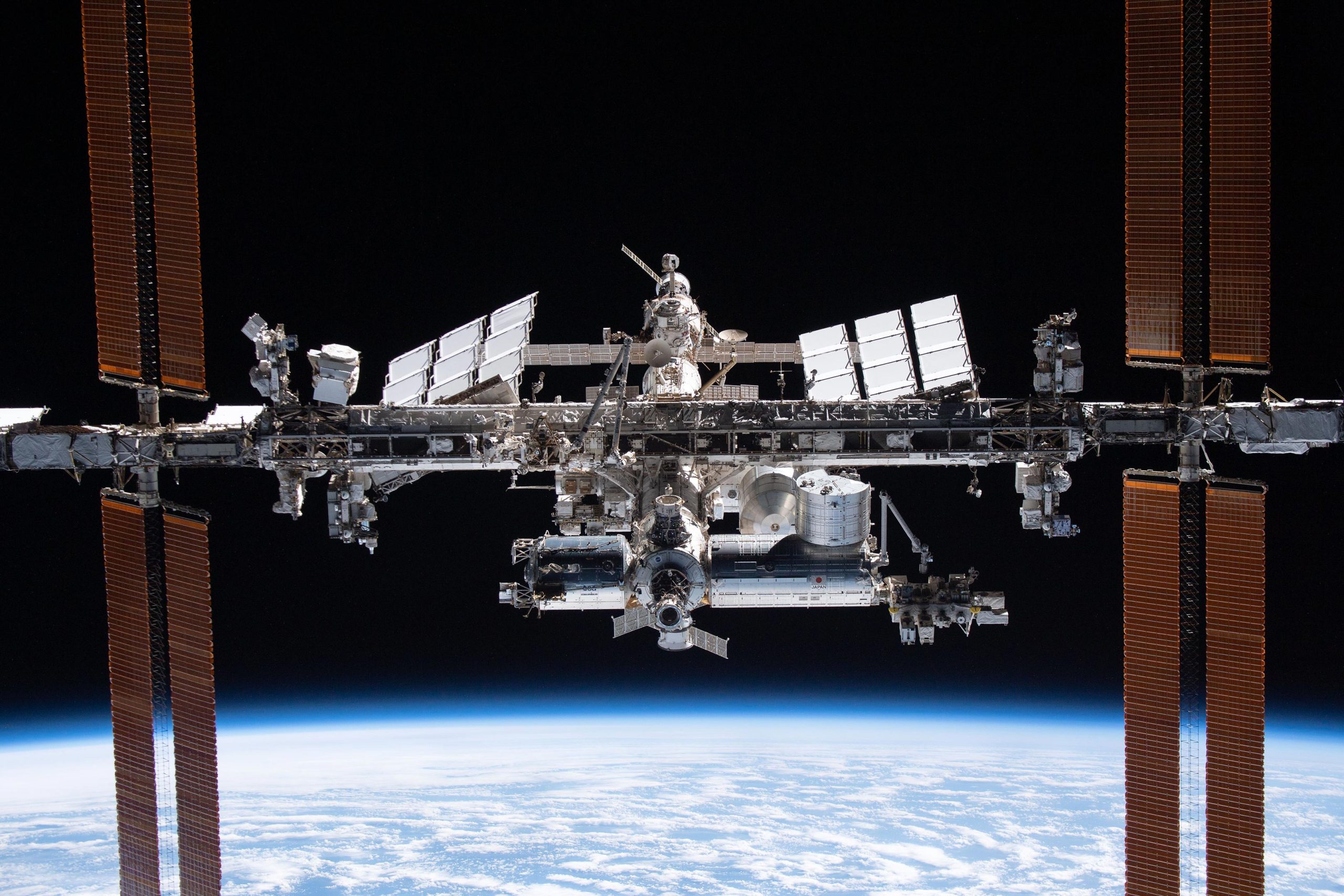
    International Space Station From SpaceX Crew Dragon Endeavour
    The International Space Station is pictured from the SpaceX Crew Dragon Endeavour during a fly around of the orbiting lab that took place following its undocking from the Harmony module’s space-facing port on November 8, 2021. The orbital complex was flying 263 miles above the Marshall Islands in the Pacific Ocean when this photograph was taken. Credit: NASA

    Reboosts are also done to optimize the ISS’s orbital position for future visiting vehicles arriving at the station. This particular reboost was performed in March 2022 using Russia’s ISS Progress 79 cargo craft. By firing its engines for several minutes, the station was put at the proper altitude for an arriving Soyuz for the new crew members that arrived in March.

    NASA says that all ISS propulsion is provided by the Russian Segment and Progress cargo spacecraft. Propulsion is used for station reboost, attitude control, debris avoidance maneuvers (as well as eventual deorbit operations). The U.S. gyroscopes provide day-to-day attitude control, i.e. controlling the orientation of the station. Russian thrusters are used for attitude control during dynamic events like spacecraft docking, and they provide attitude control recovery when the gyroscopes reach their control limits.

    Northrop Grumman’s Cygnus is the only U.S. commercial spacecraft currently available to provide reboosts, although it is still currently in testing mode. The first Cygnus capable of performing reboosts arrived at the ISS in February 2022.

    Adapted from an article originally published on Universe Today.

    Never miss a breakthrough: Join the SciTechDaily newsletter.
    Follow us on Google and Google News.

    Astronaut European Space Agency International Space Station
    Share. Facebook Twitter Pinterest LinkedIn Email Reddit

    Related Articles

    New Year’s Science in Space – For a Healthier Life

    Cosmic Pearl: The Jewel of Human Cooperation and Ingenuity Shines Brightly in This Incredible ISS Image

    Cosmic Kiss Mission Begins As Astronaut Matthias Maurer Arrives at the Space Station

    Change of Command: ESA Astronaut Thomas Pesquet Takes Over As Space Station Commander

    Auroraspectacular: Timelapse Video Made by Astronaut on International Space Station

    The First-Ever Space Olympics Aboard the ISS! [Video]

    100 Days of Space Science for ESA Astronaut Thomas Pesquet

    NASA Astronaut Gets a Good GRASP on Gravity

    Astronauts Chosen for NASA SpaceX Crew-3 Mission to Space Station

    Leave A Reply Cancel Reply

    • Facebook
    • Twitter
    • Pinterest
    • YouTube

    Don't Miss a Discovery

    Subscribe for the Latest in Science & Tech!

    Trending News

    Largest-Ever Study Finds Medicinal Cannabis Ineffective for Anxiety, Depression, PTSD

    250-Million-Year-Old Egg Solves One of Evolution’s Biggest Mysteries

    Living With Roommates Might Be Changing Your Gut Microbiome Without You Knowing

    Century-Old Cleaning Chemical Linked to 500% Increased Risk of Parkinson’s Disease

    What if Your Memories Never Happened? Physicists Take a New Look at the Boltzmann Brain Paradox

    One of the Universe’s Largest Stars May Be Getting Ready To Explode

    Scientists Discover Enzyme That Could Supercharge Ozempic-Like Weight Loss Drugs

    Popular Sweetener Linked to DNA Damage – “It’s Something You Should Not Be Eating”

    Follow SciTechDaily
    • Facebook
    • Twitter
    • YouTube
    • Pinterest
    • Newsletter
    • RSS
    SciTech News
    • Biology News
    • Chemistry News
    • Earth News
    • Health News
    • Physics News
    • Science News
    • Space News
    • Technology News
    Recent Posts
    • The Most Elusive Number in Physics Just Got Even More Mysterious
    • Scientists Uncover Hidden Trigger Behind Stem Cell Aging
    • Scientists Discover Coral Reefs Are Teeming With Previously Unknown Life
    • Scientists Find Way to Reverse Fatty Liver Disease Without Changing Diet
    • Could Humans Regrow Limbs? New Study Reveals Promising Genetic Pathway
    Copyright © 1998 - 2026 SciTechDaily. All Rights Reserved.
    • Science News
    • About
    • Contact
    • Editorial Board
    • Privacy Policy
    • Terms of Use

    Type above and press Enter to search. Press Esc to cancel.