
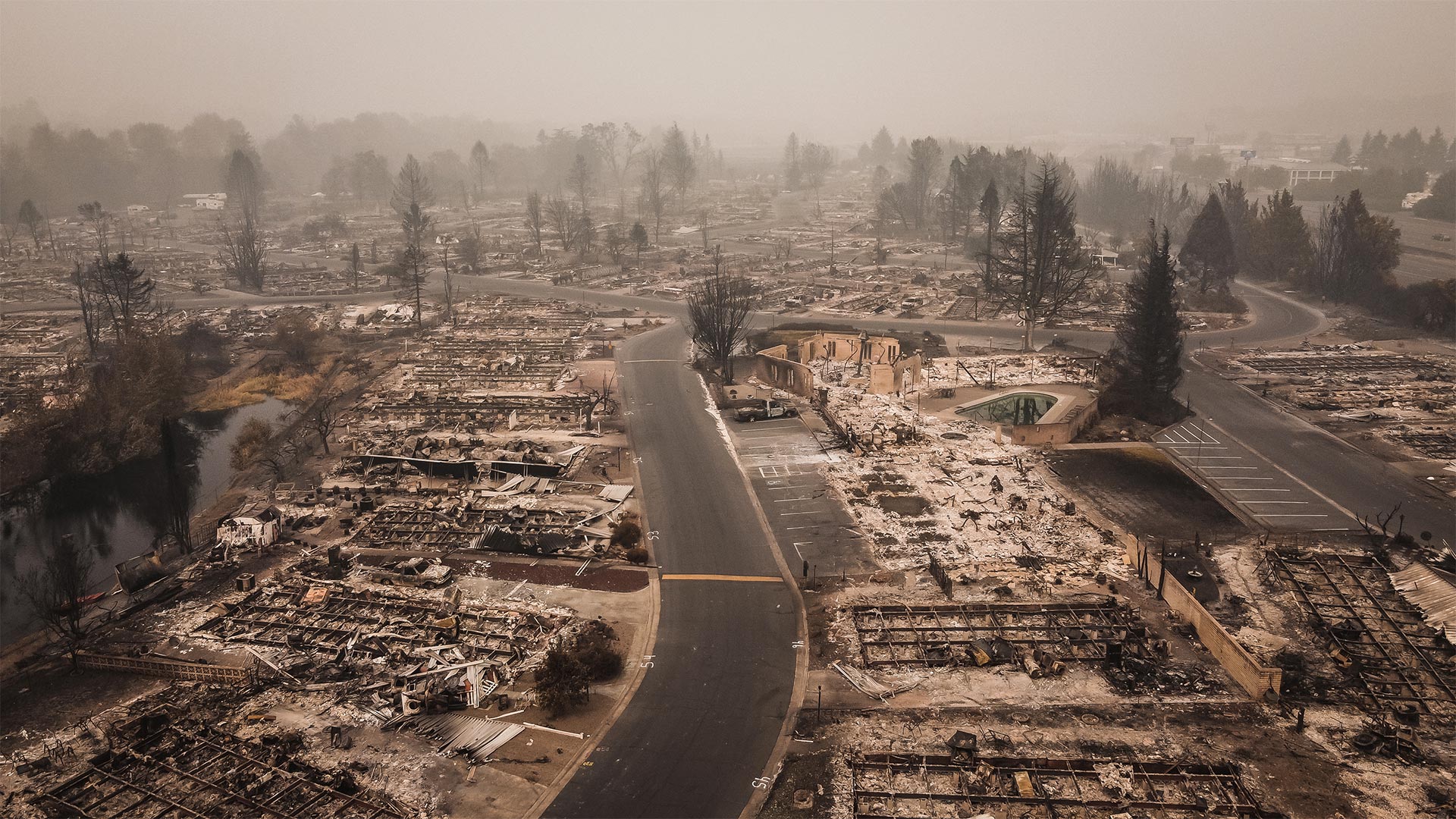
High-value homes in the western U.S. are more likely to face wildfire risks, impacting wealthy and vulnerable communities alike.
The top ten percent most valuable residences in the western United States are 70% more likely to be in high wildfire hazard areas than median-value properties, measured by county, according to new research published today (May 26, 2022) in Environmental Research Letters.
Researchers at Resources for the Future, an independent research institution in Washington, DC, used granular spatial data to study residential homes in the western United States and their relative risk for wildfire exposure. The team studied properties’ location, value, community characteristics, and proximity to previous wildfires.
Disproportionate Impact on High-Value and Vulnerable Communities
The study shows that hazard and impact from recent wildfires are disproportionately borne by high-income, white, and elderly communities, and by owners of high-value properties. However, the research also reveals disproportionate exposure to wildfire hazard among the lowest-value homes in the western United States, and among Native American communities.
According to the report, high-income, white, and elderly communities, as well as owners of high-value houses, bear a disproportionate share of the hazard and impact of recent wildfires. However, the study also finds a disproportionate vulnerability to wildfire risk among low-value residences in the western United States, as well as among Native American populations.
Exposure to wildfire hazard often goes hand-in-hand with access to benefits like scenic vistas, recreational opportunities, and proximity to nature. As a result, exposure to wildfires differs from other anthropogenic hazards such as pollution or waste facilities, which overwhelmingly affect poorer communities.
In recent years, the western United States has seen a dramatic increase in wildfires because of climate change and past forest and fire management practices. Policymakers are weighing options for how to distribute the costs of wildfire suppression and mitigation across households in both low- and high-hazard areas.
Socioeconomic Distribution of Wildfire Risks
“In spite of increased attention to the distribution of environmental and climate-related risks across socioeconomic groups, and its relevance to current wildfire-related policy debates, the distribution of wildfire hazard was previously not well understood,” comments Matthew Wibbenmeyer, lead author of the paper.
“Wildfire mitigation policies that deliver financial assistance to high-hazard areas could be subsidizing wealthy households. However, high wildfire hazard areas are quite heterogeneous, so addressing concerns associated with costs of increasing wildfire hazard may call for a geographically targeted approach focused on reducing the burden for the most vulnerable communities,” adds co-author Molly Robertson.
Reference: “The distributional incidence of wildfire hazard in the western United States” by Matthew Wibbenmeyer and Molly Robertson, 26 May 2022, Environmental Research Letters.
DOI: 10.1088/1748-9326/ac60d7
Never miss a breakthrough: Join the SciTechDaily newsletter.
Follow us on Google and Google News.
1 Comment
“Let wildfires keep burning because they are “natural”!” attitude is the real problem (including “prescribed-burns”)!!
(National parks management people also have the same attitude? Or private forest owners?)
Burning biomass alone by itself is massive waste, let alone burning massive numbers of valuable/rare/endangered trees/plants & not to mention massive numbers of animals keep burning to death! Not to mention a lot of property loss/damage!
The real solutions are full/proper forest management (like forest thinning & creating a grid of easy access roads in all forest areas)!
Let private companies harvest a lot of wood/biomass for any usage & for producing biodiesel/biofuel!
Use automated patrol drones to quickly detect any wildfires very early!!