
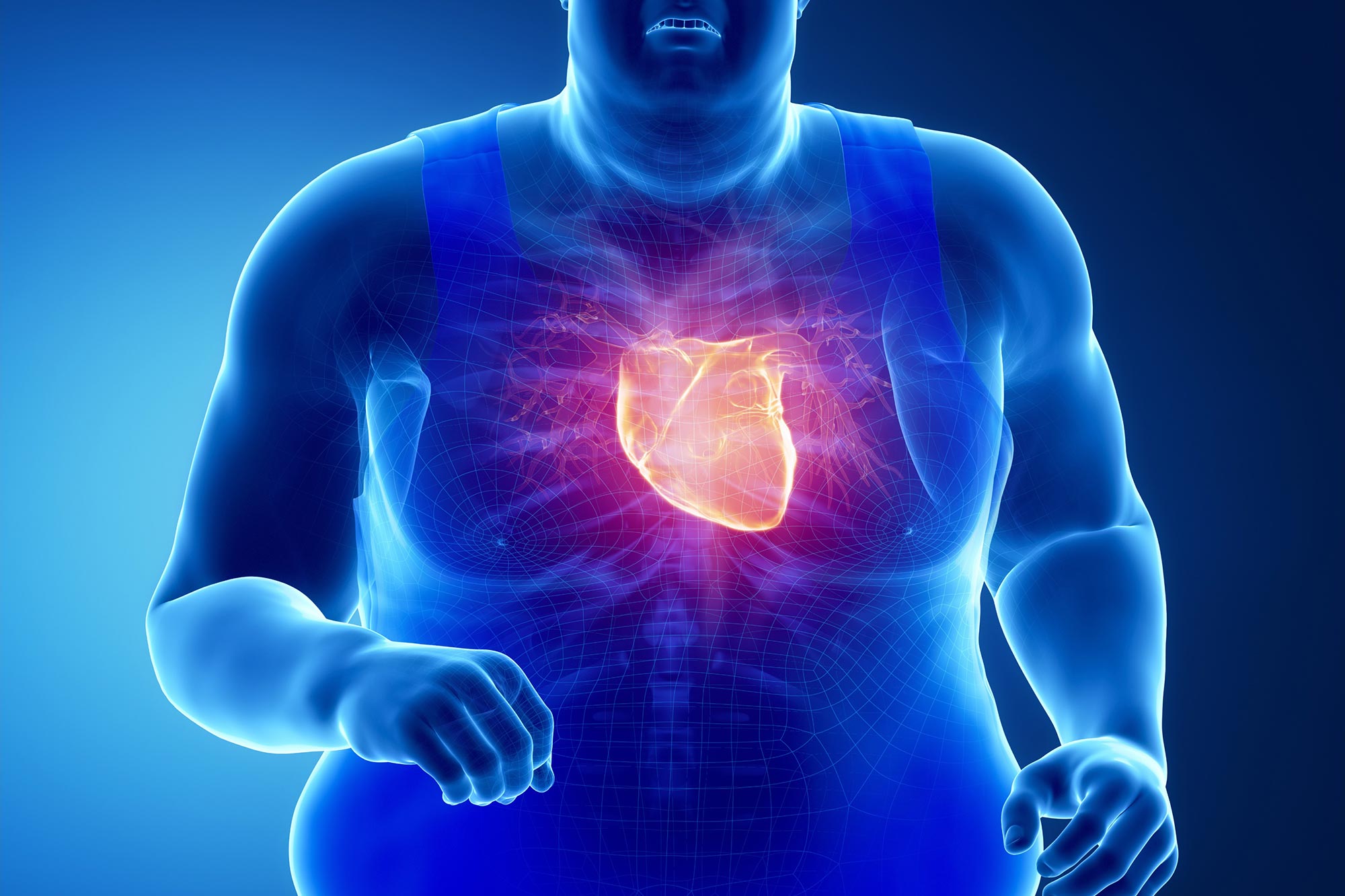
A new study suggests that widely used GLP-1 weight-loss drugs may do more than improve metabolic health: they could also protect the heart after a heart attack.
Doctors can often reopen the blocked artery that triggers a heart attack, but that is not always the end of the crisis inside the heart muscle.
A new study from the University of Bristol and University College London (UCL) suggests that GLP-1 weight-loss medicines, such as semaglutide (sold as Ozempic and Wegovy) and liraglutide (Victoza and Saxenda), could help protect vulnerable heart tissue in the hours and days after an attack by improving blood delivery through the heart’s tiniest vessels. The researchers report that this could lower the odds of severe complications linked to ongoing damage, a problem that affects up to half of patients.
The work, published in Nature Communications, adds a new possibility for heart attack care: using a class of drugs already common in clinics for metabolic diseases to target a stubborn circulation problem that standard emergency treatment does not always solve.
Large studies have already linked GLP-1 weight-loss drugs to a lower risk of major cardiac events, even when people have different health backgrounds and even when weight loss varies. The new research focuses on what might be happening at the microscopic level to produce those benefits.
Investigating the Cause of “No-Reflow”
The team zeroed in on “no-reflow,” a dangerous situation in which blood fails to fully return to parts of the heart muscle even after the main coronary artery has been cleared. This is an especially frustrating complication because it can occur after a procedure that otherwise looks successful on angiography.
Their earlier work pointed to pericytes, small contractile cells that wrap around capillaries, as key culprits. During ischemia, when the heart is starved of oxygen-rich blood, these cells can clamp down and narrow the capillaries, creating bottlenecks that persist after the artery is reopened.
Dr. Svetlana Mastitskaya, Senior Lecturer in Cardiovascular Regenerative Medicine at Bristol Medical School: Translational Health Sciences (THS) and the study’s lead author, explained: “In nearly half of all heart attack patients, tiny blood vessels within the heart muscle remain narrowed, even after the main artery is cleared during emergency medical treatment. This results in a complication known as ‘no-reflow,’ where blood is unable to reach certain parts of the heart tissue.
“Our previous research has shown that this narrowing of blood vessels contributes significantly to ‘no-reflow,’ a complication that increases the risk of death or hospital admission for heart failure within a year of a heart attack. But our latest findings are surprising in that we have found GLP-1 drugs may prevent this problem.”
How GLP-1 Drugs Improve Blood Flow
In animal models, the researchers found that GLP-1 drugs appear to loosen this microvascular choke point. The drugs activated potassium channels, which relaxed pericytes and allowed constricted vessels to widen. With the capillaries more open, blood flow improved in the heart after a heart attack, reducing the risk of additional injury.
This mechanism matters because it targets a part of the problem that current treatments struggle to address. Restoring large-vessel flow is essential, but “no-reflow” is largely a small-vessel issue, and it can leave pockets of heart muscle undersupplied even when the main blockage is gone.
Professor David Attwell, Jodrell Professor of Physiology at UCL, and the study’s co-lead, added: “With an increasing number of similar GLP-1 drugs now being used in clinical practice, for conditions ranging from type 2 diabetes and obesity to kidney disease, our findings highlight the potential for these existing drugs to be repurposed to treat the risk of ‘no-reflow’ in heart attack patients, offering a potentially life-saving solution.”
Reference: “GLP-1 activates KATP channels in coronary pericytes as the effector of brain-gut-heart signalling mediating cardioprotection” by Svetlana Mastitskaya, Felipe Santos Simões de Freitas, Lowri E. Evans and David Attwell, 14 February 2026, Nature Communications.
DOI: 10.1038/s41467-026-69555-1
Dr. Svetlana Mastitskaya is funded by the British Heart Foundation.
Never miss a breakthrough: Join the SciTechDaily newsletter.
Follow us on Google and Google News.
2 Comments
Wow. Just the other day I was reading how these drugs are also proving beneficial in helping end all sorts of addictions, including smoking.
Many MD’s keep trying to convince everyone to get on Statins but perhaps what everyone should be on from childhood forward are GLP-1 drugs!
You can get the same heart health benefit from diet and exercise without the risk of putting a new drug in your body with possible unknown, long term side effects. Drug company’s are making billions on these new drugs!