
Close Menu
    Facebook X (Twitter) Instagram
    SciTechDaily
    • Biology
    • Chemistry
    • Earth
    • Health
    • Physics
    • Science
    • Space
    • Technology
    Facebook X (Twitter) Pinterest YouTube RSS
    SciTechDaily
    Home»Biology»What Exactly Are Coronaviruses Anyway?
    Biology

    What Exactly Are Coronaviruses Anyway?

    By National Institute of Allergy and Infectious DiseasesApril 26, 2020No Comments3 Mins Read
    Facebook Twitter Pinterest Telegram LinkedIn WhatsApp Email Reddit
    Share
    Facebook Twitter LinkedIn Pinterest Telegram Email Reddit
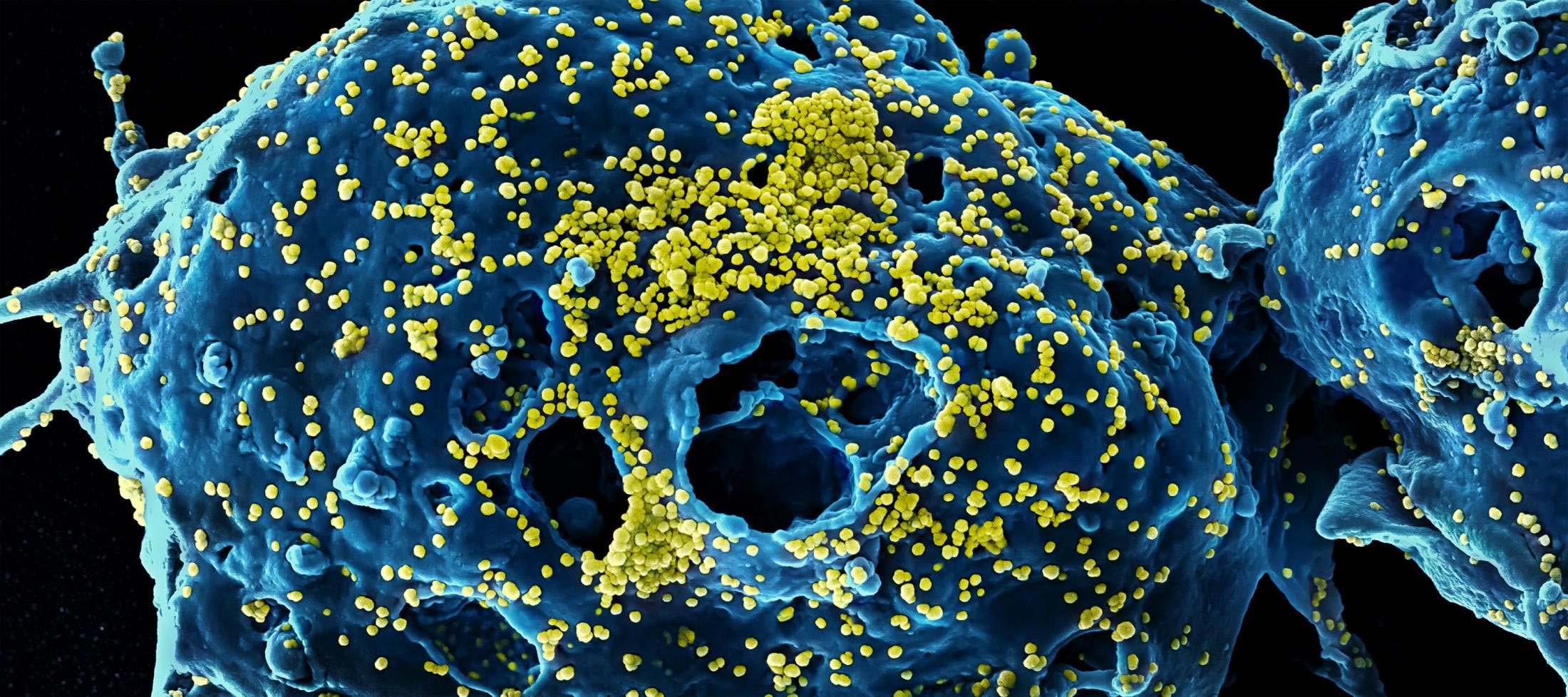
    MERS Coronavirus MERS-CoV
    MERS Coronavirus MERS-CoV. Credit: NIAID-RML

    Coronaviruses are a large family of viruses that usually cause mild to moderate upper-respiratory tract illnesses, like the common cold. However, three new coronaviruses have emerged from animal reservoirs over the past two decades to cause serious and widespread illness and death.

    There are hundreds of coronaviruses, most of which circulate among such animals as pigs, camels, bats, and cats. Sometimes those viruses jump to humans—called a spillover event—and can cause disease. Four of the seven known coronaviruses that sicken people cause only mild to moderate disease. Three can cause more serious, even fatal, disease. SARS coronavirus (SARS-CoV) emerged in November 2002 and caused severe acute respiratory syndrome (SARS). That virus disappeared by 2004. Middle East respiratory syndrome (MERS) is caused by the MERS coronavirus (MERS-CoV). Transmitted from an animal reservoir in camels, MERS was identified in September 2012 and continues to cause sporadic and localized outbreaks. The third novel coronavirus to emerge in this century is called SARS-CoV-2. It causes coronavirus disease 2019 (COVID-19), which emerged from China in December 2019 and was declared a global pandemic by the World Health Organization on March 11, 2020.

    Building on previous research on SARS and MERS, NIAID scientists and grantees are well positioned to rapidly develop COVID-19 diagnostics, therapeutics and vaccines. These projects include conducting basic research to understand how the virus infects cells and causes disease, and what interventions can prevent and stop the spread of disease.

    In fact, within two weeks of the discovery of COVID-19, NIAID researchers had determined how the virus enters cells. And within two months sites had begun Phase 1 trials of a treatment (remdesivir) and a vaccine (mRNA-1273).

    Why Are Coronaviruses a Priority for NIAID?

    After SARS-CoV emerged from China in November 2002 it spread to 26 countries within a few months, largely by infected passengers who traveled. More than 8,000 people fell ill and 774 died. SARS drew the collective focus of researchers throughout the world. The disease disappeared in 2004, likely due to intensive contact tracing and case isolation measures. In September 2012, a new coronavirus was identified in the Middle East causing an illness similar to SARS. Again, researchers at NIAID and across the globe initiated studies to understand MERS-CoV and how to stop it. Research efforts from those two outbreaks—including development of a DNA vaccine candidate for SARS by NIAID’s Vaccine Research Center—have prepared scientists to quickly assess the severity and transmission potential of SARS-CoV-2, and to develop countermeasures.

    How Is NIAID Addressing This Critical Topic?

    When MERS emerged in 2012 and COVID-19 was identified in 2020, NIAID intramural and extramural scientists mobilized quickly to study the viruses, efforts which continue today. Key areas of investigation include basic research on their origins, how they cause disease, and developing animal study models, new treatments, and vaccines.

    Never miss a breakthrough: Join the SciTechDaily newsletter.
    Follow us on Google and Google News.

    COVID-19 National Institute of Allergy and Infectious Diseases Public Health Virology
    Share. Facebook Twitter Pinterest LinkedIn Email Reddit

    Related Articles

    Update on SARS-CoV-2 Variants: Genetic Mutations in the Virus That Causes COVID-19

    New NIH Research Aims To Identify Promising COVID-19 Treatments for Larger Clinical Trials

    Clinical Test Results Released for Antiviral Remdesivir Treatment of COVID-19

    New Coronavirus That Causes COVID-19 Is Stable for Hours on Surfaces

    COVID-19: A Potent Reminder of the Challenge of Emerging Infectious Diseases

    Clinical Trial of Antiviral Remdesivir to Treat COVID-19 Underway

    Three Cases of Novel Coronavirus Reported in France – Virus Recently Emerged in China

    Research Underway to Address Threat of Novel Coronavirus That Recently Emerged in China

    “Snake Pneumonia” – Coronavirus Outbreak in China Traced to Snakes by Genetic Analysis

    Leave A Reply Cancel Reply

    • Facebook
    • Twitter
    • Pinterest
    • YouTube

    Don't Miss a Discovery

    Subscribe for the Latest in Science & Tech!

    Trending News

    New “Nanozyme Hypothesis” Could Rewrite the Story of Life’s Origins

    Anatomy Isn’t Finished: The Human Body Still Holds Secrets

    “Pretty Close to Home”: The Hidden Earthquake Threat Beneath Seattle

    The Surprising Reason You Might Want To Sleep Without a Pillow

    Scientists Say This Natural Hormone Reverses Obesity by Targeting the Brain

    35-Million-Year-Old Mystery: Strange Arachnid Discovered Preserved in Amber

    Is AI Really Just a Tool? It Could Be Altering How You See Reality

    JWST Reveals a “Forbidden” Planet With a Baffling Composition

    Follow SciTechDaily
    • Facebook
    • Twitter
    • YouTube
    • Pinterest
    • Newsletter
    • RSS
    SciTech News
    • Biology News
    • Chemistry News
    • Earth News
    • Health News
    • Physics News
    • Science News
    • Space News
    • Technology News
    Recent Posts
    • Saunas May Do More Than Raise Body Temperature – They Activate Your Immune System
    • Exercise in a Pill? Metformin Shows Surprising Effects in Cancer Patients
    • Saturn’s Magnetic Shield Isn’t What Scientists Expected
    • Hidden Oceans of Magma Could Be Protecting Alien Life
    • After Decades of Searching, Astronomers Finally Track Down the Universe’s Missing Hydrogen
    Copyright © 1998 - 2026 SciTechDaily. All Rights Reserved.
    • Science News
    • About
    • Contact
    • Editorial Board
    • Privacy Policy
    • Terms of Use

    Type above and press Enter to search. Press Esc to cancel.