
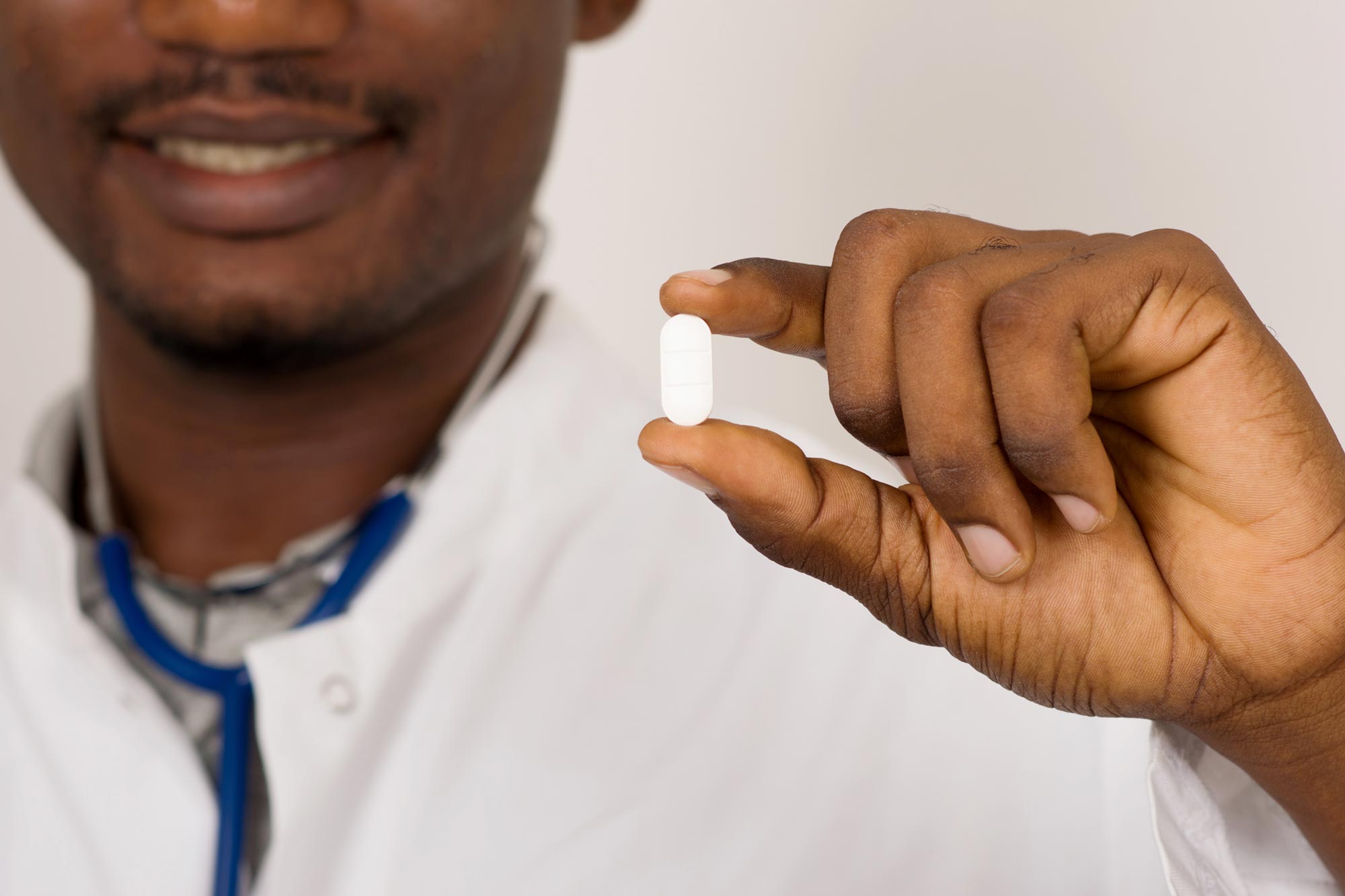
An established drug shows unexpected promise against long COVID fatigue.
A widely used antidepressant may offer unexpected relief for one of long COVID’s most stubborn symptoms. In a new clinical trial, researchers found that fluvoxamine can significantly reduce persistent fatigue, a condition that continues to disrupt daily life for millions worldwide.
The study, led in part by McMaster University, adds to growing efforts to repurpose existing medications for long COVID, a complex condition that still lacks clearly effective treatments. Because fluvoxamine is already approved, inexpensive, and broadly available, the findings could move quickly from research into real-world care.
The findings were published in the Annals of Internal Medicine.
Fatigue is not just a lingering inconvenience. For many patients, it is the defining feature of long COVID, often described as overwhelming exhaustion that does not improve with rest. Scientists believe it may be linked to ongoing inflammation, immune system disruption, or changes in brain signaling, though no single cause has been confirmed.
“This is an important step forward for patients who have been desperate for evidence‑based options,” says Edward Mills, senior author, professor in McMaster’s Department of Health Research Methods, Evidence, and Impact, and co‑principal investigator of the trial. “Fluvoxamine showed consistent and meaningful benefits, and because it’s already widely used and well understood, it has clear potential for clinical use.”
International Collaboration and Trial Design
The study involved researchers from Canada, Brazil, and the United States, with clinical sites in Belo Horizonte and throughout Minas Gerais, Brazil. The REVIVE-TOGETHER trial included collaborators from McMaster University, the University of British Columbia, Stanford University, the University of Pittsburgh, Duke University, Georgetown University, and several Brazilian institutions.
Researchers enrolled 399 adults in Brazil who continued to experience fatigue for at least 90 days after a confirmed SARS-CoV-2 infection. Participants were randomly assigned to receive fluvoxamine (sold under the brand name Luvox), metformin (a common diabetes medication), or a placebo for 60 days.
“We wanted to test whether two existing, widely available, and affordable medications could help. Both had biological reasons to think they might work against long COVID fatigue, but neither had been rigorously tested for this purpose in a proper clinical trial,” says Mills.
The results showed that fluvoxamine reduced fatigue more than placebo, with a 99 percent probability that the drug performed better than the placebo. It also improved overall quality of life across several measures.
Earlier studies found that metformin can lower the risk of developing long COVID when taken during the acute phase of infection. However, this trial found no meaningful benefit for treating fatigue in people who already have long COVID.
Innovative Trial Methods
The researchers used a Bayesian adaptive trial design, which allowed them to stop certain treatment arms early once clear results emerged – an approach that speeds up evidence generation while maintaining scientific rigor.
“The trial used a sophisticated adaptive design that allowed it to reach conclusions more efficiently than traditional trials, stopping early when the evidence was clear enough – a design innovation as important as the findings themselves,” says Gilmar Reis, lead author and researcher with Cardresearch, a Brazilian clinical research center based in Belo Horizonte. Reis is also a part-time associate professor at McMaster.
Long COVID remains a major global health issue, affecting an estimated 65 million people worldwide. Most medical guidelines still focus on supportive care, such as pacing and symptom management, because of the lack of proven treatments. Researchers note that while fluvoxamine appears promising for fatigue, long COVID involves many symptoms and biological pathways. More research is needed to determine who benefits most, how the drug works, and how it might be used alongside other treatments.
“This trial gives clinicians their first strong evidence for a medication that helps reduce long COVID fatigue. Patients want something they can try today – and this finding brings us closer to that reality,” says Jamie Forrest, corresponding author and postdoctoral research fellow at the University of British Columbia.
Reference: “The Effect of Fluvoxamine and Metformin for Fatigue in Patients With Long COVID” by Gilmar Reis, Eduardo Augusto dos Santos Moreira Silva, Daniela Carla Medeiros Silva, Lehana Thabane, Thiago Santiago Ferreira, Luiza Lanna França Reis, Ana Paula Figueiredo Guimaraes Almeida, Marcela Menezes Amaral, Leonardo Cançado Monteiro Savassi, Vitoria Helena de Souza Campos, Maria Izabel Campos Simplicio, Luciene Barra Ribeiro, Thalyne de Souza Medeiros, Thais Campos Siqueira, Taynara Silva Vieira, Nayara Drumond Rausse, Tereza Cristina Garofolo, Eliane Carreiro Fagundes Silva, Ofir Harari, Gennaro D’Urso, Jamie I. Forrest, Jay Park, Jean B. Nachega, Christopher Lindsell, Jeffrey S. Glenn, Kristian Thorlund, Mark Dybul, Edward J. Mills and REVIVE Investigators, 30 March 2026, Annals of Internal Medicine.
DOI: 10.7326/ANNALS-25-03959
Never miss a breakthrough: Join the SciTechDaily newsletter.
Follow us on Google and Google News.
1 Comment
The benefits of antidepressants against covid have been reported even back then, in the early days of the pandemic. But rarely anyone had picked up on that, because there was money to be made on “vaccines”.