
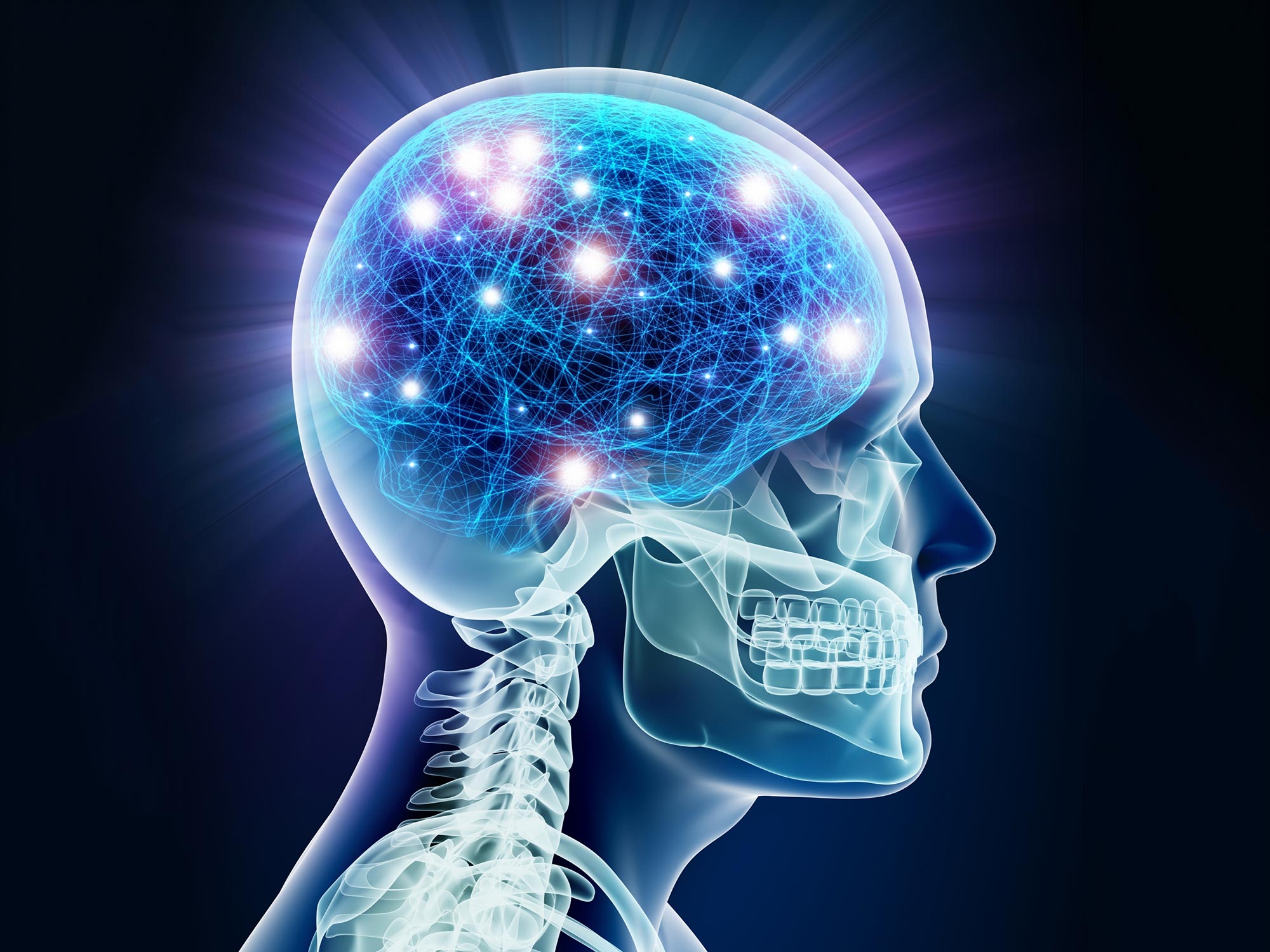
Brain patterns vary between women and men.
A recent study conducted by researchers at Stanford Medicine has unveiled an artificial intelligence model capable of identifying with over 90% accuracy whether brain activity scans originate from a female or male.
The findings, recently published in the journal Proceedings of the National Academy of Sciences, help resolve a long-term controversy about whether reliable sex differences exist in the human brain and suggest that understanding these differences may be critical to addressing neuropsychiatric conditions that affect women and men differently.
“A key motivation for this study is that sex plays a crucial role in human brain development, in aging, and in the manifestation of psychiatric and neurological disorders,” said Vinod Menon, Ph.D., professor of psychiatry and behavioral sciences and director of the Stanford Cognitive and Systems Neuroscience Laboratory. “Identifying consistent and replicable sex differences in the healthy adult brain is a critical step toward a deeper understanding of sex-specific vulnerabilities in psychiatric and neurological disorders.”
Menon is the study’s senior author. The lead authors are senior research scientist Srikanth Ryali, PhD, and academic staff researcher Yuan Zhang, PhD.
“Hotspots” that most helped the model distinguish male brains from female ones include the default mode network, a brain system that helps us process self-referential information, and the striatum and limbic network, which are involved in learning and how we respond to rewards.
The investigators noted that this work does not weigh in on whether sex-related differences arise early in life or may be driven by hormonal differences or the different societal circumstances that men and women may be more likely to encounter.
Uncovering brain differences
The extent to which a person’s sex affects how their brain is organized and operates has long been a point of dispute among scientists. While we know the sex chromosomes we are born with help determine the cocktail of hormones our brains are exposed to — particularly during early development, puberty and aging — researchers have long struggled to connect sex to concrete differences in the human brain. Brain structures tend to look much the same in men and women, and previous research examining how brain regions work together has also largely failed to turn up consistent brain indicators of sex.
In their current study, Menon and his team took advantage of recent advances in artificial intelligence, as well as access to multiple large datasets, to pursue a more powerful analysis than has previously been employed. First, they created a deep neural network model, which learns to classify brain imaging data: As the researchers showed brain scans to the model and told it that it was looking at a male or female brain, the model started to “notice” what subtle patterns could help it tell the difference.
This model demonstrated superior performance compared with those in previous studies, in part because it used a deep neural network that analyzes dynamic MRI scans. This approach captures the intricate interplay among different brain regions. When the researchers tested the model on around 1,500 brain scans, it could almost always tell if the scan came from a woman or a man.
The model’s success suggests that detectable sex differences do exist in the brain but just haven’t been picked up reliably before. The fact that it worked so well in different datasets, including brain scans from multiple sites in the U.S. and Europe, make the findings especially convincing as it controls for many confounds that can plague studies of this kind.
“This is a very strong piece of evidence that sex is a robust determinant of human brain organization,” Menon said.
Making predictions
Until recently, a model like the one Menon’s team employed would help researchers sort brains into different groups but wouldn’t provide information about how the sorting happened. Today, however, researchers have access to a tool called “explainable AI,” which can sift through vast amounts of data to explain how a model’s decisions are made.
Using explainable AI, Menon and his team identified the brain networks that were most important to the model’s judgment of whether a brain scan came from a man or a woman. They found the model was most often looking to the default mode network, striatum, and the limbic network to make the call.
The team then wondered if they could create another model that could predict how well participants would do on certain cognitive tasks based on functional brain features that differ between women and men. They developed sex-specific models of cognitive abilities: One model effectively predicted cognitive performance in men but not women, and another in women but not men. The findings indicate that functional brain characteristics varying between sexes have significant behavioral implications.
“These models worked really well because we successfully separated brain patterns between sexes,” Menon said. “That tells me that overlooking sex differences in brain organization could lead us to miss key factors underlying neuropsychiatric disorders.”
While the team applied their deep neural network model to questions about sex differences, Menon says the model can be applied to answer questions regarding how just about any aspect of brain connectivity might relate to any kind of cognitive ability or behavior. He and his team plan to make their model publicly available for any researcher to use.
“Our AI models have very broad applicability,” Menon said. “A researcher could use our models to look for brain differences linked to learning impairments or social functioning differences, for instance — aspects we are keen to understand better to aid individuals in adapting to and surmounting these challenges.”
Reference: “Deep learning models reveal replicable, generalizable, and behaviorally relevant sex differences in human functional brain organization” by Srikanth Ryali, Yuan Zhang, Carlo de los Angeles, Kaustubh Supekar and Vinod Menon, 20 February 2024, Proceedings of the National Academy of Sciences.
DOI: 10.1073/pnas.2310012121
The research was sponsored by the National Institutes of Health (grants MH084164, EB022907, MH121069, K25HD074652, and AG072114), the Transdisciplinary Initiative, the Uytengsu-Hamilton 22q11 Programs, the Stanford Maternal and Child Health Research Institute, and the NARSAD Young Investigator Award.
Never miss a breakthrough: Join the SciTechDaily newsletter.
Follow us on Google and Google News.
1 Comment
Just ask a woman’s husband, or a man’s wife, to learn about the differences……….