
Experiment Results May Lead to a New Form of Treatment for Overeating
Research from Aarhus University has found that repeated exposure to images of the same food can lead to a sense of satiety and reduce portion sizes, potentially offering a new avenue for weight-loss strategies and reevaluating the impact of food imagery in digital advertising.
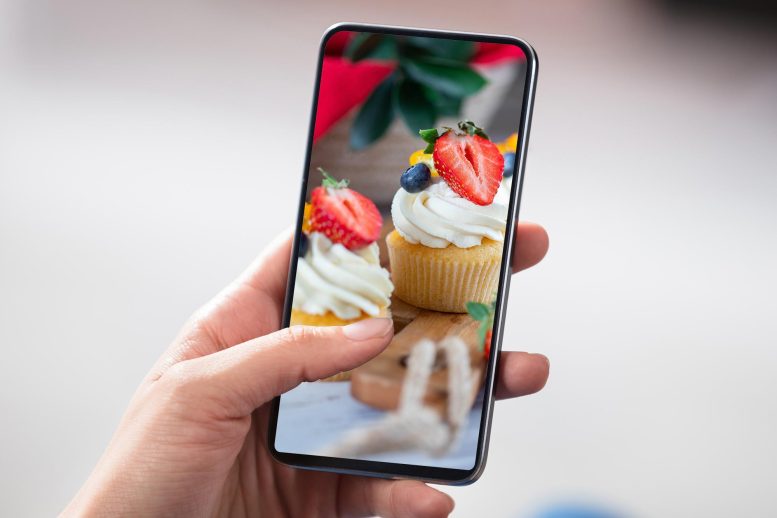
The internet is overflowing with pictures of food: On news sites, social media, and the banner ads that pop up everywhere.
Many of the food images are uploaded to sell specific foods. The idea is that the images on Facebook or Instagram will make us yearn for a McDonald’s burger, for example. In other words, the image awakens our hunger.
New research from Aarhus University now shows that the images can actually have the opposite effect. At least if we see pictures of the same product repeatedly.
A number of experiments reveal that we can get a sense of satiety if we see the same image more than 30 times. Tjark Andersen, who recently defended his PhD at Department of Food Science at Aarhus University, explains more.
“In our experiments, we showed that when the participants saw the same food picture 30 times, they felt more satiated than before they had seen the picture. The participants who were shown the picture many times also chose a smaller portion than those who had only seen the picture three times, when we subsequently asked about the size of portion they wanted,” he says.
Tricking Your Brain Into Feeling Full
It may sound strange that the participants felt full without actually eating anything. But this is really quite natural, explains Tjark Andersen. How we think about food has a large influence on our appetite.
“Your appetite is more closely linked with your cognitive perception than most of us think. How we think about our food is very important,” he says, and continues:
“Studies have shown that if you make people aware of different colors of Jelly Beans, even if they have eaten all they can in red Jelly Beans, will still want the yellow ones. Even if both colors taste completely the same.”
Within brain research, these findings are explained with the so-called grounded cognition theory. For example, if you imagine putting your teeth in a juicy apple, the same areas of the brain are stimulated as if you actually take a bite of an apple.
“You will receive a physiological response to something you have only thought about. That’s why we can feel fully satisfied without eating anything,” he says.
A Large Online Experiment
Tjark Andersen and his colleagues are not the first to discover that we can get feel full by looking at pictures of food. Other research groups have previously shown this.
The new research from Aarhus University is that they examined the number of repetitions needed – and whether variation in the images removes the sense of satiety.
“We know from previous studies that images of different types of food don’t have the same effect on satiety. That’s why you can really feel full after the main course but still have room for dessert. Sweet things are a completely different type of food,” he says.
To investigate whether variation in food completely removes the sense of satiety, Tjark Andersen and his colleagues designed a number of online experiments. They ended up getting more than 1,000 people through their digital experiments.
First, they showed a picture of just orange M&Ms. Some participants were shown the picture three times, others 30 times. The group that saw most pictures the M&M felt most satiated afterward, explains Tjark Andersen.
“They had to answer how many M&Ms between 1 and 10 they wanted. The group which had seen 30 images of orange chocolate buttons, chose a smaller amount than the other two groups.”
Afterward, they repeated the experiment. This time with M&Ms in different colors. The colors did not change the result.
Finally, they replaced the M&Ms with Skittles. Unlike M&Ms, Skittles taste different depending on the color.
“If the color didn’t play a role, it must be the imagined taste. But we found no major effect here either. This suggests that more parameters than just color and flavor have to change before we can make an effect on satiety,” he explains.
Could Be Used as a Weight-Loss Strategy
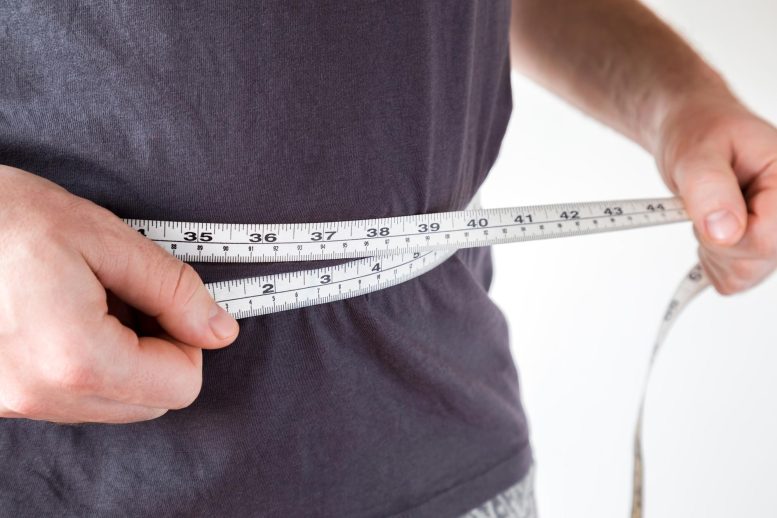
Since 1975, the number of overweight people worldwide has tripled. According to the WHO, obesity is one of the biggest health challenges facing humans. And the reason why we become too fat is that we eat too much food and too much unhealthy food and we do not take enough exercise.
This is where Tjark Andersen’s results come into play. Perhaps they can be applied as a method to control appetite, he says.
“Think if you developed an app based on a Google search. Let’s say you wanted pizza. You open the app. Choose pizza – and it shows a lot of photos of pizza while you imagine eating it. In this way, you could get a sense of satiety and maybe just stop wanting pizza.”
Perhaps his results can best be used to ensure that you don’t start a meal. The participants in the study only chose slightly fewer Skittles or M&Ms, corresponding to less than 50 calories.
“You won’t save many calories unless you completely refrain from starting a meal. But perhaps the method can be used for this as well. It’d be interesting to investigate,” he says.
Social Media Are Overflowing With Food
Tjark Andersen and a number of other researchers are studying how food advertisements on social media affect us, because we are constantly being confronted with delicious food.
A few years ago, an American research group tried to find out how many advertisements with food we encounter on average when we are on social media. The researchers monitored a number of young people and mapped out the content they met.
On average, the young people saw 6.1 of food-related posts in 12 hours. The vast majority of the posts were pictures of food – and more than a third were about desserts or other sweet food.
The internet and, in particular, social media can be a contributory factor in our becoming increasingly overweight. But it may also be the solution.
Only the future will tell.
Reference: “Imagined eating – An investigation of priming and sensory-specific satiety” by T. Andersen, D.V. Byrne and Q.J. Wang, 15 December 2022, Appetite.
DOI: 10.1016/j.appet.2022.106421
Never miss a breakthrough: Join the SciTechDaily newsletter.
Follow us on Google and Google News.