
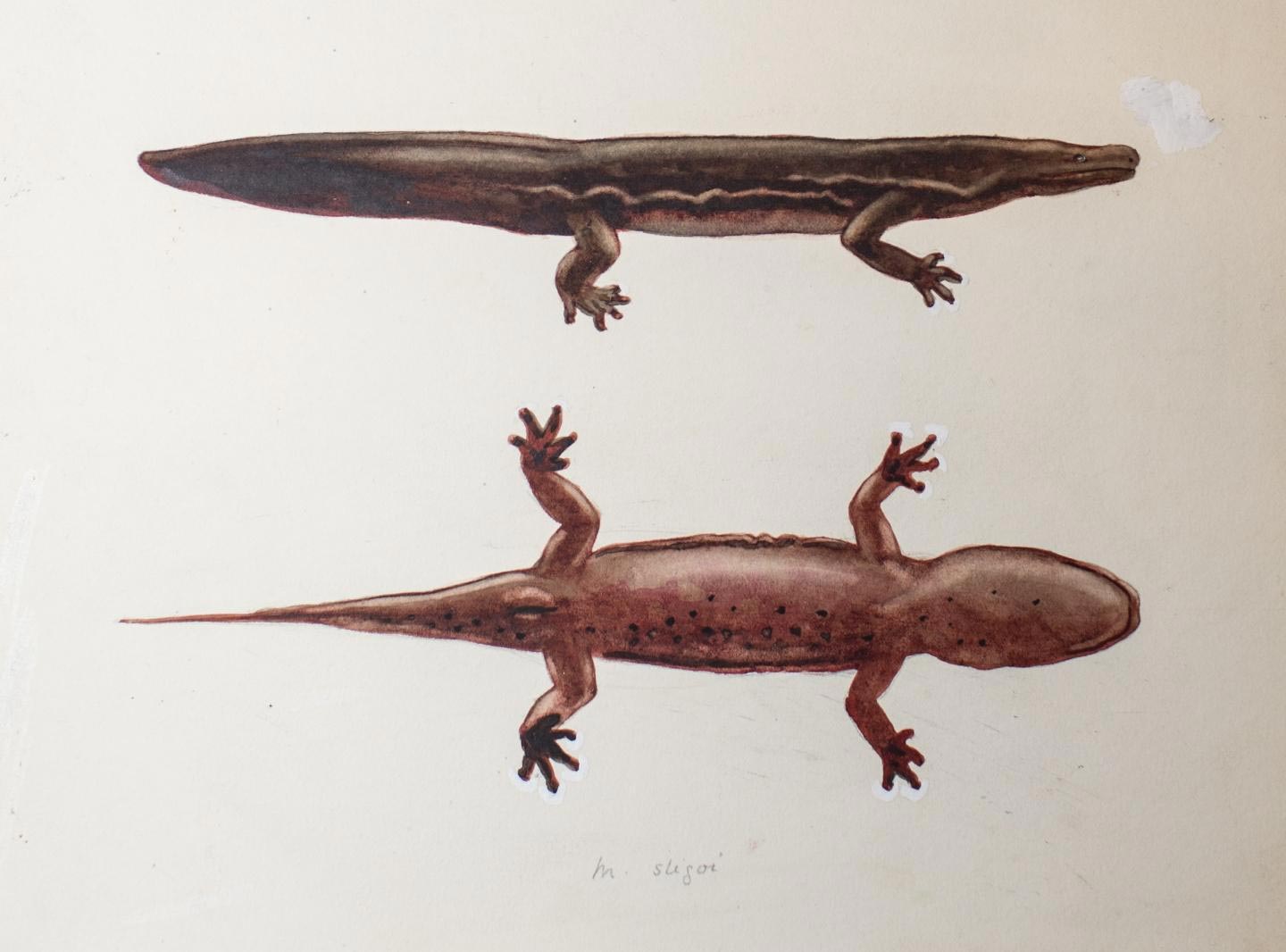
74-year-old museum specimen, which once lived at ZSL London Zoo, was identified as a new species of giant salamander and probably the world’s biggest amphibian.
Using DNA from museum specimens collected in the early 20th century, researchers from ZSL (Zoological Society of London) and London’s Natural History Museum identified two new species of giant salamander — one of which they suspect is the world’s biggest amphibian.
Chinese giant salamanders, now classified as Critically Endangered, were once widespread throughout central, southern, and eastern China. They have previously been considered a single species (Andrias davidianus). However, a new analysis of 17 historical museum specimens and tissue samples from wild salamanders challenges this assumption.
The paper, published on September 17, 2019, in the journal Ecology and Evolution, found three distinct genetic lineages in salamanders from different river systems and mountain ranges across China. These lineages are sufficiently genetically different that they represent separate species: Andrias davidianus, Andrias sligoi, and a third species which has yet to be named.
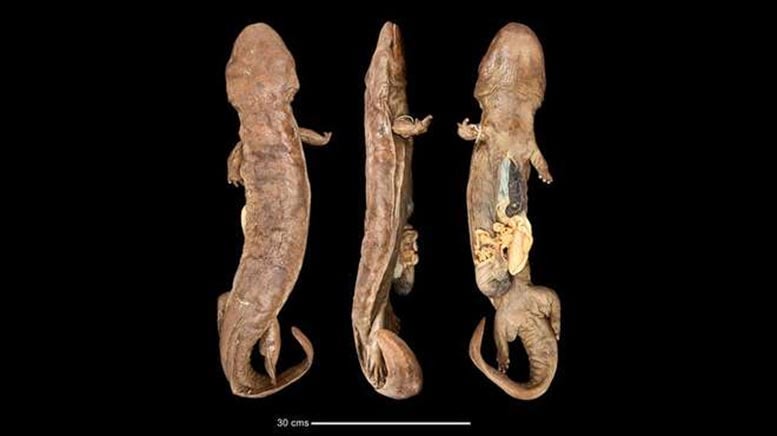
One of the newly identified species, the South China giant salamander (Andrias sligoi), was first proposed in the 1920s based on an unusual salamander from southern China that lived at the time at London Zoo. The idea was then abandoned but has been confirmed by today’s study. The team used the same animal, now preserved as a specimen in the Natural History Museum after living for 20 years at the Zoo, to define the characteristics of the new species.
The other unnamed new species, from Huangshan (the Yellow Mountains), is still only known from tissue samples and has yet to be formally described.
The study’s lead author, Professor Samuel Turvey of ZSL’s Institute of Zoology, said: “Our analysis reveals that Chinese giant salamander species diverged between 3.1 and 2.4 million years ago. These dates correspond to a period of mountain formation in China as the Tibetan Plateau rose rapidly, which could have isolated giant salamander populations and led to the evolution of distinct species in different landscapes.
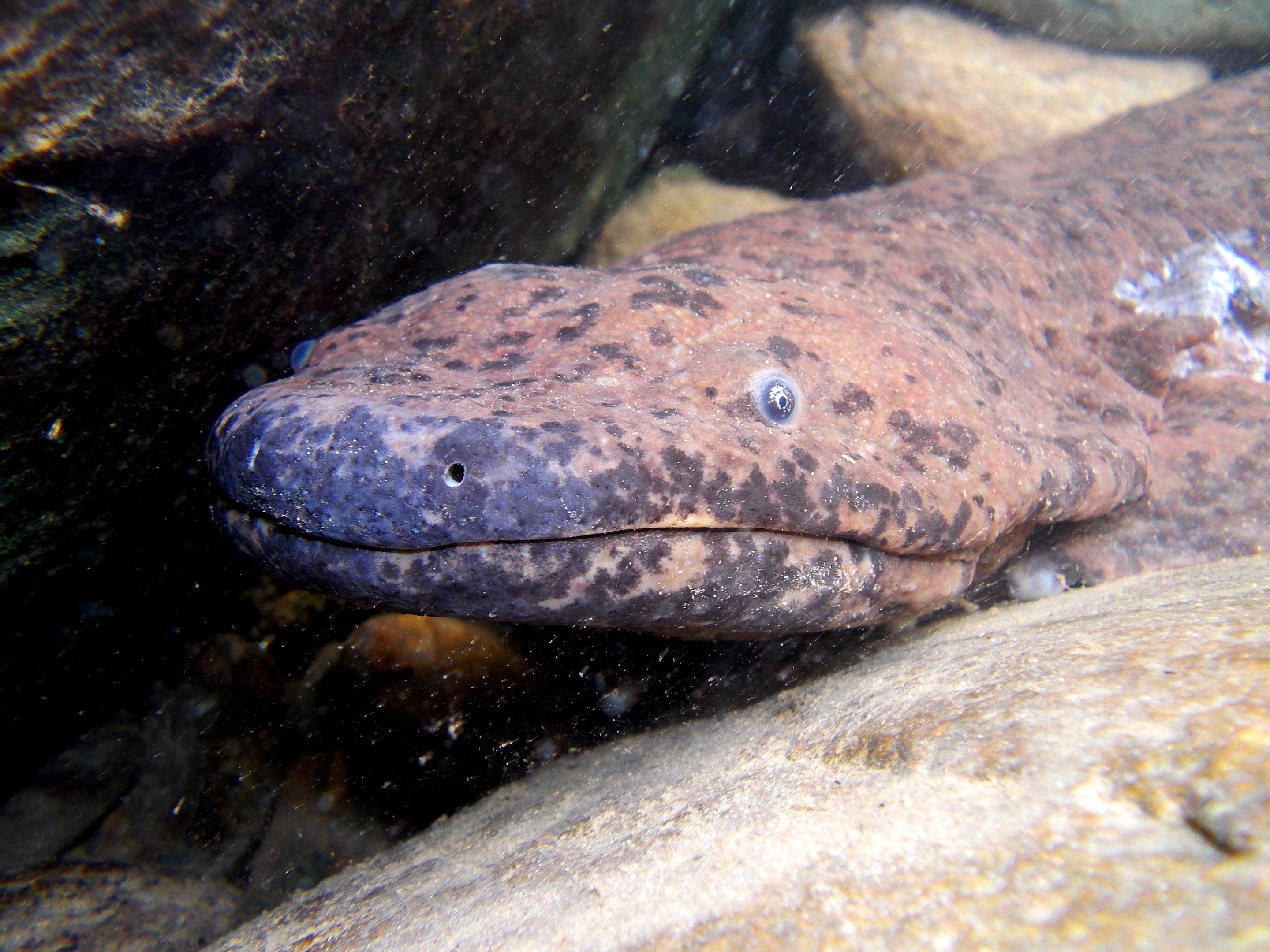
The decline in wild Chinese giant salamander numbers has been catastrophic, mainly due to recent overexploitation for food. We hope that this new understanding of their species diversity has arrived in time to support their successful conservation, but urgent measures are required to protect any viable giant salamander populations that might remain.
Salamanders are currently moved widely around China, for conservation translocation and to stock farms that cater to China’s luxury food market. Conservation plans must now be updated to recognize the existence of multiple giant salamander species, and movement of these animals should be prohibited to reduce the risk of disease transfer, competition, and genetic hybridization.”
Chinese giant salamanders are the world’s biggest amphibians. The authors suggest that the newly discovered South China giant salamander — which can reach nearly two meters — is the largest of the three and is, therefore, the largest of the 8,000 or so amphibian species alive today.
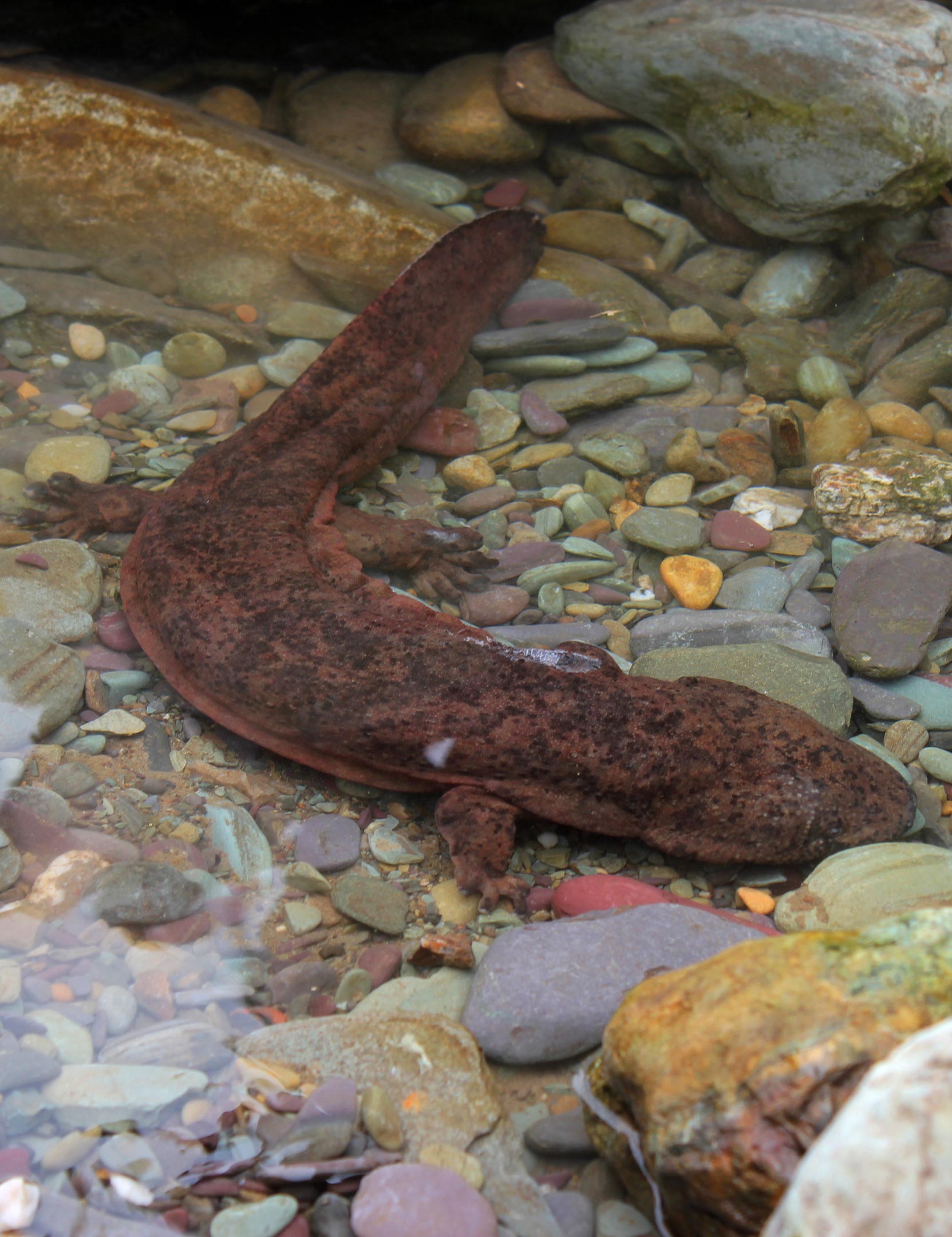
ZSL works in China to protect giant salamanders in the wild and to raise their profile through our exhibit at London Zoo, where zookeepers welcomed four juveniles in September 2016. The salamanders were seized by Border Force after an attempt to illegally import them. One of the salamanders, named Professor Lew, has since moved into a state-of-the-art tank in the Zoo’s Reptile House, where visitors can come face-to-face with one of nature’s giants. The three others are currently being cared for behind the scenes. Keepers will eventually introduce another animal to Professor Lew as a mate and the remaining two may then move to a different zoo, as the adults are highly territorial and need to be housed in separate enclosures.
Melissa Marr, a Ph.D. researcher at the Natural History Museum London added: “These findings come at a time where urgent interventions are required to save Chinese giant salamanders in the wild. Our results indicate that tailored conservation measures should be put in place that preserve the genetic integrity of each distinct species. Our research also highlights the central role that The Natural History Museum’s collections can play in the conservation of Critically Endangered species.”
Reference: “Historical museum collections clarify the evolutionary history of cryptic species radiation in the world’s largest amphibians” by Samuel T. Turvey, Melissa M. Marr, Ian Barnes, Selina Brace, Benjamin Tapley, Robert W. Murphy, Ermi Zhao and Andrew A. Cunningham , 17 September 2019, Ecology and Evolution.
DOI: 10.1002/ece3.5257
Never miss a breakthrough: Join the SciTechDaily newsletter.
Follow us on Google and Google News.
1 Comment
My God, must the, Chinese, eat everything to extinction?