

Participants who chose not to learn their results said it would place a burden on themselves and their family members.
As scientific understanding of how Alzheimer’s disease develops continues to advance, researchers are increasingly able to offer healthy study participants the chance to learn their personal risk of developing Alzheimer’s-related dementia. Although many organizations encourage researchers to provide such risk information, ethical concerns remain, particularly because there are currently no medical treatments available to alter that risk.
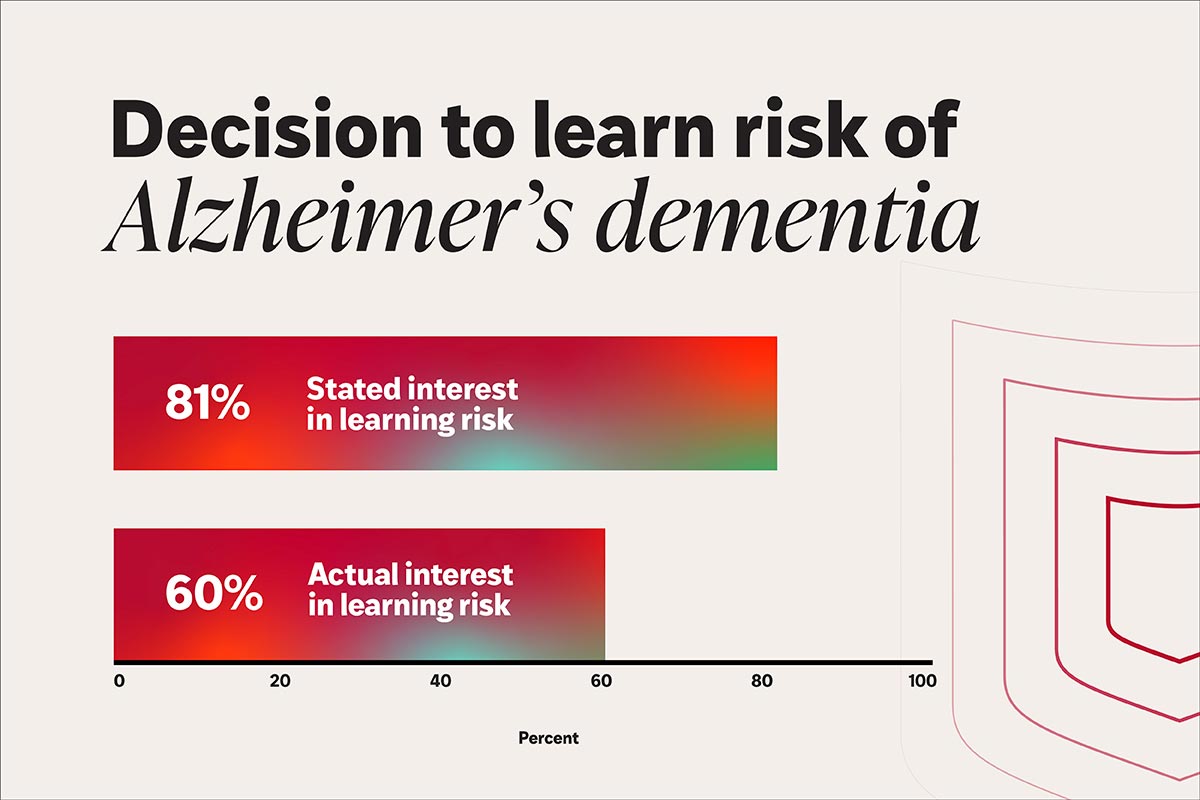
A recent study conducted by Washington University School of Medicine in St. Louis explored how healthy volunteers respond when presented with the option to learn their Alzheimer’s risk. The findings revealed a notable gap between the number of participants who said they would want to receive their risk results if given the chance, and the number who actually chose to receive them when the offer was real.
These insights can inform future study designs by helping researchers offer risk results in a manner that respects participant autonomy without applying pressure. The study also highlights the need to distinguish between hypothetical interest and genuine readiness to receive sensitive health information.
Balancing transparency with ethical concerns
The study was recently published in the journal JAMA Network Open.
“In general, there is movement toward giving research participants and patients their test results, even in situations when nothing can be done with those results,” said senior author Jessica Mozersky, PhD, an assistant professor of medicine at the Bioethics Research Center and an investigator at the Charles F. and Joanne Knight Alzheimer Disease Research Center, both at WashU Medicine. “But our study suggests that in sensitive cases — such as when estimating the risk of developing a debilitating and deadly disease — people should have the option to not know.”

In recent years, the National Academies of Sciences, Engineering, and Medicine have advised that research studies should generally give participants the option to receive their test results, even if no medical action can be taken based on those findings. Along the same lines, a group made up of research participants, their care partners, and representatives from dementia advocacy organizations has put forward a proposed bill of rights for individuals involved in Alzheimer’s disease research, which includes the right to access their own results.
Risk of anxiety with no treatment available
At the same time, ethical issues continue to surface due to the potential psychological distress that may arise when individuals learn they are at high risk for a progressive and untreatable form of dementia. Unlike some hereditary cancers, where early detection can lead to preventive steps, there are currently no approved medical treatments or interventions that can prevent Alzheimer’s disease dementia.
To better understand why some people choose not to receive their risk results, Mozersky and her team examined data from a long-standing research effort at WashU Medicine’s Knight Alzheimer Disease Research Center. Since its launch in 1979, the Memory & Aging Project has served as a foundation for studying changes in brain health over time. Over the years, this initiative has grown into multiple long-term studies focused on how Alzheimer’s disease develops, including research into biomarker tests used to estimate risk.
Testing real choices in the Memory & Aging Project
For the current study, Mozersky’s team focused on cognitively normal volunteers who underwent a battery of tests, including genetic tests, blood draws, and brain scans, from which researchers could estimate their probability of developing Alzheimer’s disease dementia over the following five years. Participants originally joined the long-term study understanding that they would not have the option to receive their own risk results. Even so, Mozersky said, over the years many have expressed a theoretical interest in learning their results. The study, co-led with Sarah M. Hartz, MD, PhD, a professor of psychiatry at WashU Medicine, offered results to a subset of participants in the Memory & Aging project — 274 participants — to assess the psychological impact of learning their risk, and the factors they consider when making that decision.
Before deciding, participants received an information guide explaining how risk is estimated and listing some examples of pros and cons of learning their results. For example, on the pro side, some people may learn their risk is lower than they might have expected. And if biomarker test results suggest a participant is at high risk of developing Alzheimer’s disease dementia over the next five years, they may become eligible to participate in clinical trials of investigational prevention strategies. On the other hand, knowledge of high risk may cause anxiety or complicate the purchase of some types of insurance.
When the results were theoretical, 81% of people in the larger, long-term research said they would choose to know. In contrast, when real results were offered to the 274 participants in the Memory & Aging Project, only 60% opted to receive them. Participants with a parental history of Alzheimer’s disease and participants who self-identified as African American were more likely than others to decline the results.
Why some chose not to know
A sample of participants who declined to learn their results were interviewed afterward, and the most common reasons given included that knowing would be a burden to themselves or their family members, their own negative experiences and perceptions of Alzheimer’s disease dementia, that they feel good about their memory currently, that they’re already prepared for the disease, and that there is still uncertainty in predictions of disease risk.
“The lack of preventive treatments is also a big factor in declining to receive the results of biomarker tests among people without symptoms of Alzheimer’s disease dementia,” Mozersky said. “When we conducted interviews with some participants to better understand their choice not to know, many said that a new effective treatment might change their mind, if it became available.”
Because the results are only available through research studies, they are not added to the participant’s medical record by the investigators. Still, such results could end up in a patient’s medical record if a participant shares them with their doctor.
“We plan to continue our research into the complexities of these questions, especially as returning results to research participants becomes more common, even if those results can’t be acted on yet,” Mozersky said.
Reference: “Research Participant Interest in Learning Results of Biomarker Tests for Alzheimer Disease” by Spondita Goswami, Sarah M. Hartz, Amy Oliver, Sacha Jackson, Tomi Ogungbenle, Alissa Evans, Erin Linnenbringer, Krista L. Moulder, John C. Morris and Jessica Mozersky, 6 May 2025, JAMA Network Open.
DOI: 10.1001/jamanetworkopen.2025.2919
This work was supported by the National Institutes of Health (NIH), grant numbers R01 AG065234, P30AG066444, P01AG003991, P01AG026276, and UL1TR002345.
Washington University has a financial stake in C2N diagnostics, which makes the Precivity AD™ plasma Alzheimer’s Disease biomarker test, one of the test results offered to participants in this study. No individual researcher who conducted this study has a personal financial interest in C2N diagnostics.
Never miss a breakthrough: Join the SciTechDaily newsletter.
Follow us on Google and Google News.