
Close Menu
    Facebook X (Twitter) Instagram
    SciTechDaily
    • Biology
    • Chemistry
    • Earth
    • Health
    • Physics
    • Science
    • Space
    • Technology
    Facebook X (Twitter) Pinterest YouTube RSS
    SciTechDaily
    Home»Biology»Yale Study Shows Risk Patterns for Autism and Schizophrenia Associated with Birth Size
    Biology

    Yale Study Shows Risk Patterns for Autism and Schizophrenia Associated with Birth Size

    By Bill Hathaway, Yale UniversitySeptember 17, 2014No Comments3 Mins Read
    Facebook Twitter Pinterest Telegram LinkedIn WhatsApp Email Reddit
    Share
    Facebook Twitter LinkedIn Pinterest Telegram Email Reddit
    Genetic Tug of War Explains Autism and Schizophrenia
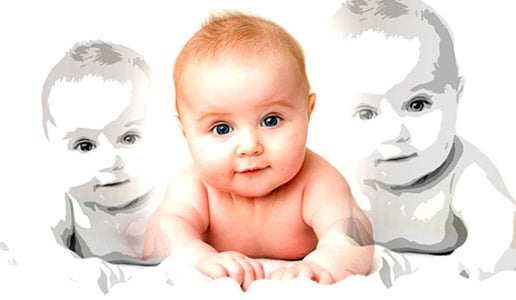
    A new study reveals that larger babies face a higher risk of autism, while smaller babies have an increased likelihood of developing schizophrenia. Credit: Illustration by Michael S. Helfenbein

    A new study from Yale University shows that bigger babies do have an increased risk of autism, while smaller babies are more likely to develop schizophrenia.

    The size of babies and even human behavior may be shaped during early fetal development by a molecular tug of war between paternal and maternal genes, according to an emerging theory in evolutionary biology.

    Yale evolutionary biologist Stephen Stearns and colleagues at the University of Copenhagen wanted to test a corollary of this theory: that autism and schizophrenia are extremes on a behavioral continuum that may arise from the same genomic conflict of interest.

    Their analysis of 1.75 million Danish babies published online September 17 in the Proceedings of Royal Society B shows that, as the theory predicts, bigger babies do have an increased risk of autism, while smaller babies are more likely to develop schizophrenia.

    “I was startled at how clear the data were,” Stearns said. “The theory isn’t generally accepted yet, but I think there is a growing awareness that this sort of variation may be underlying some forms of human behavior, only grading into mental disorders at the extremes.”

    The theory is that the activation of select paternal genes that favor larger and more demanding babies — even though this may endanger the health of the mother and her ability to have more offspring — might also increase the risk of autism. Conversely, maternal genes that favor smaller and easier-to-handle babies — thereby protecting the mother’s ability to deliver more children — might confer a greater risk of schizophrenia.

    Stearns says a possible explanation begins very early in the development of placenta and brains, when either the male copies or the female copies of certain genes are inactivated. Genes inherited from the father will tend to favor growth of larger — and more resource-demanding — infants who have a greater chance of survival. The interests of genes inherited from the mother are different; they tend to produce smaller babies, which require less resources and investment of time. In other words, male genetic interests are weighted more toward the health of the infant even at some cost to the health of the mother, while female interest is in preserving her ability to produce more offspring.

    In the extension of this theory to behavior, autism is the extreme form of a behaviorally demanding infant, while schizophrenia is the opposite end of the behavioral spectrum, favoring a more social and easy-going child.

    “These conditions may just be extreme exaggeration of normal behaviors,” Stearns said.

    For instance, natural selection in a tool-making culture might favor a mixture of individuals with different degrees of these personality traits — some slightly anti-social but mechanically-oriented individuals in a mix with more creative empathetic persons.

    In this view, variations in both birth size and mental disposition are seen as different, independent reflections of an underlying continuum from demanding to non-demanding offspring, said Stearns.

    Reference: “Opposite risk patterns for autism and schizophrenia are associated with normal variation in birth size: phenotypic support for hypothesized diametric gene-dosage effects” by Sean G. Byars, Stephen C. Stearns and Jacobus J. Boomsma, 7 November 2014, Proceedings of Royal Society B.
    DOI: 10.1098/rspb.2014.0604


    Never miss a breakthrough: Join the SciTechDaily newsletter.
    Follow us on Google and Google News.

    Autism Spectrum Disorder Evolutionary Biology Schizophrenia Yale University
    Share. Facebook Twitter Pinterest LinkedIn Email Reddit

    Related Articles

    Early Treatment Triggers Significant Improvements in Children With Autism

    Antibiotics Might Contribute to the Health Problems of the Bee Colonies

    Genome Study Links Paternal Age to Conditions Such As Autism

    Genetic Analysis Reveals New Family Tree for Ray-Finned Fish

    Extinctions Due to Habitat Loss are Proportional to the Area Destroyed

    Female Butterflies Prefer Flashier Mates

    Evolution Shapes Ecology of Dammed Connecticut Lakes

    Evolutionary Changes Surrounding the NOS1 Gene

    “Map of Life” to Illustrate All Living Things Geographically

    Leave A Reply Cancel Reply

    • Facebook
    • Twitter
    • Pinterest
    • YouTube

    Don't Miss a Discovery

    Subscribe for the Latest in Science & Tech!

    Trending News

    Enormous Prehistoric Insects Puzzle Scientists

    Scientists Develop Bioengineered Chewing Gum That Could Help Fight Oral Cancer

    After 37 Years, the World’s Longest-Running Soil Warming Experiment Uncovers a Startling Climate Secret

    NASA Satellite Captures First-Ever High-Res View of Massive Pacific Tsunami

    ADHD Isn’t Just a Deficit: Study Reveals Powerful Hidden Strengths

    Scientists Discover Stem Cells That Could Regrow Teeth and Bone

    Early Cannabis Use May Stall Key Brain Skills in Teens

    Popular Vitamin D Supplement Has “Previously Unknown” Negative Effect, Study Finds

    Follow SciTechDaily
    • Facebook
    • Twitter
    • YouTube
    • Pinterest
    • Newsletter
    • RSS
    SciTech News
    • Biology News
    • Chemistry News
    • Earth News
    • Health News
    • Physics News
    • Science News
    • Space News
    • Technology News
    Recent Posts
    • Quantum Breakthrough: New Algorithm Solves “Impossible” Materials in Seconds
    • Could the Universe’s Hidden Shape Solve One of Physics’ Biggest Mysteries?
    • Rewriting Dinosaur Evolution: Scientists Unearth Remarkable 150-Million-Year-Old Stegosaur Skull
    • Scientists Identify Two Simple Treatments for Cancer-Related Cognitive Impairment
    • Omega-3 Supplements Linked to Cognitive Decline in Surprising New Study
    Copyright © 1998 - 2026 SciTechDaily. All Rights Reserved.
    • Science News
    • About
    • Contact
    • Editorial Board
    • Privacy Policy
    • Terms of Use

    Type above and press Enter to search. Press Esc to cancel.