

Scientists used AI to reveal tens of thousands of previously undetected earthquakes beneath Yellowstone. The discovery shows swarming seismic activity across immature fault lines—transforming how we see the park’s explosive underworld.
Yellowstone’s Fiery Foundation
Yellowstone is not only one of the most visited natural landmarks in the United States, but also the first national park ever established. While it’s well known for its geysers and scenic beauty, what lies beneath is far more intense: one of the planet’s most geologically active volcanic systems.
A recently published study in Science Advances (July 18) sheds new light on this underground activity. Led by Western University engineering professor Bing Li, along with researchers from the Universidad Industrial de Santander (Industrial University of Santander) in Colombia and the U.S. Geological Survey, the team applied machine learning to revisit 15 years of seismic data from the Yellowstone caldera.
Their approach uncovered a staggering number of previously undetected earthquakes. The team was able to identify and assign magnitudes to roughly ten times more seismic events than were originally recorded.
What Is a Caldera?
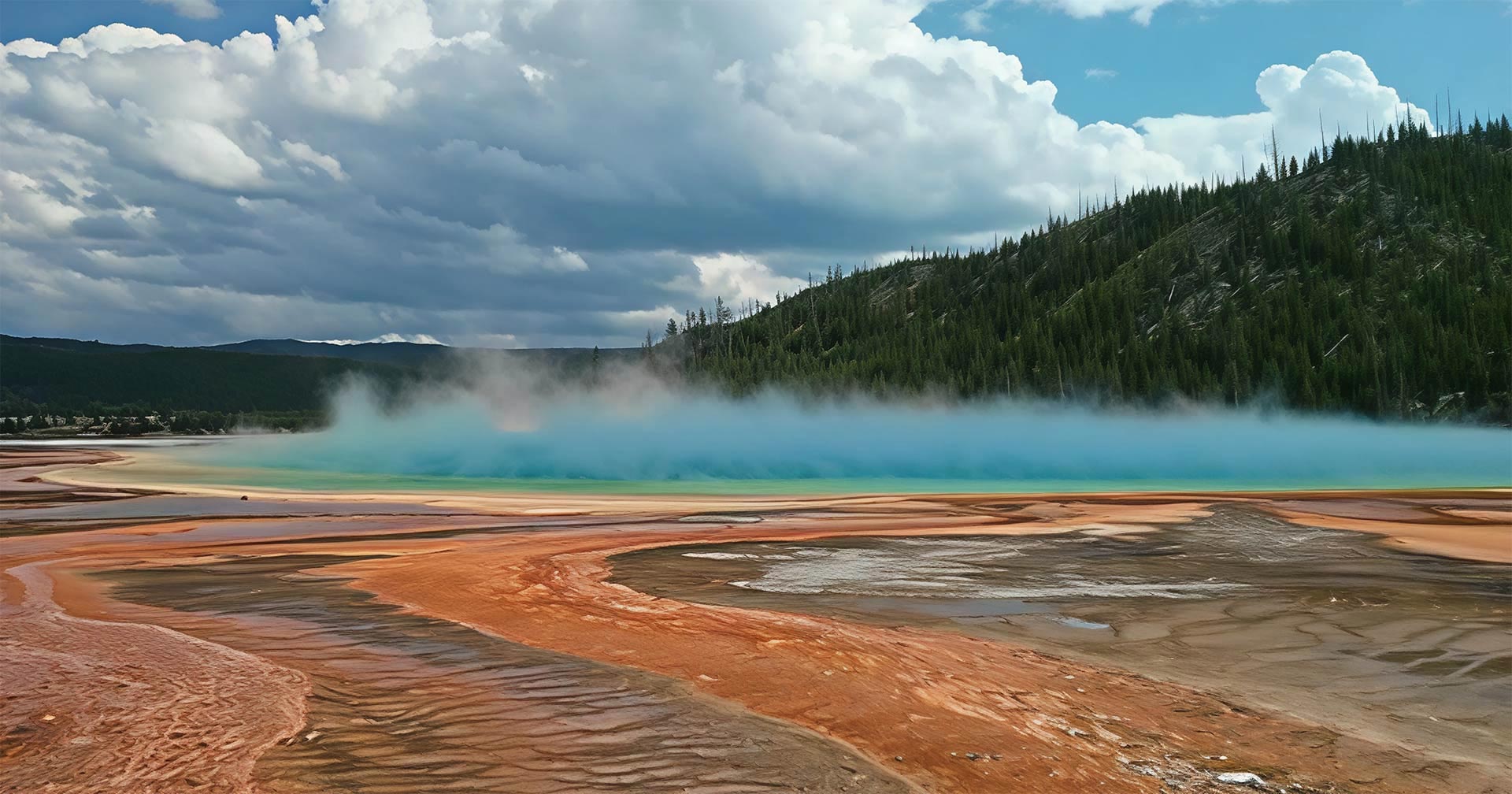
The Yellowstone caldera, which stretches across parts of Wyoming, Idaho, and Montana, is a massive geological depression formed after a volcanic eruption drains the underground magma chamber, causing the surface above to collapse. This differs from a volcanic crater, which results from an outward explosion rather than a structural collapse.
With this new analysis, the earthquake record for Yellowstone now includes 86,276 events between 2008 and 2022. This significantly enhances the scientific understanding of the region’s seismic and volcanic behavior by offering a much more detailed and comprehensive dataset.
Seismic Swarms Beneath Yellowstone
A key finding in the study is that more than half of the earthquakes recorded in Yellowstone were part of earthquake swarms – groups of small, interconnected earthquakes that spread and shift within a relatively small area over a relatively short period of time. This is unlike an aftershock, which is a smaller earthquake that follows a larger mainshock in the same general area.
Implications for Global Safety and Energy
“While Yellowstone and other volcanoes each have unique features, the hope is that these insights can be applied elsewhere,” said Li, an expert in fluid-induced earthquakes and rock mechanics. “By understanding patterns of seismicity, like earthquake swarms, we can improve safety measures, better inform the public about potential risks and even guide geothermal energy development away from danger in areas with promising heat flow.”
Prior to the application of machine learning, earthquakes were generally detected through manual inspection by trained experts. This process takes time, is cost-intensive and often detects fewer events than machine learning, which has sparked a data-mining gold rush in recent years. Seismologists revisit the wealth of historical waveform data stored in data centres across the world and learn more about current and previously unknown seismic regions around the world.
“If we had to do it old school with someone manually clicking through all this data looking for earthquakes, you couldn’t do it. It’s not scalable,” said Li.
Immature Faults and Unusual Patterns
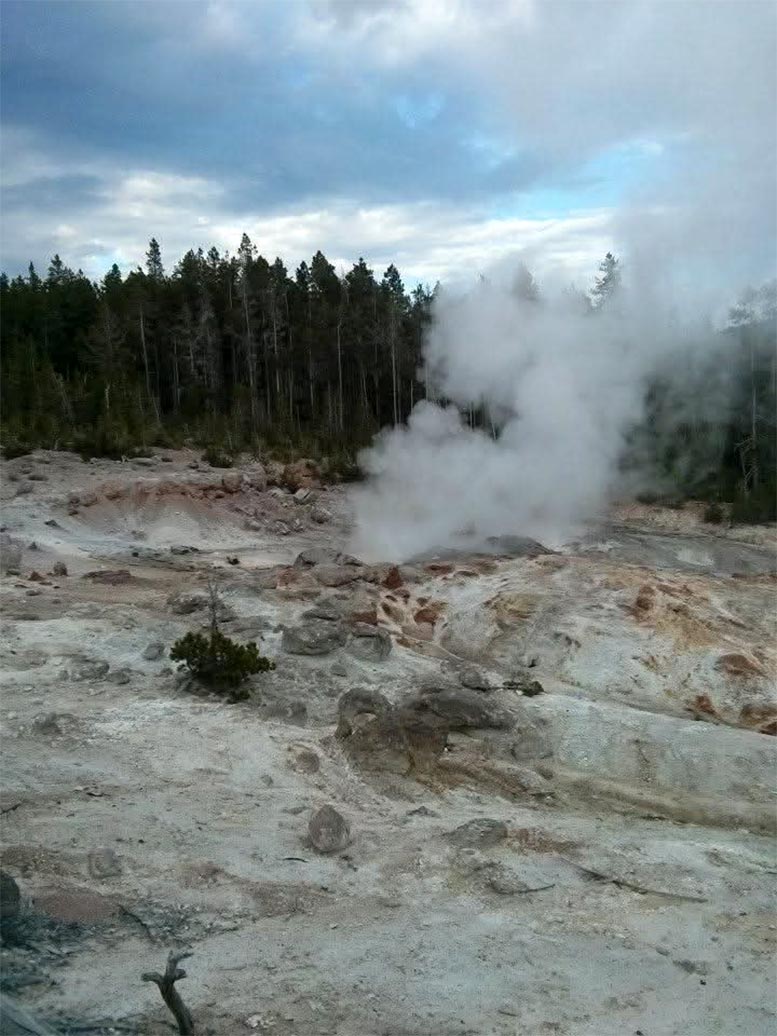
The study also shows that earthquake swarms beneath the Yellowstone caldera have occurred along relatively immature, rougher fault structures, compared to more typical mature fault structures seen in regions such as southern California and even immediately outside the caldera.
The roughness was measured by characterizing earthquakes as fractals, which are geometric shapes that exhibit self-similarity, meaning they appear similar at different scales. First visualized by Benoit Mandelbrot in 1980, fractal patterns are seen in coastlines, snowflakes, broccoli, and even the branching of blood vessels. The fractal-based models, targeting roughness versus regularity, were able to characterize these earthquake swarms, which the researchers believe were caused by the mix of slowly moving underground water and sudden bursts of fluid.
A Clearer View of Yellowstone’s Interior
“To a large extent, there is no systematic understanding of how one earthquake triggers another in a swarm. We can only indirectly measure space and time between events,” said Li. “But now, we have a far more robust catalogue of seismic activity under the Yellowstone caldera, and we can apply statistical methods that help us quantify and find new swarms that we haven’t seen before, study them, and see what we can learn from them.”
Reference: “Long-term dynamics of earthquake swarms in the Yellowstone caldera” by Manuel A. Florez, Bing Q. Li, David R. Shelly, Mia V. Angulo and José D. Sanabria-Gómez, 18 July 2025, Science Advances.
DOI: 10.1126/sciadv.adv6484
Never miss a breakthrough: Join the SciTechDaily newsletter.
Follow us on Google and Google News.
2 Comments
daily news of science
The earthquakes is natural etc