
Close Menu
    Facebook X (Twitter) Instagram
    SciTechDaily
    • Biology
    • Chemistry
    • Earth
    • Health
    • Physics
    • Science
    • Space
    • Technology
    Facebook X (Twitter) Pinterest YouTube RSS
    SciTechDaily
    Home»Earth»Earth Recovered 10 Million Years After Permian-Triassic Mass Extinction
    Earth

    Earth Recovered 10 Million Years After Permian-Triassic Mass Extinction

    By SciTechDailyMay 29, 20122 Comments2 Mins Read
    Facebook Twitter Pinterest Telegram LinkedIn WhatsApp Email Reddit
    Share
    Facebook Twitter LinkedIn Pinterest Telegram Email Reddit
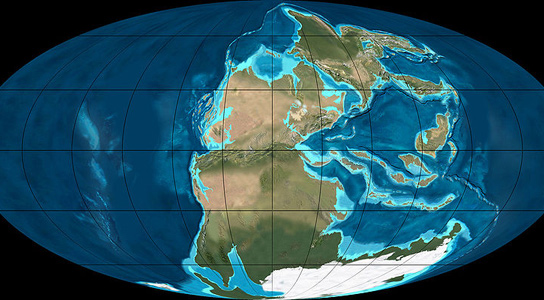
    earth-during-permian-triassic
    The Permian-Triassic extinction event, occurring around 250 million years ago, nearly wiped out life on Earth and took about 10 million years for biodiversity to recover.

    The greatest mass extinction pulse was the Permian-Triassic extinction event, and it happened about 250 million years ago, nearly wiping out life on Earth. It was Earth’s most severe extinction even, with 96% of all marine species and 70% of all terrestrial vertebrate species becoming extinct. It is the only known mass extinction that affected insects, 57% of all families and 83% of all genera were extinguished.

    The loss of such biodiversity apparently took Earth 10 million years to recover, more than any other extinction pulse. In a recent article in the journal Nature Geoscience, lead scientists Zhong-Qiang Chen from the University of Geosciences in Wuhan and Michael Benton from the University of Bristol analyzed the bounce-back of life.
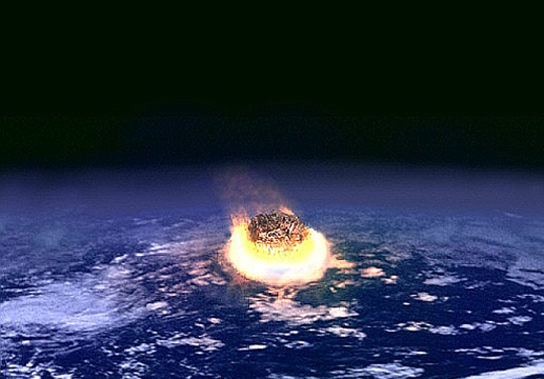
    possible-comet-earth-impact

    There were two reasons for the delay of the return biodiversity. The sheer intensity of the extinction and the grim conditions on Earth after the pulse made it harder for species to recover. The Permian-Triassic extinction event was triggered by a number of different factors, including global warming, acid rain, ocean acidification and ocean anoxia. These factors were enough to spur the extinction pulse.
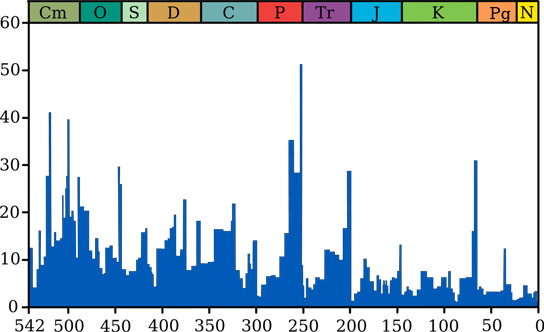
    extinction-pulses
    Plot of extinction intensity (percentage of genera that are present in each interval of time but do not exist in the following interval) vs time in the past for marine genera. Geological periods are annotated (by abbreviation and color) above. The Permian–Triassic extinction event is the most significant event for marine genera, with just over 50% (according to this source) failing to survive. Credit: Wikipedia Smith609

    Research shows that the grim conditions continued for five to six million years later, with continued carbon and oxygen crises, warming and other effects. Once the environmental crises ceased to be severe, more complex ecosystems emerged, allowing new groups to take hold.

    The new groups, including ancestral crabs and lobsters, as well as the first marine reptiles, re-set evolution, becoming the source of the dominant species on Earth in millions of years to come.

    Reference: “The timing and pattern of biotic recovery following the end-Permian mass extinction” by Zhong-Qiang Chen and Michael J. Benton, 27 May 2012, Nature Geoscience.
    DOI: 10.1038/ngeo1475

    Never miss a breakthrough: Join the SciTechDaily newsletter.
    Follow us on Google and Google News.

    Biodiversity Ecology Extinction Extinction Event Geoscience Global Warming Permian-triassic University of Bristol
    Share. Facebook Twitter Pinterest LinkedIn Email Reddit

    Related Articles

    Mass Extinction Predicted: Extreme Heat Likely To Wipe Out Humans and Mammals in “Triple Whammy”

    “Shocking” – Rate of Climate-Driven Extinction Is Drastically Accelerating

    LOME’s Twist: Ancient Mass Extinction Event May Not Be So Strange After All

    Planting Seeds of Hope: “Zero Plant Extinction” Is Possible

    Unchecked Global Emissions on Course To Trigger Mass Extinction of Marine Life

    Animals Died in “Toxic Soup” During Earth’s Worst Mass Extinction – A Warning for Today

    The Arctic Ocean’s Deep Past Provides Clues to Its Imminent Future Under a Global Warming Regime

    Earth’s Worst Mass Extinction Took Ten Times Longer on Land Than in the Water

    Scientists Document a Surprising Trend in a Study on Extinctions

    2 Comments

    1. mark b on October 1, 2015 8:22 am

      I have to wonder, if all these mass extinction events never happened and the earth was left to develop without these events would there be life as we know it here on this planet.

      Reply
      • geoguy on August 13, 2020 1:22 pm

        While volcanoes cause short-term disruption of environments favorable for life, they also bring nutrients to an otherwise denuded and nutrient-deficient surface.

        Reply
    Leave A Reply Cancel Reply

    • Facebook
    • Twitter
    • Pinterest
    • YouTube

    Don't Miss a Discovery

    Subscribe for the Latest in Science & Tech!

    Trending News

    What Causes Chronic Pain? Scientists Identify Key Culprit in the Brain

    Semaglutide Shows Surprising Mental Health Benefits in Massive 100,000-Person Study

    This Liquid Snapped Instead of Flowing and Scientists Were Shocked

    Breakthrough Alzheimer’s Drug Rewires the Brain Instead of Just Clearing Plaques

    Scientists Discover Hidden “Footprint of Death” That Could Transform How We Fight Disease

    A Simple Nose Swab Could Detect Alzheimer’s Years Before Symptoms Appear

    Scientists Just Rewrote the Timeline of Complex Life on Earth

    Teenager’s Fossil Find Leads to Discovery of Shark Teeth in 5 Million-Year-Old Whale Skull

    Follow SciTechDaily
    • Facebook
    • Twitter
    • YouTube
    • Pinterest
    • Newsletter
    • RSS
    SciTech News
    • Biology News
    • Chemistry News
    • Earth News
    • Health News
    • Physics News
    • Science News
    • Space News
    • Technology News
    Recent Posts
    • Even “Failed” Diets May Deliver Long-Term Health Gains, Study Finds
    • Childhood Junk Food May Rewire the Brain for Life
    • NIH Scientists Discover Powerful New Opioid That Relieves Pain Without Dangerous Side Effects
    • Breakthrough Study Reveals Why Damaged Nerves Struggle To Heal
    • 20-Year Study Reveals Cholera’s Surprising Weakness
    Copyright © 1998 - 2026 SciTechDaily. All Rights Reserved.
    • Science News
    • About
    • Contact
    • Editorial Board
    • Privacy Policy
    • Terms of Use

    Type above and press Enter to search. Press Esc to cancel.