
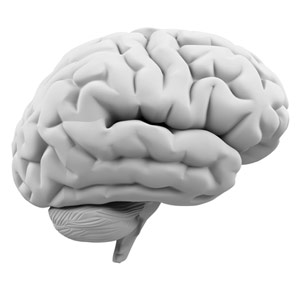
A newly published study takes a closer look at the “inside” of Einstein’s brain, revealing that the unusually well connected right and left hemispheres of his brain may have contributed to his intelligence.
The left and right hemispheres of Albert Einstein’s brain were unusually well connected to each other and may have contributed to his brilliance, according to a new study conducted in part by Florida State University evolutionary anthropologist Dean Falk.
“This study, more than any other to date, really gets at the ‘inside’ of Einstein’s brain,” Falk said. “It provides new information that helps make sense of what is known about the surface of Einstein’s brain.”
The study, “The Corpus Callosum of Albert Einstein’s Brain: Another Clue to His High Intelligence,” was published in the journal Brain. Lead author Weiwei Men of East China Normal University’s Department of Physics developed a new technique to conduct the study, which is the first to detail Einstein’s corpus callosum, the brain’s largest bundle of fibers that connects the two cerebral hemispheres and facilitates interhemispheric communication.
“This technique should be of interest to other researchers who study the brain’s all-important internal connectivity,” Falk said.
Men’s technique measures and color-codes the varying thicknesses of subdivisions of the corpus callosum along its length, where nerves cross from one side of the brain to the other. These thicknesses indicate the number of nerves that cross and therefore how “connected” the two sides of the brain are in particular regions, which facilitate different functions depending on where the fibers cross along the length. For example, movement of the hands is represented toward the front and mental arithmetic along the back.
In particular, this new technique permitted registration and comparison of Einstein’s measurements with those of two samples — one of 15 elderly men and one of 52 men of Einstein’s age in 1905. During his so-called “miracle year” at 26 years old, Einstein published four articles that contributed substantially to the foundation of modern physics and changed the world’s views about space, time, mass, and energy.
The research team’s findings show that Einstein had more extensive connections between certain parts of his cerebral hemispheres compared to both younger and older control groups.
The research of Einstein’s corpus callosum was initiated by Men, who requested the high-resolution photographs that Falk and other researchers published in 2012 of the inside surfaces of the two halves of Einstein’s brain. In addition to Men, the current research team included Falk, who served as second author; Tao Sun of the Washington University School of Medicine; and, from East China Normal University’s Department of Physics, Weibo Chen, Jianqi Li, Dazhi Yin, Lili Zang, and Mingxia Fan.
Reference: “The corpus callosum of Albert Einstein‘s brain: another clue to his high intelligence?” by Weiwei Men, Dean Falk, Tao Sun, Weibo Chen, Jianqi Li, Dazhi Yin, Lili Zang and Mingxia Fan, 21 September 2013, Brain.
DOI: 10.1093/brain/awt252
Never miss a breakthrough: Join the SciTechDaily newsletter.
Follow us on Google and Google News.
4 Comments
I have never heard such utter nonsense. In a slightly different context, Dr Johnson gave the classic response to this sort of rubbish: “It is incident to physicians, I am afraid, beyond all other men, to mistake subsequence for consequence.”
Let me repeat my comments on Einstein’s brain:
Madanagopal.V.C. Says:
November 23, 2012 at 11:54 pm
Anybody will get Einstein`s brain, if he can work hard to learn throughout life. Our brain is constantly learning, something already known or something new. Learning is a continuous process till death. The learning does not confine itself to library studies. Even the daily experience is nothing but learning. Now, Prefrontal cortex of the brain is the seat of logical learning and its other side frontal cortex records images corresponding to that learning. The more one learns and uses his brain , more neuron`s grow in the grey matter. Since knowledge is simply confined to the skin effect of the brain, more area for storing is required since the cranial space is limited. This results in convolutions and `sulcus` in the histology of brain to offer more space for recording the neuronal connections. Thank You.
The above fact applies to common man also not so much familiar with science. He could be an arrrogant dictator, or a notorious king or anybody with negative characters. The connections does not automatically mean that it is responsible for scientific genius. The person is applying his right and left brain to the realm of his mind’s intentions.Thank You.
he was a also a serious violinist.
how many of those brains were musicians?
Musicians also have a thicker corpus callosum. Einstein was an accomplished violinist. It is known that learning to play a musical instrument can enhance your intelligence. A comparison of Einstein’s corpus callosum with those of musicians would help to elucidate the various connections between these facts – causal or otherwise.