
Close Menu
    Facebook X (Twitter) Instagram
    SciTechDaily
    • Biology
    • Chemistry
    • Earth
    • Health
    • Physics
    • Science
    • Space
    • Technology
    Facebook X (Twitter) Pinterest YouTube RSS
    SciTechDaily
    Home»Biology»Bonobo Genome Completed, Differs from Humans by 1.3 Percent
    Biology

    Bonobo Genome Completed, Differs from Humans by 1.3 Percent

    By Max Planck InstituteJune 14, 2012No Comments3 Mins Read
    Facebook Twitter Pinterest Telegram LinkedIn WhatsApp Email Reddit
    Share
    Facebook Twitter LinkedIn Pinterest Telegram Email Reddit
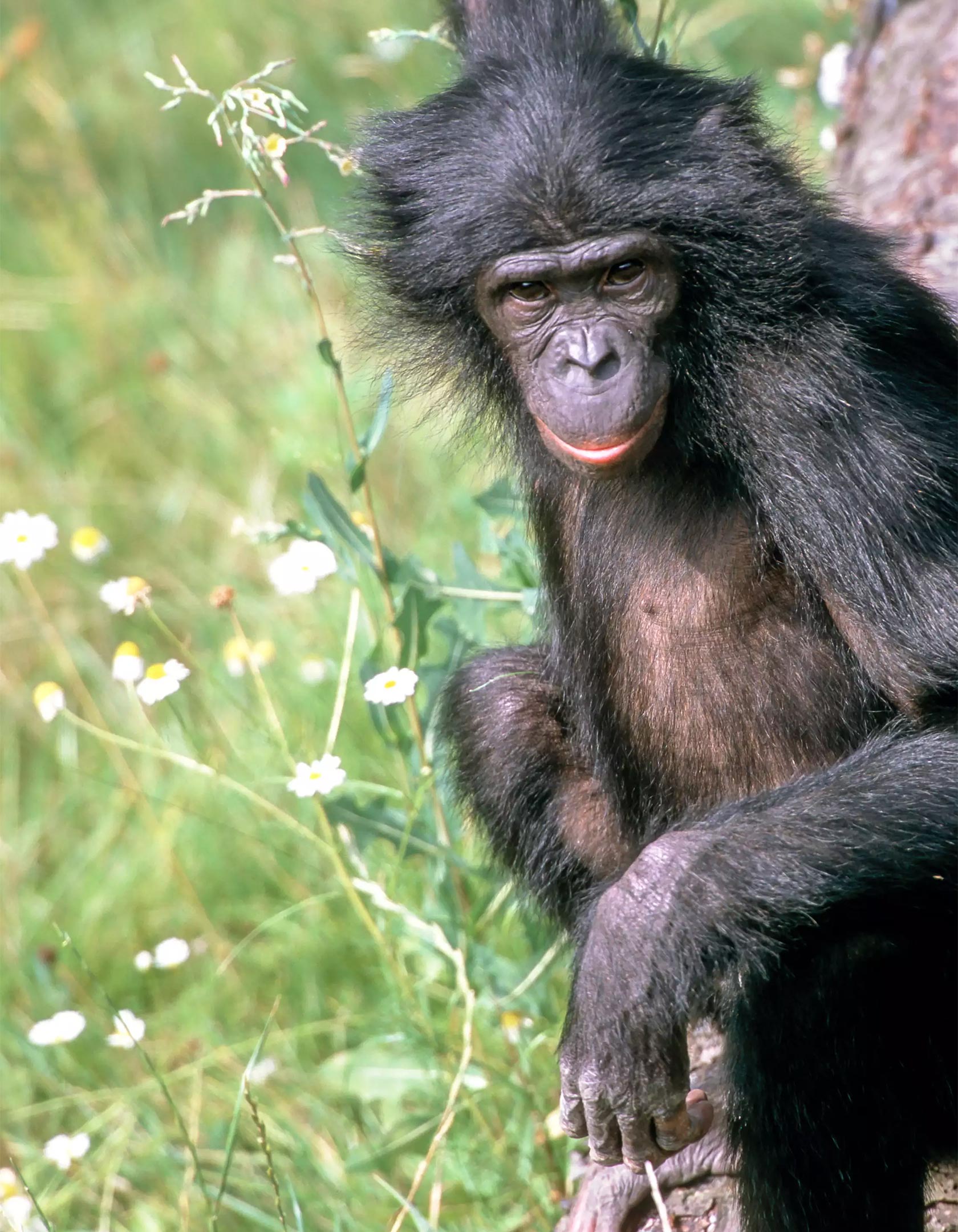
    Bonobo Ulindi Female
    The female Bonobo Ulindi in the Zoo Leipzig. Credit: Michael Seres

    Biologists at the Max Planck Institute for Evolutionary Anthropology have completed the sequencing and analysis of the genome of the bonobo, finding that the bonobo differs by approximately 1.3% from humans.

    In a project led by the Max Planck Institute for Evolutionary Anthropology in Leipzig, an international team of scientists has completed the sequencing and analysis of the genome of the last great ape, the bonobo. Bonobos, which together with chimpanzees are the closest living relatives of humans, are known for their peaceful, playful and sexual behavior that contrasts with the more aggressive behavior of chimpanzees. The genome sequence provides insights into the evolutionary relationships between the great apes and may help us to understand the genetic basis of these traits.

    The genome was sequenced from Ulindi, a female bonobo who lives in the Zoo Leipzig. Genome sequences have also been generated from all other great apes – chimpanzee, orang-utan and gorilla – making this the final genome of a great ape to be sequenced and providing insights into their relationships with one another and with humans.

    The comparison of the genome sequences of bonobo, chimpanzee, and human shows that humans differ by approximately 1.3% from both bonobo and chimpanzee. Chimpanzees and bonobos are more closely related, differing by only 0.4%.

    Bonobo and chimpanzee territories in central Africa are close to one another and separated only by the Congo River. It has been hypothesized that the formation of the Congo River separated the ancestors of chimpanzees and bonobos, leading to these distinct apes. Examination of the relationship between bonobos and chimpanzees showed that there appears to have been a clean split and no subsequent interbreeding, which supports this hypothesis.

    Despite the fact that on average the genomes of bonobos and chimpanzees are equally distant from human, analysis of the genome sequence of the bonobo revealed that for some particular parts of the genome, humans are closer to bonobos than to chimpanzees, while in other regions the human genome is closer to chimpanzees. Further research will determine whether these regions contribute in any way to the behavioral differences and similarities between humans, chimpanzees, and bonobos.

    Reference: “The bonobo genome compared with the chimpanzee and human genomes” by Kay Prüfer, Kasper Munch, Ines Hellmann, Keiko Akagi, Jason R. Miller, Brian Walenz, Sergey Koren, Granger Sutton, Chinnappa Kodira, Roger Winer, James R. Knight, James C. Mullikin, Stephen J. Meader, Chris P. Ponting, Gerton Lunter, Saneyuki Higashino, Asger Hobolth, Julien Dutheil, Emre Karakoç, Can Alkan, Saba Sajjadian, Claudia Rita Catacchio, Mario Ventura, Tomas Marques-Bonet, Evan E. Eichler, Claudine André, Rebeca Atencia, Lawrence Mugisha, Jörg Junhold, Nick Patterson, Michael Siebauer, Jeffrey M. Good, Anne Fischer, Susan E. Ptak, Michael Lachmann, David E. Symer, Thomas Mailund, Mikkel H. Schierup, Aida M. Andrés, Janet Kelso and Svante Pääbo, 13 June 2012, Nature.
    DOI: 10.1038/nature11128

    Never miss a breakthrough: Join the SciTechDaily newsletter.
    Follow us on Google and Google News.

    Evolutionary Anthropology Evolutionary Biology Genetics Genome Max Planck Institute
    Share. Facebook Twitter Pinterest LinkedIn Email Reddit

    Related Articles

    DNA Study Reveals Clues about Primate Evolution

    Ancient DNA Reveals Link between Early Humans & Present-Day Asians and Native Americans

    Gene Flow Between Indian Populations and Australia Occurred 4,000 Years Ago

    Bactrian Camel Genome Might Help Survival in Harsh Environments

    Genome Study Links Paternal Age to Conditions Such As Autism

    Ancient Genome Reveals Relationships Between Denisovans and Present-Day Humans

    Investigating the Evolutionary Model of Muller’s Ratchet

    Study Finds “Rare” Genetic Variants Aren’t So Rare

    Researchers Complete Genome Sequence of a Denisovan Human Finger Bone

    Leave A Reply Cancel Reply

    • Facebook
    • Twitter
    • Pinterest
    • YouTube

    Don't Miss a Discovery

    Subscribe for the Latest in Science & Tech!

    Trending News

    Researchers Have Found a Dietary Compound That Increases Longevity

    Scientists Baffled by Bizarre “Living Fossil” From 275 Million Years Ago

    Your IQ at 23 Could Predict Your Wealth at 27, Study Finds

    320 Light-Years Away, a Planet Confirms a Fundamental Cosmic Assumption

    The Crown Jewel of Dentistry? Breakthrough Tech Could Transform Tooth Repair

    Python Blood Could Hold the Secret to Weight Loss Without Side Effects

    Naturally Occurring Bacteria Completely Eradicate Tumors in Mice With a Single Dose

    New “Nanozyme Hypothesis” Could Rewrite the Story of Life’s Origins

    Follow SciTechDaily
    • Facebook
    • Twitter
    • YouTube
    • Pinterest
    • Newsletter
    • RSS
    SciTech News
    • Biology News
    • Chemistry News
    • Earth News
    • Health News
    • Physics News
    • Science News
    • Space News
    • Technology News
    Recent Posts
    • Scientists Discover Bizarre Crocodile Relative That Walked on Two Legs
    • How Quantum Mechanics Went From Baffling Theory to Revolutionizing Modern Technology
    • Scientists May Have Found the Key to Jupiter and Saturn’s Moon Mystery
    • Scientists Uncover Hidden Clues to the Origin of the Genetic Code
    • Scientists Discover Unexpected Role of Alzheimer’s Protein in Cell Division
    Copyright © 1998 - 2026 SciTechDaily. All Rights Reserved.
    • Science News
    • About
    • Contact
    • Editorial Board
    • Privacy Policy
    • Terms of Use

    Type above and press Enter to search. Press Esc to cancel.