
Close Menu
    Facebook X (Twitter) Instagram
    SciTechDaily
    • Biology
    • Chemistry
    • Earth
    • Health
    • Physics
    • Science
    • Space
    • Technology
    Facebook X (Twitter) Pinterest YouTube RSS
    SciTechDaily
    Home»Biology»Genome Study Links Paternal Age to Conditions Such As Autism
    Biology

    Genome Study Links Paternal Age to Conditions Such As Autism

    By SciTechDailyAugust 31, 2012No Comments3 Mins Read
    Facebook Twitter Pinterest Telegram LinkedIn WhatsApp Email Reddit
    Share
    Facebook Twitter LinkedIn Pinterest Telegram Email Reddit
    mutation-sperm
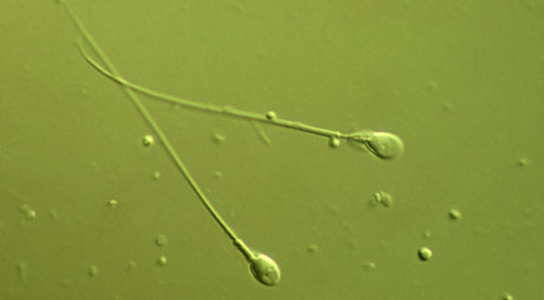
    The age at which a father sires children has been proven to determine how many mutations those offspring inherit.

    J.B.S. Haldane proposed in the 1930s that children might inherit more mutations from their fathers than their mothers. This year, thanks to whole-genome sequencing of dozens of Icelandic families, it has been proven that the age at which a father sires children determines how many mutations those offspring inherit.

    The scientists published their findings in the journal Nature. When fathers start families in their thirties and beyond, men could increase the likelihood of passing on their mutations to their children. Lead author Kári Stefánsson, a geneticist in Reykjavik, Iceland, states that there is an increased chance that one of those mutations might be deleterious.

    child-autism

    Sperm is continually generated by dividing precursor cells, which acquire new mutations with each division. Women are born with all of their egg cells, no more are produced. Stefánsson compared the genome of 78 trios of mothers, fathers, and children. The team then searched for mutations that weren’t present in either parent and that must have spontaneously arisen in the egg, sperm or embryo. This is the largest genetic study of nuclear families so far.

    On average, fathers pass on nearly four times as many new mutations as mothers. The number of new mutations being passed on rose exponentially with paternal age. A 36-year-old father will pass on twice as many mutations as a 20-year-old man. A 70-year-old will pass on eight times as many.

    Icelandic children born in 2011 will have 70 new mutations compared to 60 for a child born in 1980. The average age of fatherhood increased from 28 to 33 during that time period. Most of these mutations are harmless, but some could be linked to conditions such as autism and schizophrenia. The study doesn’t prove that fathers are more likely to pass on disease-associated or deleterious genes, but it strongly implies that fact.

    This could explain the rise in autism spectrum disorder. In the US, the CDC reported that one out of every 88 American children is now diagnosed with autism, a 78% increase since 2007. Other geneticists agree that older fathers could lead to more cases of autism, but that’s not the only answer. Paternal age is unlikely to account for the entire rise in autism. In most cases, autism isn’t caused by a single mutation, so there must be other predisposing factors that are inherited from parents which are distinct from new mutations occurring in sperm.

    Reference: “Rate of de novo mutations and the importance of father’s age to disease risk” by Augustine Kong, Michael L. Frigge, Gisli Masson, Soren Besenbacher, Patrick Sulem, Gisli Magnusson, Sigurjon A. Gudjonsson, Asgeir Sigurdsson, Aslaug Jonasdottir, Adalbjorg Jonasdottir, Wendy S. W. Wong, Gunnar Sigurdsson, G. Bragi Walters, Stacy Steinberg, Hannes Helgason, Gudmar Thorleifsson, Daniel F. Gudbjartsson, Agnar Helgason, Olafur Th. Magnusson, Unnur Thorsteinsdottir and Kari Stefansson, 22 August 2012, Nature.
    DOI: 10.1038/nature11396

    Never miss a breakthrough: Join the SciTechDaily newsletter.
    Follow us on Google and Google News.

    Autism Spectrum Disorder Disease Evolution Evolutionary Biology Genetics Genome
    Share. Facebook Twitter Pinterest LinkedIn Email Reddit

    Related Articles

    Genomic Regions That Set Humans Apart From Other Primates Carry Many Autism-Linked Mutations

    Scientists Reveal Catalog of Human Genetic Variation

    DNA Study Reveals Clues about Primate Evolution

    Study Finds “Rare” Genetic Variants Aren’t So Rare

    Cdt1 Protein Has a Role in DNA Replication and Mitosis

    Evolutionary Changes Surrounding the NOS1 Gene

    Stickleback Fish Used Pre-Existing Genes to Go from Saltwater to Freshwater Environments

    Human Y-Chromosome Has Enough Genes to Stay for Millions of Years

    Researchers Complete Genome Sequence of a Denisovan Human Finger Bone

    Leave A Reply Cancel Reply

    • Facebook
    • Twitter
    • Pinterest
    • YouTube

    Don't Miss a Discovery

    Subscribe for the Latest in Science & Tech!

    Trending News

    Bone-Strengthening Discovery Could Reverse Osteoporosis

    Scientists Uncover Hidden Trigger Behind Stem Cell Aging

    Scientists Find Way to Reverse Fatty Liver Disease Without Changing Diet

    Could Humans Regrow Limbs? New Study Reveals Promising Genetic Pathway

    Scientists Reveal Eating Fruits and Vegetables May Increase Your Risk of Lung Cancer

    Scientists Reverse Brain Aging With Simple Nasal Spray

    Scientists Uncover Potential Brain Risks of Popular Fish Oil Supplements

    Scientists Discover a Surprising Way To Make Bread Healthier and More Nutritious

    Follow SciTechDaily
    • Facebook
    • Twitter
    • YouTube
    • Pinterest
    • Newsletter
    • RSS
    SciTech News
    • Biology News
    • Chemistry News
    • Earth News
    • Health News
    • Physics News
    • Science News
    • Space News
    • Technology News
    Recent Posts
    • Why Are Giant Ants Letting Tiny Ants Crawl All Over Them?
    • Revolutionary Technique Sends Healthy Mitochondria Exactly Where They’re Needed
    • This Student Recreated the Universe in a Bottle. What She Discovered Could Help Reveal How Life Started on Earth
    • Alzheimer’s Symptoms May Start Outside the Brain, Study Finds
    • Cancer’s Secret Weapon? Scientists Reveal How Tumors “Learn” To Survive Treatment
    Copyright © 1998 - 2026 SciTechDaily. All Rights Reserved.
    • Science News
    • About
    • Contact
    • Editorial Board
    • Privacy Policy
    • Terms of Use

    Type above and press Enter to search. Press Esc to cancel.