
Close Menu
    Facebook X (Twitter) Instagram
    SciTechDaily
    • Biology
    • Chemistry
    • Earth
    • Health
    • Physics
    • Science
    • Space
    • Technology
    Facebook X (Twitter) Pinterest YouTube RSS
    SciTechDaily
    Home»Space»Hubble Admires Youthful Globular Star Cluster NGC 362
    Space

    Hubble Admires Youthful Globular Star Cluster NGC 362

    By ESA/HubbleOctober 31, 2016No Comments2 Mins Read
    Facebook Twitter Pinterest Telegram LinkedIn WhatsApp Email Reddit
    Share
    Facebook Twitter LinkedIn Pinterest Telegram Email Reddit
    Hubble Views NGC 362
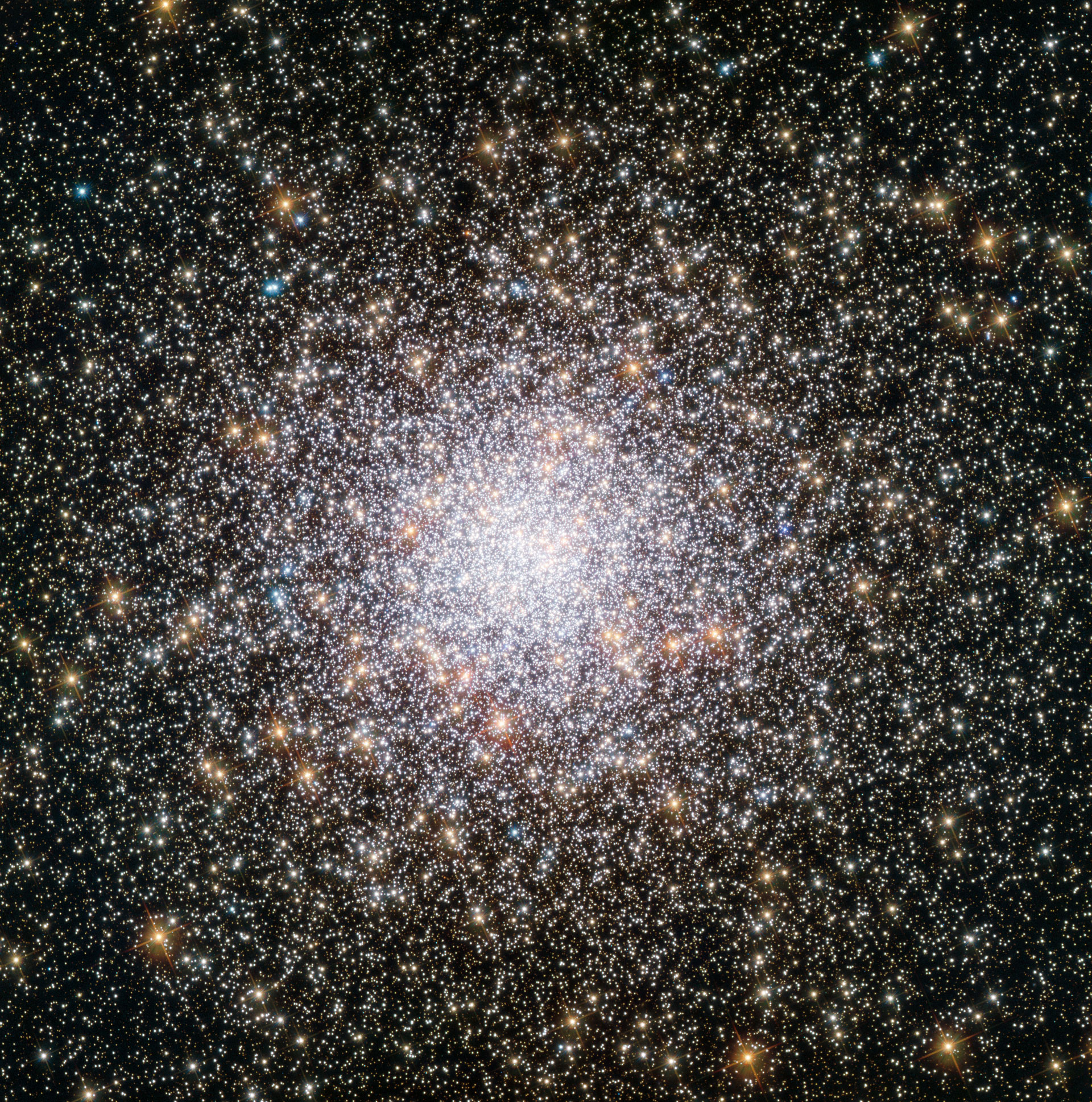
    Hubble Space Telescope image of globular cluster NGC 362. Credit: ESA/Hubble & NASA

    This newly released Hubble image shows globular cluster NGC 362.

    Globular clusters offer some of the most spectacular sights in the night sky. These ornate spheres contain hundreds of thousands of stars, and reside in the outskirts of galaxies. The Milky Way contains over 150 such clusters — and the one shown in this NASA/ESA Hubble Space Telescope image, named NGC 362, is one of the more unusual ones.

    As stars make their way through life they fuse elements together in their cores, creating heavier and heavier elements — known in astronomy as metals — in the process. When these stars die, they flood their surroundings with the material they have formed during their lifetimes, enriching the interstellar medium with metals. Stars that form later, therefore, contain higher proportions of metals than their older relatives.

    By studying the different elements present within individual stars in NGC 362, astronomers discovered that the cluster boasts a surprisingly high metal content, indicating that it is younger than expected. Although most globular clusters are much older than the majority of stars in their host galaxy, NGC 362 bucks the trend, with an age lying between 10 and 11 billion years old. For reference, the age of the Milky Way is estimated to be above 13 billion years.

    This image, in which you can view NGC 362’s individual stars, was taken by Hubble’s Advanced Camera for Surveys (ACS).

    Never miss a breakthrough: Join the SciTechDaily newsletter.
    Follow us on Google and Google News.

    Astronomy Globular Cluster Hubble Space Telescope
    Share. Facebook Twitter Pinterest LinkedIn Email Reddit

    Related Articles

    Hubble Views Globular Cluster IC 4499

    New Hubble Image of One of the Oldest Known Globular Clusters

    Hubble Reveals Largest Known Group of Star Clusters, Clues to Dark Matter

    Hubble Views Globular Cluster Palomar 2

    Hubble Zooms in on the Center of M4

    Hubble Views Globular Cluster Messier 56

    Hubble Captures a New Image of Messier 107

    Hubble Space Telescope Views the Globular Cluster Messier 10

    Hubble Captures New Image of Messier 9

    Leave A Reply Cancel Reply

    • Facebook
    • Twitter
    • Pinterest
    • YouTube

    Don't Miss a Discovery

    Subscribe for the Latest in Science & Tech!

    Trending News

    Scientists Recreate a Nuclear Fireball and Uncover Fallout’s Hidden Chemistry

    These Tiny Gut Particles Could Be Accelerating Aging Throughout the Body

    Doctors Changed One Thing and Weight Gain Stopped

    Magnetic Fields May Solve a Longstanding Binary Star Mystery

    The Probiotic Breakthrough for Natural Anxiety Relief and Better Mental Health

    Animal vs. Plant Protein: Scientists Found a Surprising Nutritional Difference

    According to Scientists, This Simple Dietary Change Is Linked to Lower Depression Scores

    Researchers Discover a Hidden Vitamin D Problem That Persists Year-Round

    Follow SciTechDaily
    • Facebook
    • Twitter
    • YouTube
    • Pinterest
    • Newsletter
    • RSS
    SciTech News
    • Biology News
    • Chemistry News
    • Earth News
    • Health News
    • Physics News
    • Science News
    • Space News
    • Technology News
    Recent Posts
    • Scientists Tracked 4,500 Animals During COVID – What They Discovered Was Surprising
    • Hidden Phase of Matter Finally Captured After Decades of Predictions
    • The Strange “Spacetime Crystal” That Can Suddenly Turn Into a Black Hole
    • A Hidden Gut Signal May Be Driving Sleep Apnea’s Deadly Heart Risks
    • This AI-Designed “Universal Vaccine” Could Stop Future Pandemics Before They Start
    Copyright © 1998 - 2026 SciTechDaily. All Rights Reserved.
    • Science News
    • About
    • Contact
    • Editorial Board
    • Privacy Policy
    • Terms of Use

    Type above and press Enter to search. Press Esc to cancel.