
As it turns out, even with all our medical technology and health education, we can’t outrun the findings of Charles Darwin. A study conducted by an international collaboration of scientists shows that humans are continuing to evolve just like other species in the wild.
New evidence proves humans are continuing to evolve and that significant natural and sexual selection is still taking place in our species in the modern world.
Despite advancements in medicine and technology, as well as an increased prevalence of monogamy, research reveals humans are continuing to evolve just like other species.
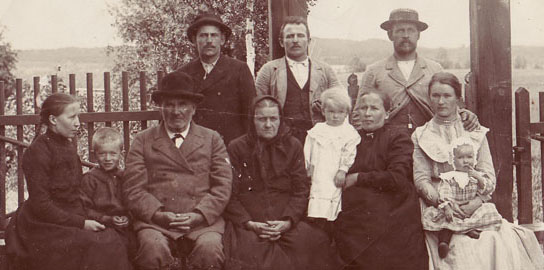
Scientists in an international collaboration, which includes the University of Sheffield, analyzed church records of about 6,000 Finnish people born between 1760-1849 to determine whether the demographic, cultural, and technological changes of the agricultural revolution affected natural and sexual selection in our species.
Project leader Dr. Virpi Lummaa, of the University´s Department of Animal and Plant Sciences, said: “We have shown advances have not challenged the fact that our species is still evolving, just like all the other species `in the wild´. It is a common misunderstanding that evolution took place a long time ago, and that to understand ourselves we must look back to the hunter-gatherer days of humans.”
Dr. Lummaa added: “We have shown significant selection has been taking place in very recent populations, and likely still occurs, so humans continue to be affected by both natural and sexual selection. Although the specific pressures, the factors making some individuals able to survive better, or have better success at finding partners and produce more kids, have changed across time and differ in different populations.”
As for most animal species, the authors found that men and women are not equal concerning Darwinian selection.
Principal investigator Dr. Alexandre Courtiol, of the Wissenschftskolleg zu Berlin, added: “Characteristics increasing the mating success of men are likely to evolve faster than those increasing the mating success of women. This is because mating with more partners was shown to increase reproductive success more in men than in women. Surprisingly, however, selection affected wealthy and poor people in the society to the same extent.”
The experts needed detailed information on large numbers of study subjects to be able to study selection over the entire life cycle of individuals: survival to adulthood, mate access, mating success, and fertility per mate.
Genealogy is very popular in Finland and the country has some of the best available data for such research thanks to detailed church records of births, deaths, marriages, and wealth status which were kept for tax purposes. Movement in the country was also very limited until the 20th century.
“Studying evolution requires large sample sizes with individual-based data covering the entire lifespan of each born person,” said Dr Lummaa. “We need unbiased datasets that report the life events for everyone born. Because natural and sexual selection acts differently on different classes of individuals and across the life cycle, we needed to study selection with respect to these characteristics in order to understand how our species evolves.”
The project was funded by the European Research Council and the Kone Foundation (Finland) and was carried out with Wissenschftskolleg zu Berlin and the Leibniz Institute for Zoo and Wildlife Research in Germany, University of Turku in Finland, University of Helsinki in Finland, and the Population Research Institute in Finland.
Never miss a breakthrough: Join the SciTechDaily newsletter.
Follow us on Google and Google News.
3 Comments
Exactly what evolutionary changes are being found?
I was going to ask the same thing. And how are they manifested?
Where is the link to the study or where it was published? This is almost clickbait!!