
Close Menu
    Facebook X (Twitter) Instagram
    SciTechDaily
    • Biology
    • Chemistry
    • Earth
    • Health
    • Physics
    • Science
    • Space
    • Technology
    Facebook X (Twitter) Pinterest YouTube RSS
    SciTechDaily
    Home»Earth»Shallow Undersea Methane Hydrate Deposit Found in Arctic
    Earth

    Shallow Undersea Methane Hydrate Deposit Found in Arctic

    By SciTechDailyDecember 10, 20124 Comments2 Mins Read
    Facebook Twitter Pinterest Telegram LinkedIn WhatsApp Email Reddit
    Share
    Facebook Twitter LinkedIn Pinterest Telegram Email Reddit
    arctic-drilling-beaufort
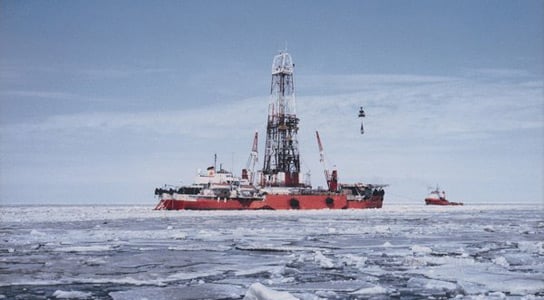
    Shell Alaska’s earlier drilling program in the Chukchi Sea. Credit: Royal Dutch Shell

    In the Arctic Circle, on the continental slope off Canada in the Beaufort Sea, the shallowest known deposit of methane hydrate has been discovered. The crystalline solid is comprised of methane molecules trapped in an ice-lattice structure.

    The scientists presented their findings at the annual meeting of the Geophysical Union in San Francisco, California. The trapped gas deposit is located just 290 meters (950 feet) below sea level. Previously, the shallowest deposits were found in the vicinity of the Svalbard Islands, in the Gulf of Mexico, at a depth of around 400 meters (1,300 feet).

    The newly discovered deposit is of modest size, but such trapped deposits represent a large global carbon reservoir and some researchers fear that their destabilization around the world, caused by changes in sea temperature or drilling, could cause a release of methane into the environment and accelerate global warming.

    Even a subtle warming makes this new deposit makes it vulnerable to decomposition, since it is at such a shallow depth. The deposit is within the “methane hydrate stability zone,” a range of pressure and temperature at which gas hydrates are stable. The stability zone begins at a depth of about 270 m (890 ft) in this region, above sea temperatures are too warm to ensure that the methane remains locked.

    Some climate scientists fear that gas-hydrate decomposition could destabilize the sea floor, causing landslides and tsunamis. Other scientists remain skeptical, since there is no proof in the geological record that any of that has ever happened before.

    Never miss a breakthrough: Join the SciTechDaily newsletter.
    Follow us on Google and Google News.

    Arctic Global Warming Methane Hydrates
    Share. Facebook Twitter Pinterest LinkedIn Email Reddit

    Related Articles

    New Reason Why Arctic Is Warming So Fast Found by Scientists

    Half of Late 20th-Century Arctic Warming Caused by Ozone-Depleting Substances – “It’s a Good-News Story”

    2019 Arctic Sea Ice Minimum Tied for Second Lowest on Record [Video]

    Carbon Locked in Arctic Permafrost Will Contribute to Global Warming

    Arctic Sea Ice Set for a Record Breaking Melt

    Melting Arctic Ice May Lead to Severe Weather Changes

    Increased Methane Gas Levels Found Over Cracks in Arctic Sea Ice

    Fossil Fuel Emissions, Organic Carbon and Alaska’s Glaciers

    NASA Study Reveals Multi-Year Ice Declining Faster than Perennial Ice that Surrounds It

    4 Comments

    1. Rock on December 10, 2012 10:07 am

      So…..WHY oh WHY dont we harvest the damn gas and use it for something productive??

      Reply
      • Steve Last on December 14, 2012 1:10 pm

        I am sure that Shell and others would “harvest the damn gas” if the technology was available to do it.

        Reply
    2. Steve Last on December 14, 2012 1:08 pm

      It strikes em that there may be very little risk of this methane escaping as methane. If the ice crystals melt gently as presumably they would, as sea temperatures rise gradually, the methane will bubble up through the sea and be biologically oxidised in the ocean, providing a carbon source for increasing life in the sea. There would be a CO2 rise impact but not the much bigger (about 23 times bigger) greenhouse effect of methane emissions.

      I say this from experience of the remarkable ability of soil microbess to oxidise landfill gas methane, which I have seen, as it passes through the soil (or an engineered biofilter) BEFORE it reaches the air above.

      Reply
    3. peter m on July 29, 2013 2:17 pm

      six words for steve last:

      clathrate gun hypothesis
      Permian extinction event

      Rock: you and i are on the same boat

      Reply
    Leave A Reply Cancel Reply

    • Facebook
    • Twitter
    • Pinterest
    • YouTube

    Don't Miss a Discovery

    Subscribe for the Latest in Science & Tech!

    Trending News

    Monster Storms on Jupiter Unleash Lightning Beyond Anything on Earth

    Scientists Create “Liquid Gears” That Spin Without Touching

    The Simple Habit That Could Help Prevent Cancer

    Millions Take These IBS Drugs, But a New Study Finds Serious Risks

    Scientists Unlock Hidden Secrets of 2,300-Year-Old Mummies Using Cutting-Edge CT Scanner

    Bread Might Be Making You Gain Weight Even Without Eating More Calories

    Scientists Discover Massive Magma Reservoir Beneath Tuscany

    Europe’s Most Active Volcano Just Got Stranger – Here’s Why Scientists Are Rethinking It

    Follow SciTechDaily
    • Facebook
    • Twitter
    • YouTube
    • Pinterest
    • Newsletter
    • RSS
    SciTech News
    • Biology News
    • Chemistry News
    • Earth News
    • Health News
    • Physics News
    • Science News
    • Space News
    • Technology News
    Recent Posts
    • 25-Year Study Uncovers Hidden Paths and Early Warning Signs of Blood Cancer
    • Not Just Snoring – New Research Reveals Sleep Apnea May Be Damaging Your Muscles
    • Scientists Discover a Surprising Reason Intermittent Fasting Extends Life
    • Scientists Discover a New Meteor Shower From a Mysterious Crumbling Asteroid
    • This Simple Fruit Wash Could Make Produce Safer and Last Days Longer
    Copyright © 1998 - 2026 SciTechDaily. All Rights Reserved.
    • Science News
    • About
    • Contact
    • Editorial Board
    • Privacy Policy
    • Terms of Use

    Type above and press Enter to search. Press Esc to cancel.