
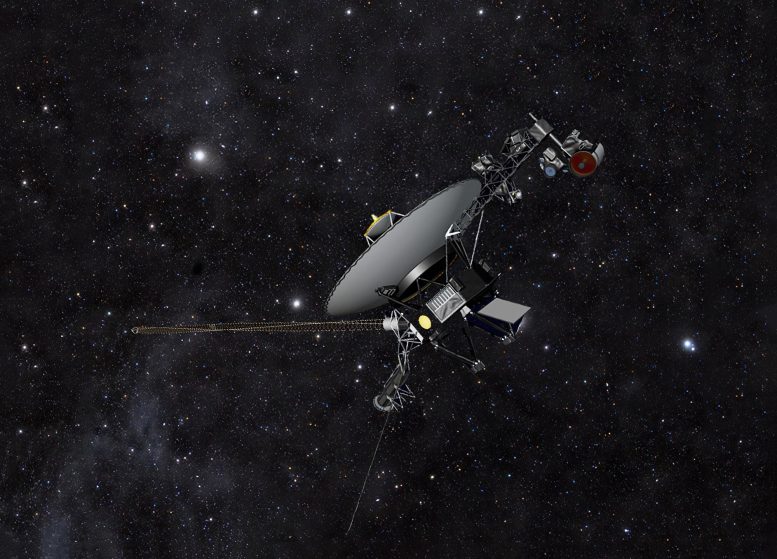
The plan will keep Voyager 2’s science instruments turned on a few years longer than previously anticipated, enabling yet more revelations from interstellar space.
Launched in 1977, the Voyager 2 spacecraft is more than 12 billion miles (20 billion kilometers) from Earth, using five science instruments to study interstellar space. To help keep those instruments operating despite a diminishing power supply, the aging spacecraft has begun using a small reservoir of backup power set aside as part of an onboard safety mechanism. The move will enable the mission to postpone shutting down a science instrument until 2026, rather than this year.
Switching off a science instrument will not end the mission. After shutting off the one instrument in 2026, the probe will continue to operate four science instruments until the declining power supply requires another to be turned off. If Voyager 2 remains healthy, the engineering team anticipates the mission could potentially continue for years to come.
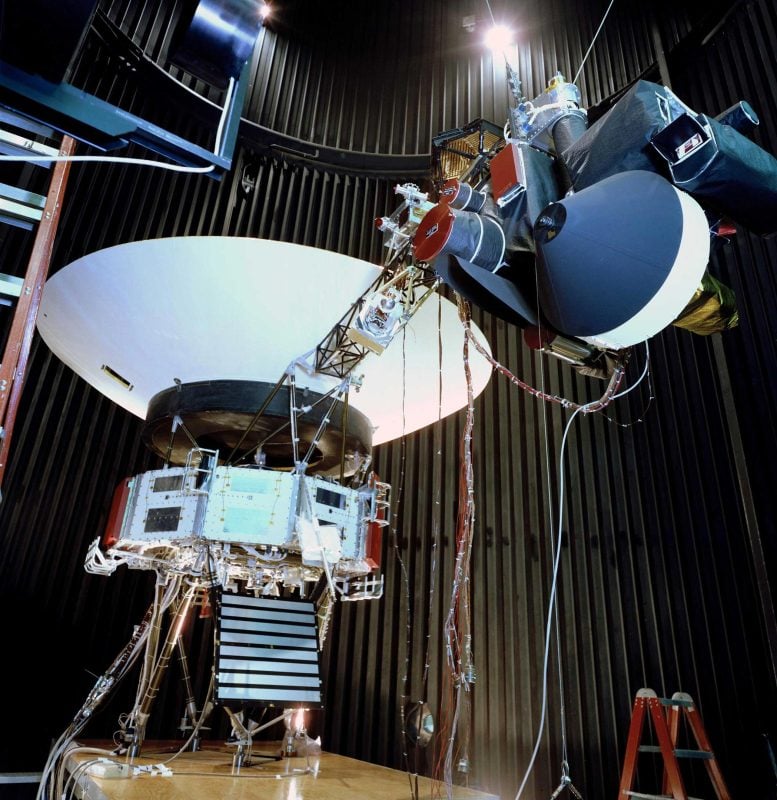
Voyager 2 and its twin Voyager 1 are the only spacecraft ever to operate outside the heliosphere, the protective bubble of particles and magnetic fields generated by the Sun. The probes are helping scientists answer questions about the shape of the heliosphere and its role in protecting Earth from the energetic particles and other radiation found in the interstellar environment.
“The science data that the Voyagers are returning gets more valuable the farther away from the Sun they go, so we are definitely interested in keeping as many science instruments operating as long as possible,” said Linda Spilker, Voyager’s project scientist at NASA’s Jet Propulsion Laboratory in Southern California, which manages the mission for NASA.
Power to the Probes
Both Voyager probes power themselves with radioisotope thermoelectric generators (RTGs), which convert heat from decaying plutonium into electricity. The continual decay process means the generator produces slightly less power each year. So far, the declining power supply hasn’t impacted the mission’s science output, but to compensate for the loss, engineers have turned off heaters and other systems that are not essential to keeping the spacecraft flying.
With those options now exhausted on Voyager 2, one of the spacecraft’s five science instruments was next on their list. (Voyager 1 is operating one less science instrument than its twin because an instrument failed early in the mission. As a result, the decision about whether to turn off an instrument on Voyager 1 won’t come until sometime next year.)
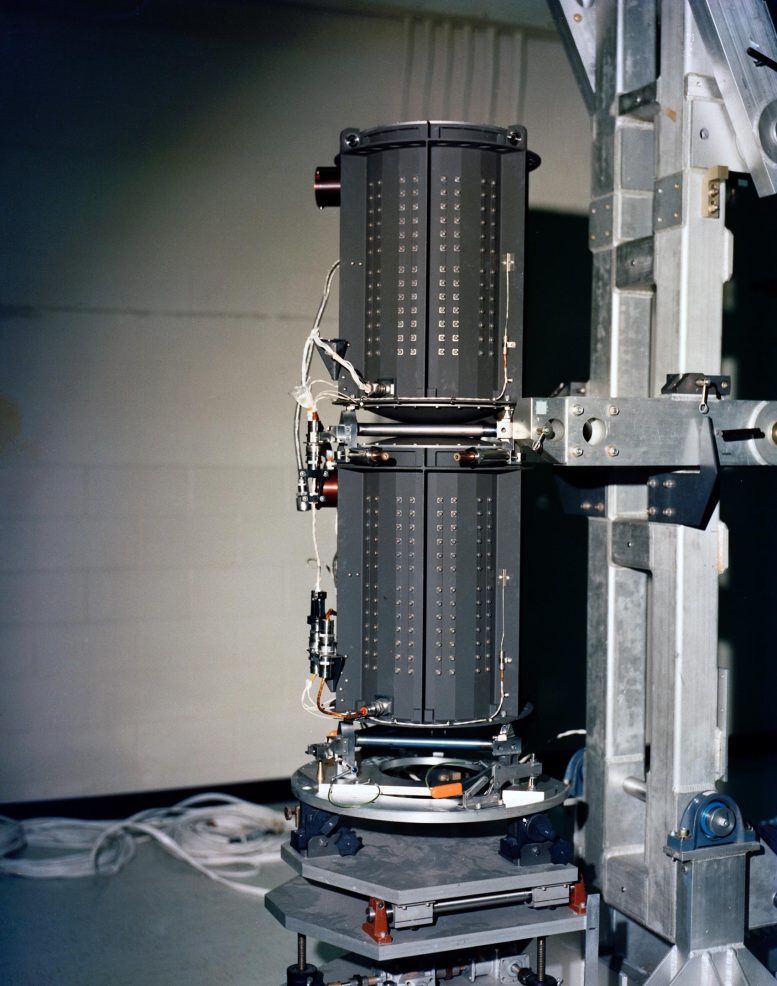
In search of a way to avoid shutting down a Voyager 2 science instrument, the team took a closer look at a safety mechanism designed to protect the instruments in case the spacecraft’s voltage – the flow of electricity – changes significantly. Because a fluctuation in voltage could damage the instruments, Voyager is equipped with a voltage regulator that triggers a backup circuit in such an event. The circuit can access a small amount of power from the RTG that’s set aside for this purpose. Instead of reserving that power, the mission will now be using it to keep the science instruments operating.
Although the spacecraft’s voltage will not be tightly regulated as a result, even after more than 45 years in flight, the electrical systems on both probes remain relatively stable, minimizing the need for a safety net. The engineering team is also able to monitor the voltage and respond if it fluctuates too much. If the new approach works well for Voyager 2, the team may implement it on Voyager 1 as well.
“Variable voltages pose a risk to the instruments, but we’ve determined that it’s a small risk, and the alternative offers a big reward of being able to keep the science instruments turned on longer,” said Suzanne Dodd, Voyager’s project manager at JPL. “We’ve been monitoring the spacecraft for a few weeks, and it seems like this new approach is working.”
The Voyager mission was originally scheduled to last only four years, sending both probes past Saturn and Jupiter. NASA extended the mission so that Voyager 2 could visit Neptune and Uranus; it is still the only spacecraft ever to have encountered the ice giants. In 1990, NASA extended the mission again, this time with the goal of sending the probes outside the heliosphere. Voyager 1 reached the boundary in 2012, while Voyager 2 (traveling slower and in a different direction than its twin) reached it in 2018.
More About the Mission
Jet Propulsion Laboratory (JPL), a division of Caltech in Pasadena, built and operates the Voyager spacecraft. The Voyager missions are a part of the NASA Heliophysics System Observatory, sponsored by the Heliophysics Division of the Science Mission Directorate in Washington.
Never miss a breakthrough: Join the SciTechDaily newsletter.
Follow us on Google and Google News.
5 Comments
I helped build Voyager I when I worked at RCA Astro division in Princeton NJ.. it’s amazing that these probes are still going strong.. I’m pleased to be a part of history..
Thank you for your contribution!
Good
I think space exploration facts transcends all petty political and social events on earth.
Not a comment but a question. When was voyager 1 launched?