
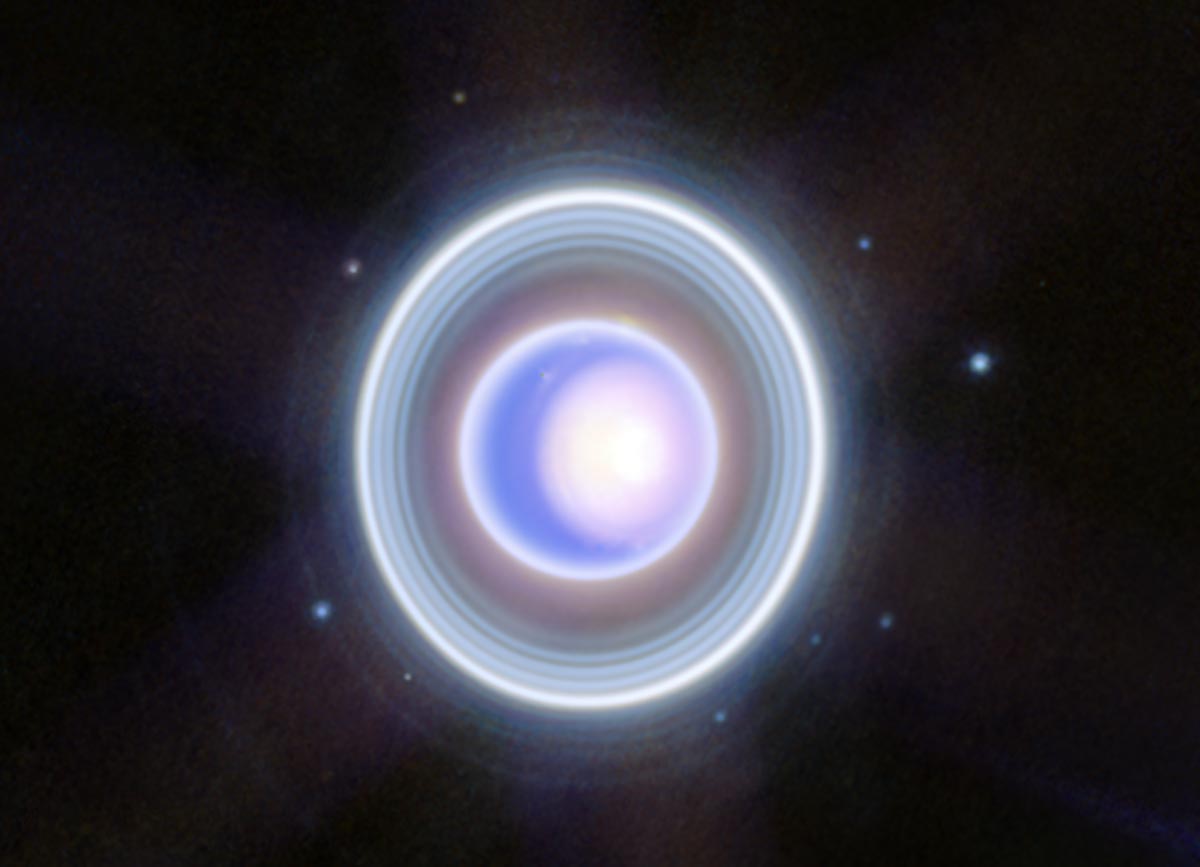
NASA’s Voyager 2 flyby of Uranus decades ago shaped scientists’ understanding of the planet but also introduced unexplained oddities. A recent data dive has offered answers.
In 1986, Voyager 2’s flyby of Uranus caught the planet during a rare magnetic anomaly caused by unique space weather, which influenced its magnetosphere’s behavior, offering new insights into its intense radiation belts and suggesting potential activity on its moons.
Voyager 2’s Historic Uranus Flyby
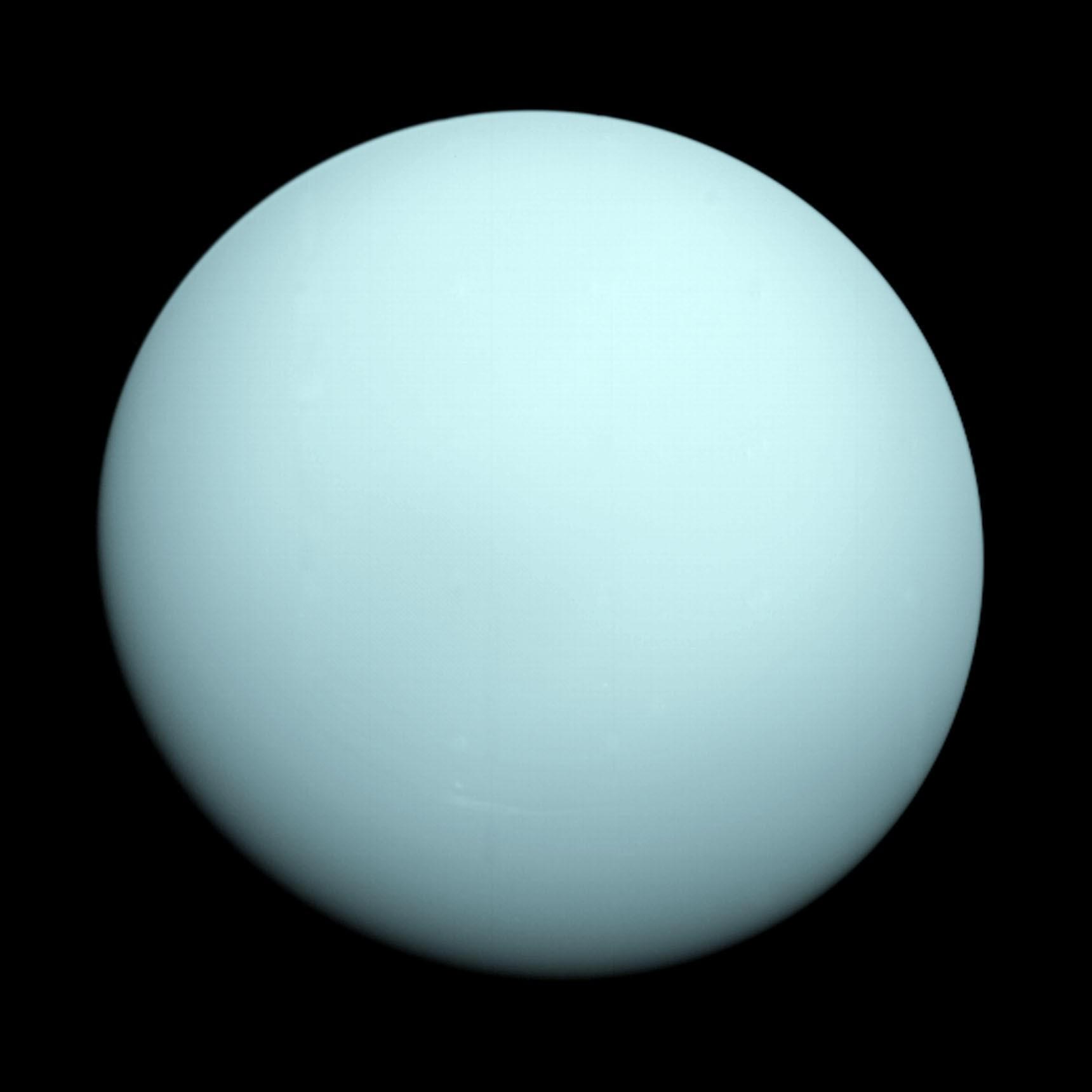
In 1986, NASA’s Voyager 2 spacecraft made its historic flyby of Uranus, offering scientists their first—and still only—close-up view of this unique outer planet with its sideways rotation. During the flyby, Voyager 2 discovered new moons and rings, but it also unveiled perplexing mysteries. Energized particles around Uranus behaved in ways that defied scientists’ understanding of how magnetic fields trap particle radiation, establishing Uranus as an unusual case in our solar system.

Now, new research analyzing data from that 38-year-old flyby has shed light on this mystery, revealing it was likely due to a cosmic coincidence. Just days before Voyager 2’s flyby, an unusual space weather event compressed Uranus’s magnetosphere, dramatically altering the planet’s magnetic field and creating the unique conditions Voyager 2 observed.
“If Voyager 2 had arrived just a few days earlier, it would have observed a completely different magnetosphere at Uranus,” said Jamie Jasinski of NASA’s Jet Propulsion Laboratory in Southern California and lead author of the new work published on November 11 in Nature Astronomy. “The spacecraft saw Uranus in conditions that only occur about 4% of the time.”
Importance of Magnetospheres
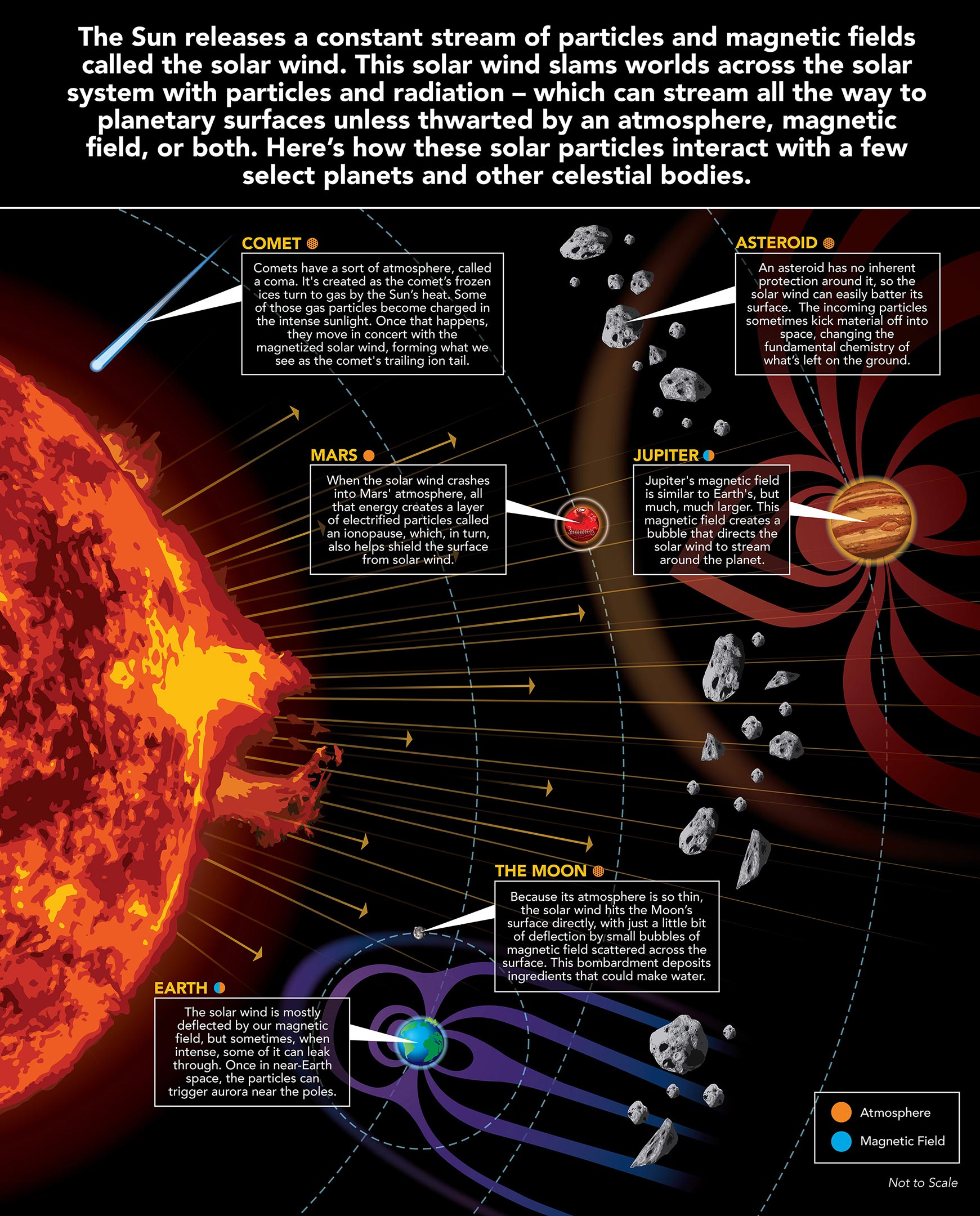
Magnetospheres serve as protective bubbles around planets (including Earth) with magnetic cores and magnetic fields, shielding them from jets of ionized gas — or plasma — that stream out from the Sun in the solar wind. Learning more about how magnetospheres work is important for understanding our own planet, as well as those in seldom-visited corners of our solar system and beyond.
That’s why scientists were eager to study Uranus’ magnetosphere, and what they saw in the Voyager 2 data in 1986 flummoxed them. Inside the planet’s magnetosphere were electron radiation belts with an intensity second only to Jupiter’s notoriously brutal radiation belts. But there was apparently no source of energized particles to feed those active belts; in fact, the rest of Uranus’ magnetosphere was almost devoid of plasma.
The missing plasma also puzzled scientists because they knew that the five major Uranian moons in the magnetic bubble should have produced water ions, as icy moons around other outer planets do. They concluded that the moons must be inert with no ongoing activity.
Impact of Solar Wind Events
So why was no plasma observed, and what was happening to beef up the radiation belts? The new data analysis points to the solar wind. When plasma from the Sun pounded and compressed the magnetosphere, it likely drove plasma out of the system. The solar wind event also would have briefly intensified the dynamics of the magnetosphere, which would have fed the belts by injecting electrons into them.
The findings could be good news for those five major moons of Uranus: Some of them might be geologically active after all. With an explanation for the temporarily missing plasma, researchers say it’s plausible that the moons actually may have been spewing ions into the surrounding bubble all along.
Future Missions and Scientific Excitement
Planetary scientists are focusing on bolstering their knowledge about the mysterious Uranus system, which the National Academies’ 2023 Planetary Science and Astrobiology Decadal Survey prioritized as a target for a future NASA mission.
JPL’s Linda Spilker was among the Voyager 2 mission scientists glued to the images and other data that flowed in during the Uranus flyby in 1986. She remembers the anticipation and excitement of the event, which changed how scientists thought about the Uranian system.
“The flyby was packed with surprises, and we were searching for an explanation of its unusual behavior. The magnetosphere Voyager 2 measured was only a snapshot in time,” said Spilker, who has returned to the iconic mission to lead its science team as project scientist. “This new work explains some of the apparent contradictions, and it will change our view of Uranus once again.”
Voyager 2, now in interstellar space, is almost 13 billion miles (21 billion kilometers) from Earth.
Reference: “The anomalous state of Uranus’s magnetosphere during the Voyager 2 flyby” by Jamie M. Jasinski, Corey J. Cochrane, Xianzhe Jia, William R. Dunn, Elias Roussos, Tom A. Nordheim, Leonardo H. Regoli, Nick Achilleos, Norbert Krupp and Neil Murphy, 11 November 2024, Nature Astronomy.
DOI: 10.1038/s41550-024-02389-3
Never miss a breakthrough: Join the SciTechDaily newsletter.
Follow us on Google and Google News.
2 Comments
I am disappointed that this article has no humorous comments. Do better, people.
Voyager’s still doing a great job & from The 70’s…. Wow Go Voyager’s
I told my wife the other night as she was getting out of the shower, that i just loved looking at the rings around UrAnus.. 😉
Beautiful 😍