
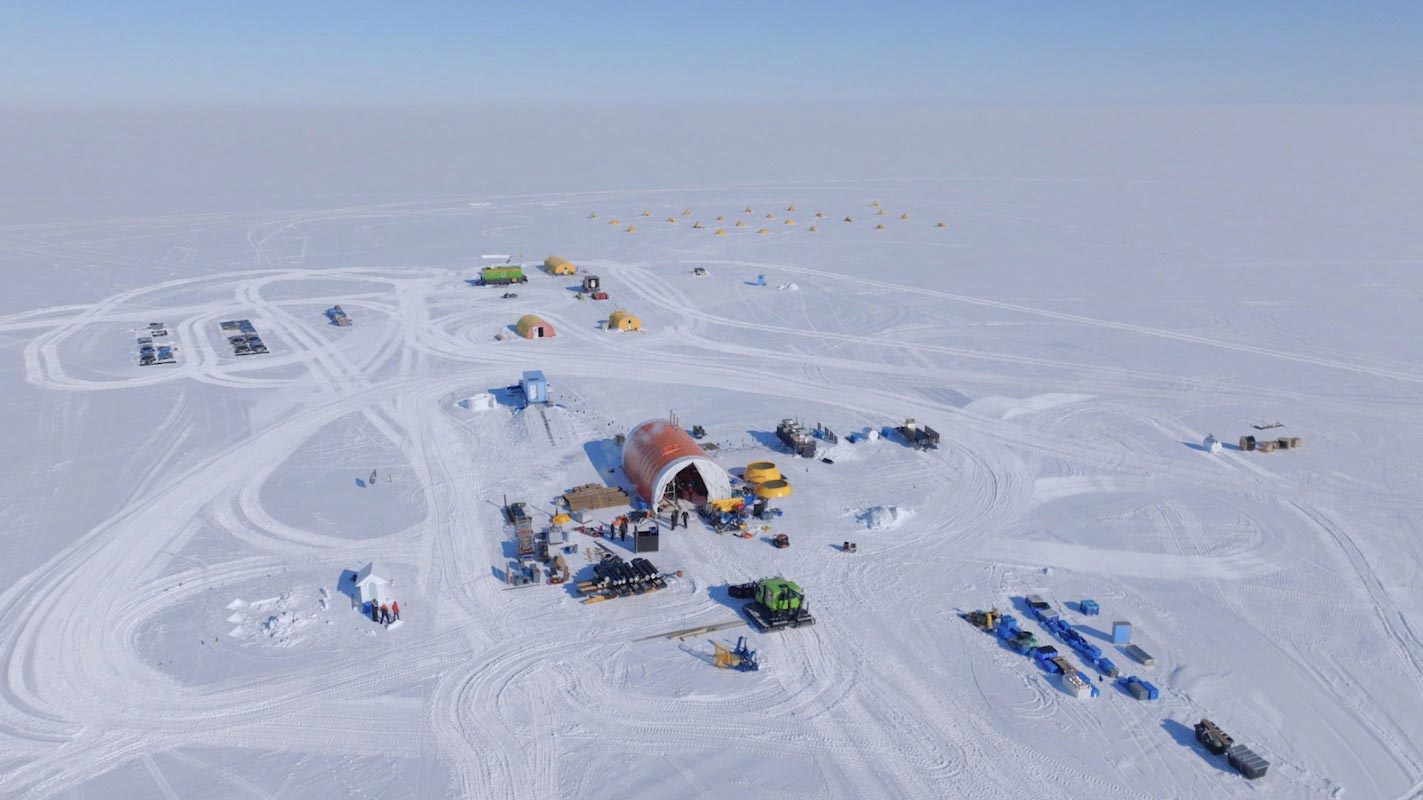
Scientists are studying the West Antarctic Ice Sheet to understand its response to warming and predict future sea-level rise.
An international team of scientists, including faculty from Binghamton University, State University of New York, is embarking on an ambitious mission to gather critical geological records from the West Antarctic Ice Sheet.
Associate Professor Molly Patterson is part of the science leadership team for the current expedition, which is taking place during the Antarctic summer. She will co-lead the Crary Ice Stream season in the following year. This season’s “on-ice” team, comprising 27 members, also includes Brendan Reilly from the Lamont-Doherty Earth Observatory.
The Threat of Melting Ice
The vast ice sheet holds enough ice to raise sea levels by 13 to 16.4 feet if it melts completely. Research has found a collapse might be inevitable for some parts of the West Antarctic Ice Sheet, such as the area around the Thwaites Glacier — also known as the “Doomsday Glacier” — in the Amundsen Sea, due to the presence of warm water. In contrast, water underneath the Ross Ice Shelf — which acts as a buttress to stabilize the inland ice — remains cold.
But will the Ross Ice Shelf melt? And, if so, when? Scientists, drillers, and Antarctic field specialists from 13 countries have come together as part of the Sensitivity of the West Antarctic Ice Sheet to 2°C (SWAIS2C) of warming project to find those answers.
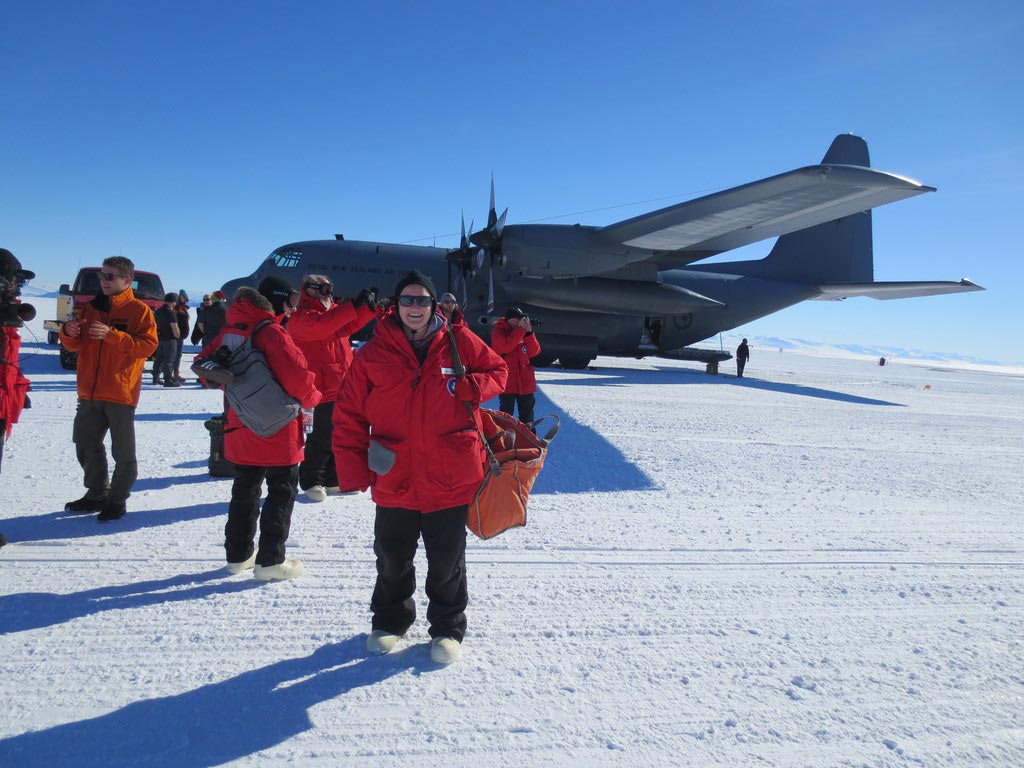
“The international partnership supporting this project really highlights how we can try to address some of the most pressing and challenging science questions related to the impacts of global change that will impact society,” said Patterson, co-chief scientist of SWAIS2C.
The mission, which takes place during the Antarctic summer, is challenging. Researchers are seeking insights contained in sediment layered on the seafloor under the Ross Ice Shelf. To access it, they must melt a hole through around 580 meters of ice, pass through a 55-meter ocean cavity, and use a custom-designed drilling system to retrieve a sediment core 200 meters deep in the seabed.
Last year, the attempt failed after reaching the seafloor due to technical difficulties. It was the first-ever attempt to obtain a geological record that deep so far from a base — around 700 miles — and so close to the center of the West Antarctic Ice Sheet, said co-chief scientist Richard Levy from GNS Science and Te Herenga Waka-Victoria University of Wellington, New Zealand.
Unlocking Earth’s Climate History
The rocks and mud in the core will reveal how the ice sheet behaved during the last interglacial period 125,000 years ago when the Earth was around 1.5° C warmer than pre-industrial temperatures — similar to temperatures this year due to human-caused climate change. If the researchers find marine algae, indicating open ocean conditions, it’s likely that the ice sheet retreated.
The team calls SWAIS2C “the discovery for our lifetime” and hopes the results will guide plans to adapt to unavoidable sea-level rise while amplifying the imperative to mitigate global greenhouse gas emissions.
“Retrieving this sample from such a remote location will help us build a much clearer picture of how the West Antarctic Ice Sheet will respond to future warming, which parts will melt first, and which parts will remain. We’re using the past to help prepare for our future,” said co-chief scientist Tina van de Flierdt from Imperial College London.
Never miss a breakthrough: Join the SciTechDaily newsletter.
Follow us on Google and Google News.
1 Comment
Why is ice melting in West Antarctica and NOT in East Antarctica. If water temperature is related to well-mixed CO2, why isn’t it uniform around Antarctica?