
Close Menu
    Facebook X (Twitter) Instagram
    SciTechDaily
    • Biology
    • Chemistry
    • Earth
    • Health
    • Physics
    • Science
    • Space
    • Technology
    Facebook X (Twitter) Pinterest YouTube RSS
    SciTechDaily
    Home»Space»A Small, Bright Surprise: Two Views of a Sungrazing Comet
    Space

    A Small, Bright Surprise: Two Views of a Sungrazing Comet

    By Sarah Frazier, NASA's Goddard Space Flight CenterJanuary 4, 2021No Comments3 Mins Read
    Facebook Twitter Pinterest Telegram LinkedIn WhatsApp Email Reddit
    Share
    Facebook Twitter LinkedIn Pinterest Telegram Email Reddit
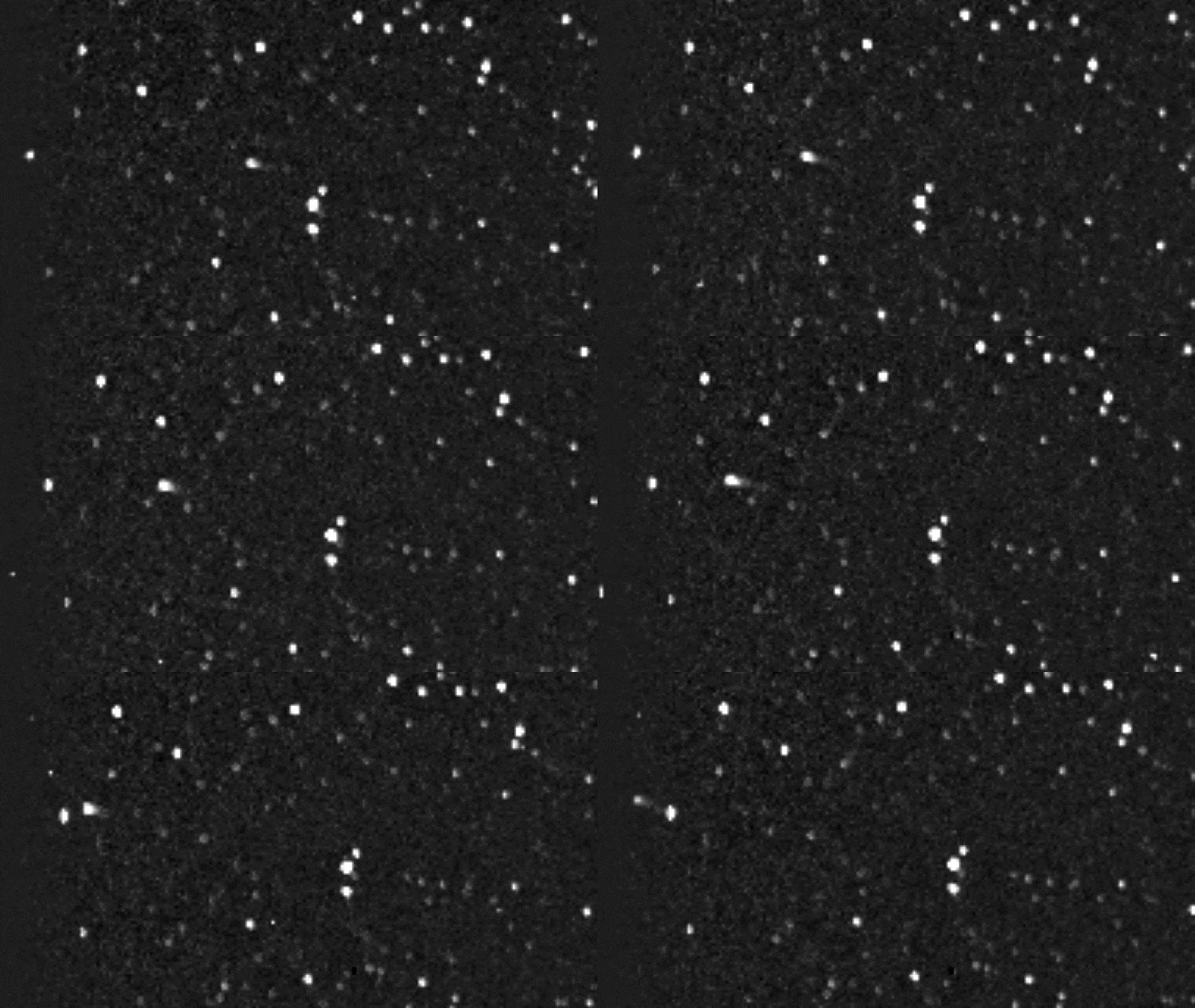
    Comet SOHO 4063
    This series of images from the WISPR instrument on board Parker Solar Probe shows a small sungrazing comet, SOHO-4063, as it approached the Sun on September 13-14, 2020. This is the first observation of a sungrazing comet by Parker Solar Probe’s instruments. Credit: NASA/Johns Hopkins APL/Naval Research Lab/Parker Solar Probe/Guillermo Stenborg

    Parker Solar Probe Captured Its First Sungrazing Comet, SOHO-4063

    When scientists downlinked data from Parker Solar Probe’s sixth orbit, there was a small, bright surprise waiting for them: the spacecraft’s first observation of a sungrazing comet. This particular comet was discovered just weeks earlier using data from ESA (European Space Agency) and NASA’s Solar and Heliospheric Observatory, or SOHO.

    A Unique Class of Comets Near the Sun

    Parker Solar Probe captured spectacular images of comet NEOWISE in July 2020, but this is the first time the spacecraft has seen a sungrazer — a particular class of comet that flies extremely close to the Sun, typically so small and dim that they are impossible to see from Earth or observatories other than SOHO. This sighting confirms the hope of the Parker Solar Probe team that the spacecraft’s WISPR instrument, designed to image the Sun’s outer atmosphere and solar wind, could provide new insight into these star-skimming celestial bodies.

    Like nearly all sungrazers, this comet — nicknamed SOHO-4063 after the observatory that first spotted it — was destroyed as it swooped by the Sun, disintegrated by heating from the intense sunlight. It’s this destruction process that scientists hope to learn more about with future Parker Solar Probe observations of sungrazers — a prospect that looks more likely based on these first images. The comet appeared brighter in Parker Solar Probe’s data than in that from SOHO, indicating that Parker Solar Probe’s WISPR instrument is particularly sensitive to comets and may provide a new level of detail on the sungrazers that happen to cross its field of view. Parker Solar Probe’s close solar orbit also puts the spacecraft closer to these sungrazing comets than other observatories — about 40 million miles away, less than half the distance from which SOHO sees sungrazers.


    These images from September 13-15, 2020, show comet SOHO-4063 as it approaches the Sun, seen by ESA (European Space Agency) and NASA’s Solar and Heliospheric Observatory. Comet SOHO-4063 was later detected in data from NASA’s Parker Solar Probe. Credit: ESA/NASA/SOHO/Naval Research Lab/Brendan Gallagher

    Discovered by a Citizen Scientist

    Comet SOHO-4063 was originally discovered on September 13, 2020, by citizen scientist Worachate Boonplod with the Sungrazer Project, and the comet first appeared in Parker Solar Probe’s data later on September 13. Parker Solar Probe sends its science data back to Earth in batches at certain points in its orbit, meaning scientists didn’t have a chance to look for this comet in Parker Solar Probe’s data until weeks after it was initially discovered in SOHO’s data. Even with such weeks- or months-long lags, Parker Solar Probe’s proximity to sungrazers and the WISPR instrument’s high sensitivity to comets means that Parker Solar Probe may eventually spot new sungrazing comets that elude even SOHO.

    Never miss a breakthrough: Join the SciTechDaily newsletter.
    Follow us on Google and Google News.

    Astronomy Comet European Space Agency NASA NASA Goddard Space Flight Center Parker Solar Probe SOHO
    Share. Facebook Twitter Pinterest LinkedIn Email Reddit

    Related Articles

    ESA/NASA Solar and Heliospheric Observatory Celebrates a Quarter-Century in Space

    ESA/NASA SOHO Spacecraft Has Discovered Thousands of Comets – What Makes It So Good at It?

    New Comet SWAN Discovered by Solar Observatory Is Visible From Earth Without a Telescope

    Dozens of ‘Comet Crumbs’ Detected by LISA Pathfinder [Video]

    SOHO Reveals Evidence of Seismic G-Mode Waves in Our Sun

    NASA’s Solar and Heliospheric Observatory Celebrates 20 Years of Science

    SOHO Views Large Coronal Hole Near the Sun’s North Pole

    Satellites Monitor the Colliding Winds of O-Type Stars

    Ultra-Fast Outflows are Common Features of Black-Hole-Powered Galaxies

    Leave A Reply Cancel Reply

    • Facebook
    • Twitter
    • Pinterest
    • YouTube

    Don't Miss a Discovery

    Subscribe for the Latest in Science & Tech!

    Trending News

    Dark Matter May Be Leaving a Signal in Earth’s Atmosphere

    Scientists Discover a 300-Million-Year-Old Geological Time Capsule Inside Fossilized Wood

    Oral Weight Loss Pill Helps Patients Lose up to 12% of Body Weight

    Scientists Find Two New Ways To Break Down “Forever Chemicals” in Water

    Pesticide Exposure May Carry a Serious Neurological Risk Years Later

    Ozempic Could Fight Addiction Too – Scientists Finally Know How

    Two Mysterious ‘Ghost’ Ancestors Are Hiding in Our DNA

    This Widely Used Plastic Could Be Harming Your Liver

    Follow SciTechDaily
    • Facebook
    • Twitter
    • YouTube
    • Pinterest
    • Newsletter
    • RSS
    SciTech News
    • Biology News
    • Chemistry News
    • Earth News
    • Health News
    • Physics News
    • Science News
    • Space News
    • Technology News
    Recent Posts
    • How Prehistoric Poop Changed Earth’s Ecosystems Forever
    • This Fossil Upends a Decades-Old Debate About Snake Evolution
    • Breast Cancer May Hijack Nerves To Grow and Resist Treatment
    • Any Level of Physical Activity May Slow Cognitive Decline, Study Suggests
    • A Blood Test Years Before Cancer May Reveal a Hidden Warning Sign
    Copyright © 1998 - 2026 SciTechDaily. All Rights Reserved.
    • Science News
    • About
    • Contact
    • Editorial Board
    • Privacy Policy
    • Terms of Use

    Type above and press Enter to search. Press Esc to cancel.