
Close Menu
    Facebook X (Twitter) Instagram
    SciTechDaily
    • Biology
    • Chemistry
    • Earth
    • Health
    • Physics
    • Science
    • Space
    • Technology
    Facebook X (Twitter) Pinterest YouTube RSS
    SciTechDaily
    Home»Space»New Comet SWAN Discovered by Solar Observatory Is Visible From Earth Without a Telescope
    Space

    New Comet SWAN Discovered by Solar Observatory Is Visible From Earth Without a Telescope

    By NASA's Goddard Space Flight CenterMay 18, 2020No Comments3 Mins Read
    Facebook Twitter Pinterest Telegram LinkedIn WhatsApp Email Reddit
    Share
    Facebook Twitter LinkedIn Pinterest Telegram Email Reddit
    SWAN SOHO
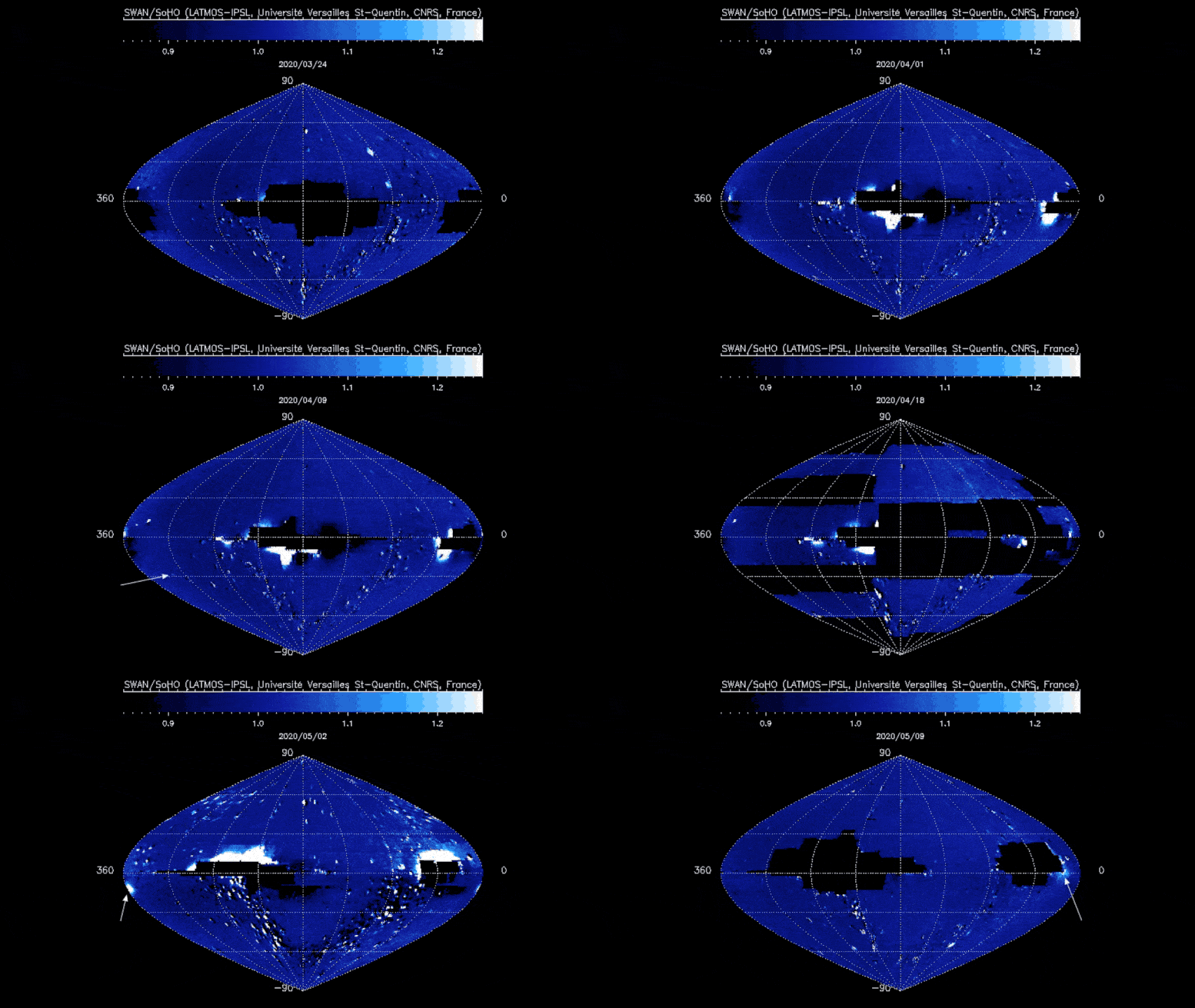
    An amateur astronomer named Michael Mattiazzo discovered the new comet using data from Solar Wind Anisotropies (SWAN), a SOHO instrument, in April 2020, as depicted in the image. Credit: ESA/NASA/SOHO

    In late May and early June, Earthlings may be able to glimpse Comet SWAN. The comet is currently faintly visible to the unaided eye in the Southern Hemisphere just before sunrise — providing skywatchers with a relatively rare glimpse of a comet bright enough to be seen without a telescope. But Comet SWAN’s initial discovery was made not from the ground, but via an instrument on board ESA (the European Space Agency) and NASA’s Solar and Heliospheric Observatory, or SOHO, satellite.

    The new comet was first spotted in April 2020, by an amateur astronomer named Michael Mattiazzo using data from a SOHO instrument called Solar Wind Anisotropies, or SWAN — as seen here. The comet appears to leave the left side of the image and reappear on the right side around May 3, because of the way SWAN’s 360-degree all-sky maps are shown, much like a globe is represented by a 2D map.

    SWAN maps the constantly outflowing solar wind in interplanetary space by focusing on a particular wavelength of ultraviolet light emitted by hydrogen atoms. The new comet — officially classified C/2020 F8 (SWAN) but nicknamed Comet SWAN — was spotted in the images because it’s releasing huge amounts of water, about 1.3 metric tons (about 1.5 imperial tons) per second. As water is made of hydrogen and oxygen, this release made Comet SWAN visible to SOHO’s instruments.

    Comet SWAN is the 3,932nd comet discovered using data from SOHO. Almost all of the nearly 4,000 discoveries have been made using data from SOHO’s coronagraph, an instrument that blocks out the Sun’s bright face using a metal disk to reveal the comparatively faint outer atmosphere, the corona. This is only the 12th comet discovered with the SWAN instrument since SOHO’s launch in 1995, eight of which were also discovered by Mattiazzo.

    Comet SWAN makes its closest approach to Earth on May 13, at a distance of about 53 million miles. Comet SWAN’s closest approach to the Sun, called perihelion, will happen on May 27.

    Though it can be very difficult to predict the behavior of comets that make such close approaches to the Sun, scientists are hopeful that Comet SWAN will remain bright enough to be seen as it continues its journey.

    Never miss a breakthrough: Join the SciTechDaily newsletter.
    Follow us on Google and Google News.

    Astronomy Comet European Space Agency NASA NASA Goddard Space Flight Center Popular
    Share. Facebook Twitter Pinterest LinkedIn Email Reddit

    Related Articles

    Behind Galactic Bars: Webb Telescope Unlocks Secrets of Star Formation

    Hubble Confirms Largest Comet Nucleus Ever Seen – A Staggering 500 Trillion Tons Headed This Way

    Stunning Views of Comet Leonard Captured From Two Sun-Watching Spacecraft

    Doomed Celestial Visitor May Have Been Piece of Prehistoric Comet

    A Small, Bright Surprise: Two Views of a Sungrazing Comet

    Recently Discovered Comet Seen Flying Past the Sun During Total Solar Eclipse

    Dozens of ‘Comet Crumbs’ Detected by LISA Pathfinder [Video]

    First Confirmed Interstellar Comet Observed by Hubble [Video]

    Satellites Monitor the Colliding Winds of O-Type Stars

    Leave A Reply Cancel Reply

    • Facebook
    • Twitter
    • Pinterest
    • YouTube

    Don't Miss a Discovery

    Subscribe for the Latest in Science & Tech!

    Trending News

    Breakthrough Bowel Cancer Trial Leaves Patients Cancer-Free for Nearly 3 Years

    Natural Compound Shows Powerful Potential Against Rheumatoid Arthritis

    100,000-Year-Old Neanderthal Fossils in Poland Reveal Unexpected Genetic Connections

    Simple “Gut Reset” May Prevent Weight Gain After Ozempic or Wegovy

    2.8 Days to Disaster: Scientists Warn Low Earth Orbit Could Suddenly Collapse

    Common Food Compound Shows Surprising Power Against Superbugs

    5 Simple Ways To Remember More and Forget Less

    The Atomic Gap That Could Cost the Semiconductor Industry Billions

    Follow SciTechDaily
    • Facebook
    • Twitter
    • YouTube
    • Pinterest
    • Newsletter
    • RSS
    SciTech News
    • Biology News
    • Chemistry News
    • Earth News
    • Health News
    • Physics News
    • Science News
    • Space News
    • Technology News
    Recent Posts
    • Alzheimer’s May Begin Decades Earlier Than You Think, New Mayo Clinic Study Finds
    • The Hidden Risk of Taking Breaks From Weight-Loss Drugs Like Ozempic
    • Total Solar Eclipse Made Cities Go Eerily Quiet Beneath the Surface
    • This Common Plant Could Be an Unexpected New Source of Protein
    • Birds in Cities Fear Women More Than Men and Scientists Don’t Know Why
    Copyright © 1998 - 2026 SciTechDaily. All Rights Reserved.
    • Science News
    • About
    • Contact
    • Editorial Board
    • Privacy Policy
    • Terms of Use

    Type above and press Enter to search. Press Esc to cancel.