
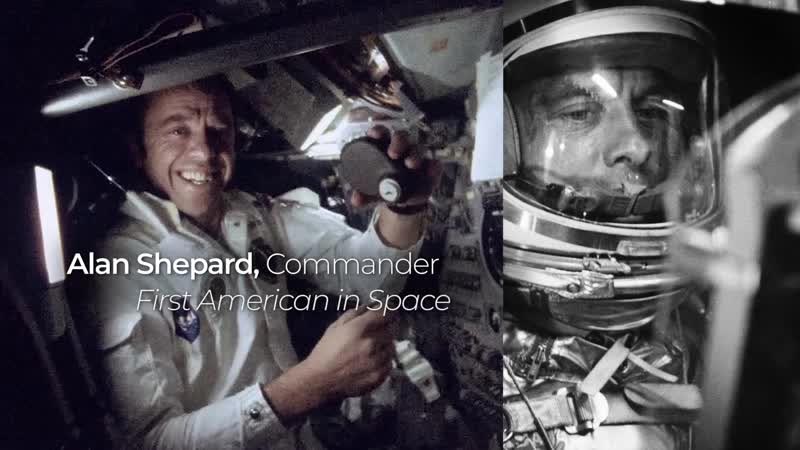
Apollo 14 was the eighth crewed Apollo mission and the third to land on the Moon. On January 31, 1971, Apollo 14 launched from Kennedy Space Center with a crew of commander Alan B. Shepard, command module pilot Stuart A. Roosa, and lunar module pilot Edgar D. Mitchell.
The crew experienced challenges in docking with the lunar module Antares and six attempts were required before a “hard dock” was achieved.
On February 5, 1971, Antares made the most precise landing to date in the hilly uplands of the Fra Mauro crater.
Shepard and Mitchell spent a total of 33.5 hours on the Moon and performed two extra-vehicular activities (EVAs, or “moonwalks”), totaling 9 hours and 23 minutes. During the first EVA, they deployed several science experiments. Among these was a reflector that continues to be used to measure the distance from the Earth to the Moon. They also deployed a seismometer, which detected thousands of moonquakes and helped to determine the structure of the Moon’s interior. Other instruments measured the composition of the solar wind and the Moon’s tenuous atmosphere and plasma environment. Shepard and Mitchell collected 95 pounds (43 kilograms) of lunar rock and soil samples.
The command module Kitty Hawk splashed down safely on February 9, 1971, exactly nine days and two minutes after launch. The mission duration from liftoff to splashdown was 216 hours and two minutes.
Apollo 14 Mission Objective
The primary objectives of this mission were to explore the Fra Mauro region centered around deployment of the Apollo Lunar Surface Scientific Experiments Package, or ALSEP; lunar field geology investigations; collection of surface material samples for return to Earth; deployment of other scientific instruments not part of ALSEP; orbital science involving high-resolution photography of candidate future landing sites; photography of deep-space phenomena, such as zodiacal light and gegenschein; communications tests using S-band and VHF signals to determine reflective properties of the lunar surface; engineering and operational evaluation of hardware and techniques; tests to determine variations in S-band signals; and photography of surface details from 60 nautical miles in altitude.
Mission Highlights
Apollo 14 launched at 4:03 p.m. EST. At approximately 3:41 p.m. ground elapsed time, or GET, difficulties were experienced in docking with the lunar module, or LM, and six attempts were required before a “hard dock” was achieved. An in-flight televised inspection of the docking mechanism revealed no apparent reason for the malfunction and the system appeared to be functioning normally.
Prior to the powered descent initiation, or PDI, for the Antares landing, a short in the LM computer abort switch was discovered, which could have triggered an undesired abort during the LM’s descent. On February 5, Antares made the most precise landing to date, approximately 87 feet (27 meters) from the targeted landing point. The landing point coordinates were 3 degrees, 40 minutes, 27 seconds south and 17 degrees, 27 minutes, 58 seconds west, midway between the Doublet and Triplet craters in the hilly uplands of the Fra Mauro crater, and about 110 miles east of the Apollo 12 landing site.
Due to communications system problems, the first period of extra vehicular activity, or EVA, began almost one hour later than scheduled with Commander Alan Shepard setting foot on the lunar surface at 114 hours, 31 minutes GET. The first of the two EVA periods included ALSEP deployment and lasted four hours and 49 minutes.
The second EVA on February 6 began when the LM egress hatch was opened at 4:15 a.m. EST. During this EVA, Shepard and Edgar Mitchell moved more than half a mile from their LM, conducting selenological investigations, collecting samples, and attempting to reach the rim of Cone crater, approximately 300 feet (90 meters) above the landing site. NASA personnel monitoring the EVA estimate that the two astronauts were within 50 to 75 meters (165 to 246 feet) of the crater rim when they were advised by mission control to collect samples at that spot and begin their traverse back to the LM. The second EVA lasted four hours, and 35 minutes, resulting in a new mark for EVA time by a lunar landing crew: nine hours, 24 minutes. Shepard set a new distance-traveled record on the lunar surface of approximately 9,000 feet (2,700 meters).
During the two traverses, the astronauts collected 94 pounds (43 kilograms) of rocks and soil for return to Earth. The samples were scheduled to go to 187 scientific teams in the United States, as well as 14 other countries for study and analysis.
Orbital science activities were conducted by Stuart Roosa during the lunar surface activities period. He experienced some difficulties with the high-resolution, motion-compensating Hycon Lunar Topographic Camera while attempting to photograph the Descartes area, the landing site planned for Apollo 16.
The liftoff of Antares from the lunar surface took place precisely on schedule. Rendezvous and docking occurred only two minutes later than scheduled. The command module Kitty Hawk splashed down safely in the Pacific Ocean at 4:05 p.m. EST February 9, exactly nine days and two minutes after launch. The actual landing point was only 1.02 nautical miles (1.9 kilometers) off its targeted point of about 765 nautical miles (1,417 kilometers) south of Samoa, and four miles from the prime recovery ship, the USS New Orleans. The mission duration from liftoff to splashdown was 216 hours and two minutes.
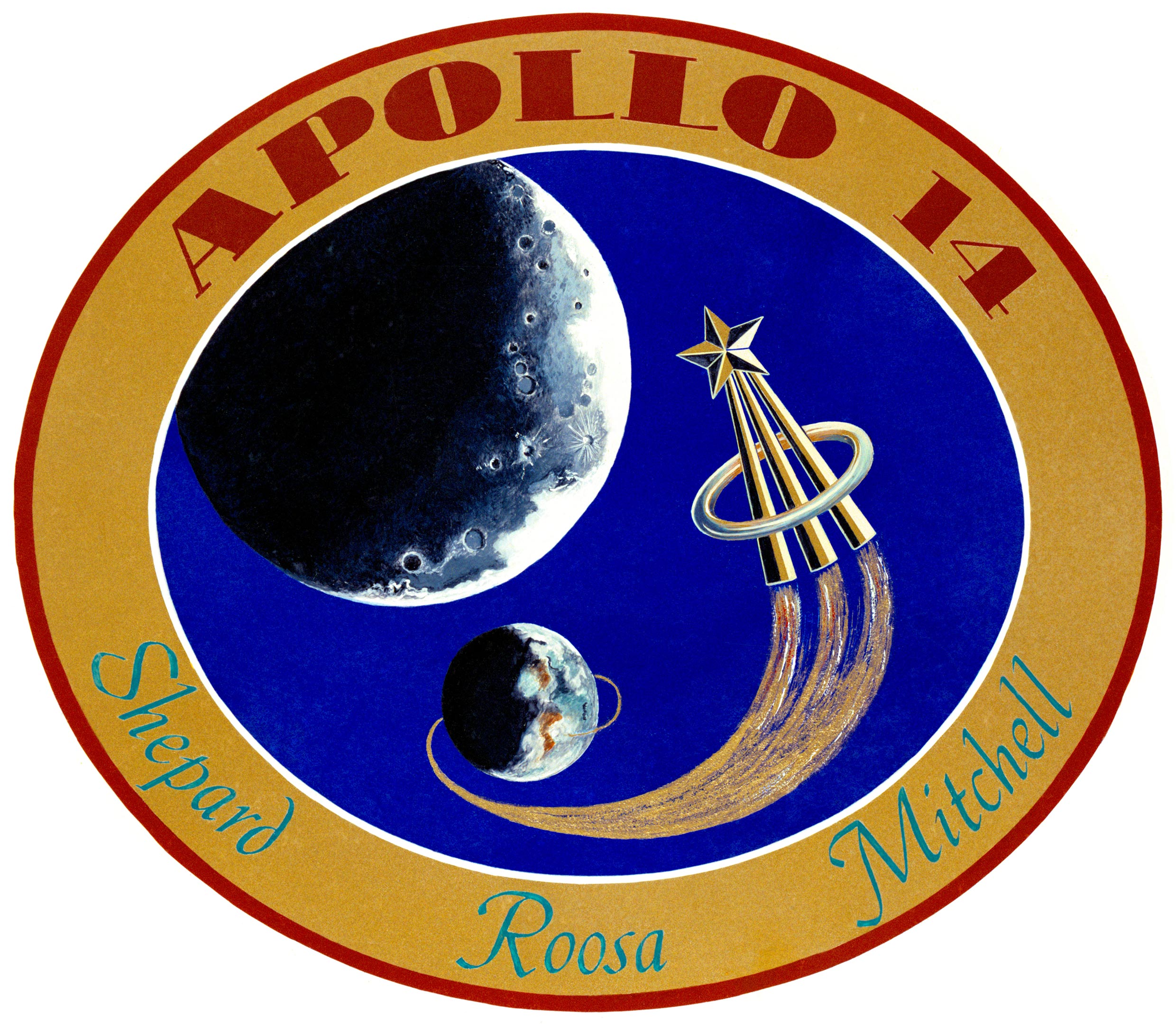
Crew
Alan B. Shepard Jr., Commander
Edgar D. Mitchell, Lunar Module Pilot
Stuart A. Roosa, Command Module Pilot
Backup Crew
Eugene A. Cernan, Commander
Joe H. Engle, Lunar Module Pilot
Ronald E. Evans, Command Module Pilot
Payload
Kitty Hawk (CM-110)
Antares (LM-8)
Prelaunch Milestones
1/21/70 – S-IVB ondock at Kennedy
1/21/70 – S-II ondock at Kennedy
1/12/70 – S-IC ondock at Kennedy
5/6/70 – S-IU ondock at Kennedy
Launch
January 31, 1971; 4:03 p.m. EDT
Launch Pad 39A
Saturn-V AS-509
High Bay 3
Mobile Launcher Platform-2
Firing Room 2
Orbit
Altitude: 118.55 miles
Inclination: 31.12 degrees
Orbits: 34 revolutions
Duration: nine days, two minutes
Distance: 1,150,321 miles
Lunar Location: Fra Mauro
Lunar Coordinates: 3.65 degrees south, 17.48 degrees west
Landing
February 9, 1971
Pacific Ocean
Recovery Ship: USS New Orleans
Never miss a breakthrough: Join the SciTechDaily newsletter.
Follow us on Google and Google News.