
Close Menu
    Facebook X (Twitter) Instagram
    SciTechDaily
    • Biology
    • Chemistry
    • Earth
    • Health
    • Physics
    • Science
    • Space
    • Technology
    Facebook X (Twitter) Pinterest YouTube RSS
    SciTechDaily
    Home»Space»Successful High-Resolution Moon Imaging Test Paves Way for New Planetary Radar
    Space

    Successful High-Resolution Moon Imaging Test Paves Way for New Planetary Radar

    By National Radio Astronomy ObservatoryFebruary 7, 20211 Comment3 Mins Read
    Facebook Twitter Pinterest Telegram LinkedIn WhatsApp Email Reddit
    Share
    Facebook Twitter LinkedIn Pinterest Telegram Email Reddit
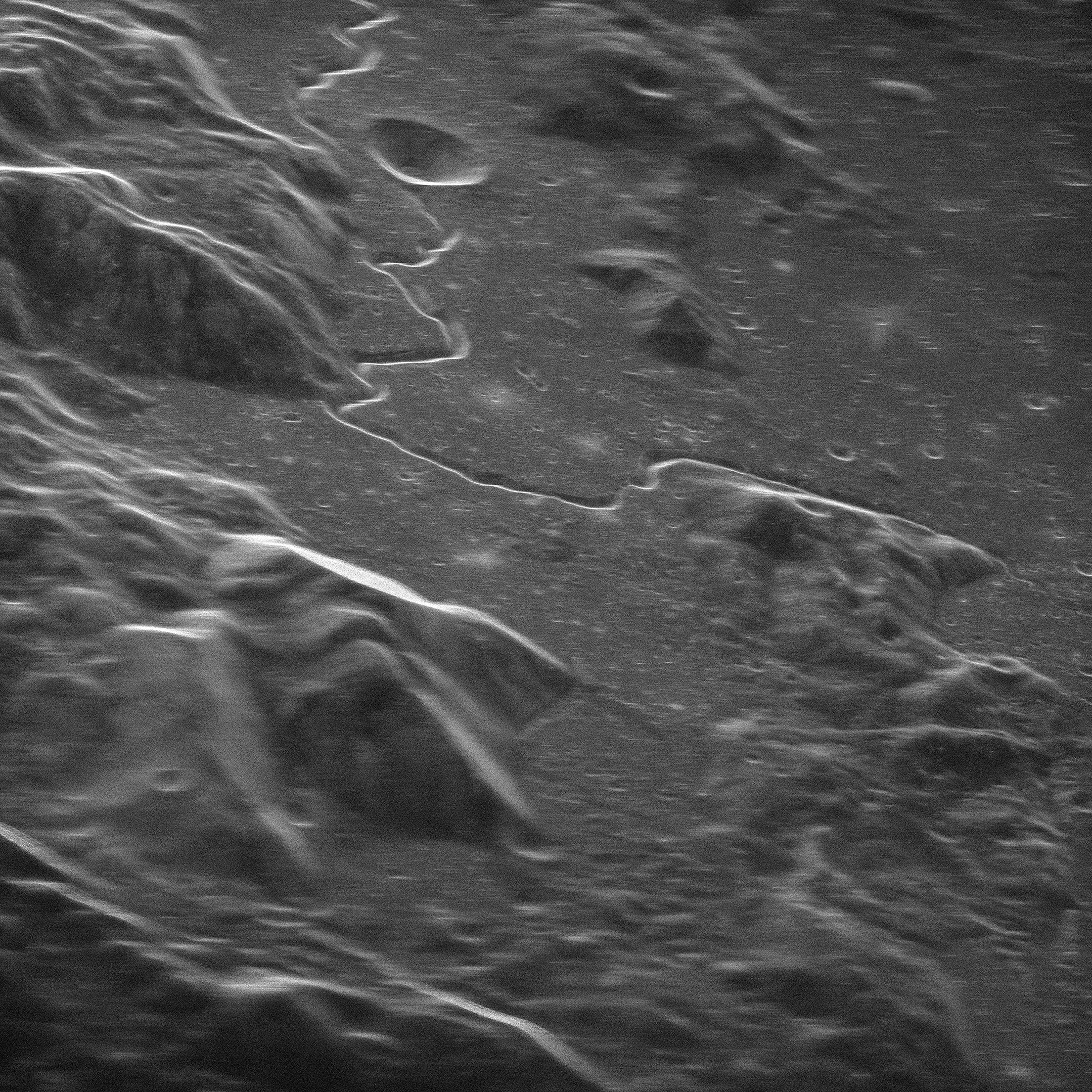
    GBT-VLBA Radar Image Apollo 15
    GBT-VLBA radar image of the region where Apollo 15 landed in 1971. The snake-like feature is Hadley Rille, a remnant of ancient volcanic activity, probably a collapsed lava tube. The crater at top, alongside the rille, is called Hadley C and is about 6 kilometers in diameter. This image shows objects as small as 5 meters across. Credit: NRAO/GBO/Raytheon/NSF/AUI

    GBT-VLBA System Images Lunar Landscape

    The National Science Foundation’s Green Bank Observatory (GBO) and National Radio Astronomy Observatory (NRAO), and Raytheon Intelligence & Space conducted a test in November to prove that a new radio telescope system can capture high-resolution images in near-Earth space.

    GBO’s Green Bank Telescope (GBT) in West Virginia — the world’s largest fully steerable radio telescope — was outfitted with a new transmitter developed by Raytheon Intelligence & Space, allowing it to transmit a radar signal into space. The NRAO’s continent-wide Very Long Baseline Array (VLBA) received the reflected signal and produced images of the Apollo 15 moon landing site.

    The proof-of-concept test, culminating a two-year effort, paves the way for designing a more powerful transmitter for the telescope. More power will allow enhanced detection and imaging of small objects passing by the Earth, moons orbiting around other planets and other debris in the Solar System.
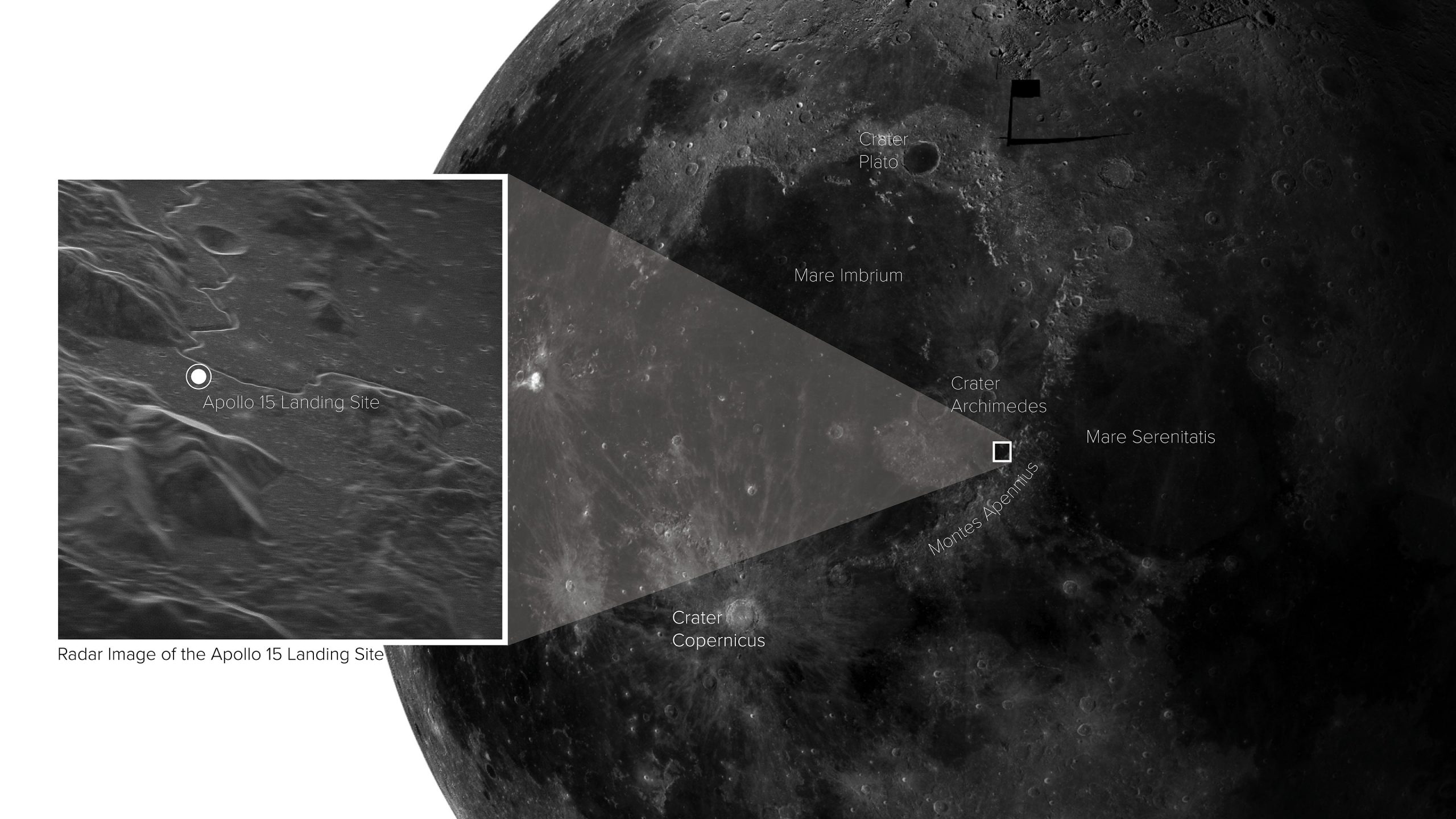
    Apollo 15 Landing Site Radar Image
    New radar image of the Apollo 15 landing site, located with respect to prominent lunar features. Credit: Sophia Dagnello, NRAO/GBO/Raytheon/AUI/NSF/USGS

    The technology was developed as part of a cooperative research and development agreement between NRAO, GBO, and Raytheon.

    “This project opens a whole new range of capabilities for both NRAO and GBO,” said Tony Beasley, director of the National Radio Astronomy Observatory and vice president for Radio Astronomy at Associated Universities, Inc. (AUI). “We’ve participated before in important radar studies of the Solar System, but turning the GBT into a steerable planetary radar transmitter will greatly expand our ability to pursue intriguing new lines of research.”

    Using the information collected with this latest test, the participants will finalize a plan to develop a 500-kilowatt, high-power radar system that can image objects in the Solar System with unprecedented detail and sensitivity. The increased performance also will allow astronomers to use radar signals as far away as the orbits of Uranus and Neptune, increasing our understanding of the Solar System.

    Green Bank Telescope West Virginia
    The Green Bank Telescope in West Virginia, the world’s largest fully-steerable radio telescope. This telescope is being equipped with a new planetary radar transmitter for studying objects in the Solar System. Credit: GBO / AUI / NSF

    “The planned system will be a leap forward in radar science, allowing access to never before seen features of the Solar System from right here on Earth,” said Karen O’Neil, the Green Bank Observatory site director.

    “Raytheon’s radar techniques could ultimately improve our ability to explore the Solar System,” said Steven Wilkinson, Principal Engineering Fellow at Raytheon Intelligence & Space. “Working with the astronomy community allows us to apply decades of radar know-how to a project that provides high-resolution images of near-Earth objects.”

    Very Long Baseline Array Antenna Locations
    Antenna locations of the continent-wide Very Long Baseline Array. These antennas will serve as the receiving sites for the reflected radar signal from the Green Bank Telescope. Credit: NRAO/AUI/NSF

    “We are excited to be partnering with Raytheon and applying their radar expertise to transform our observatories’ telescopes in new science areas,” said AUI President Adam Cohen.

    The National Radio Astronomy Observatory and the Green Bank Observatory are facilities of the National Science Foundation, operated under cooperative agreement by Associated Universities, Inc.

    Never miss a breakthrough: Join the SciTechDaily newsletter.
    Follow us on Google and Google News.

    Astronomy Moon National Radio Astronomy Observatory Popular Very Long Baseline Array
    Share. Facebook Twitter Pinterest LinkedIn Email Reddit

    Related Articles

    Moon’s Tycho Crater Revealed in Intricate Detail – Powerful New Radar Technology Will Reveal Secrets of the Solar System

    NASA Missions Explore a “TIE Fighter” Active Galaxy Far, Far Away

    Saturn-Sized Exoplanet Discovered by the Gravitational “Wobble” in the Small, Cool Star It Orbits

    Very Long Baseline Array Discovers Orbital Motion in Pair of Supermassive Black Holes

    Astronomers Discover Hydrogen Clouds Between Nearby Galaxies, Andromeda and Triangulum

    Presence of Water in the Primary Crust Indicates That the Early Moon Was Wet

    Massive Outburst in Spiral Galaxy NGC 660 Surprises Astronomers

    GRAIL Generates High Resolution Gravity Field Map of the Moon

    Simulation May Explain Saturnian System

    1 Comment

    1. RALPH A WINRICH on February 9, 2021 1:14 pm

      This could prove to be a useful tool with ECO’s, to fill the gap now left with the loss of Arecibo.

      Reply
    Leave A Reply Cancel Reply

    • Facebook
    • Twitter
    • Pinterest
    • YouTube

    Don't Miss a Discovery

    Subscribe for the Latest in Science & Tech!

    Trending News

    5 Simple Ways To Remember More and Forget Less

    The Atomic Gap That Could Cost the Semiconductor Industry Billions

    Researchers Finally Solve 50-Year-Old Blood Group Mystery

    Scientists Discover “Molecular Switch” That Fuels Alzheimer’s Brain Inflammation

    Trees Emit Tiny Lightning Flashes During Storms and Scientists Finally Prove It

    Pomegranate Compound Could Help Protect Against Heart Disease

    Your Blood Test Might Already Show Alzheimer’s Risk

    Scientists Were Wrong About This Strange “Rule-Breaking” Particle

    Follow SciTechDaily
    • Facebook
    • Twitter
    • YouTube
    • Pinterest
    • Newsletter
    • RSS
    SciTech News
    • Biology News
    • Chemistry News
    • Earth News
    • Health News
    • Physics News
    • Science News
    • Space News
    • Technology News
    Recent Posts
    • Hidden Parasite Found in Popular Portuguese Lake Raises Health Concerns
    • This Simple Trick Can Boost Your Workout Endurance by 20%
    • This Popular Supplement May Interfere With Cancer Treatment, Scientists Warn
    • Scientists Propose Radical New Way To Detect Alien Life – Without Traditional Biosignatures
    • Scientists Just Discovered Light Can Actually Slow Plant Growth
    Copyright © 1998 - 2026 SciTechDaily. All Rights Reserved.
    • Science News
    • About
    • Contact
    • Editorial Board
    • Privacy Policy
    • Terms of Use

    Type above and press Enter to search. Press Esc to cancel.