
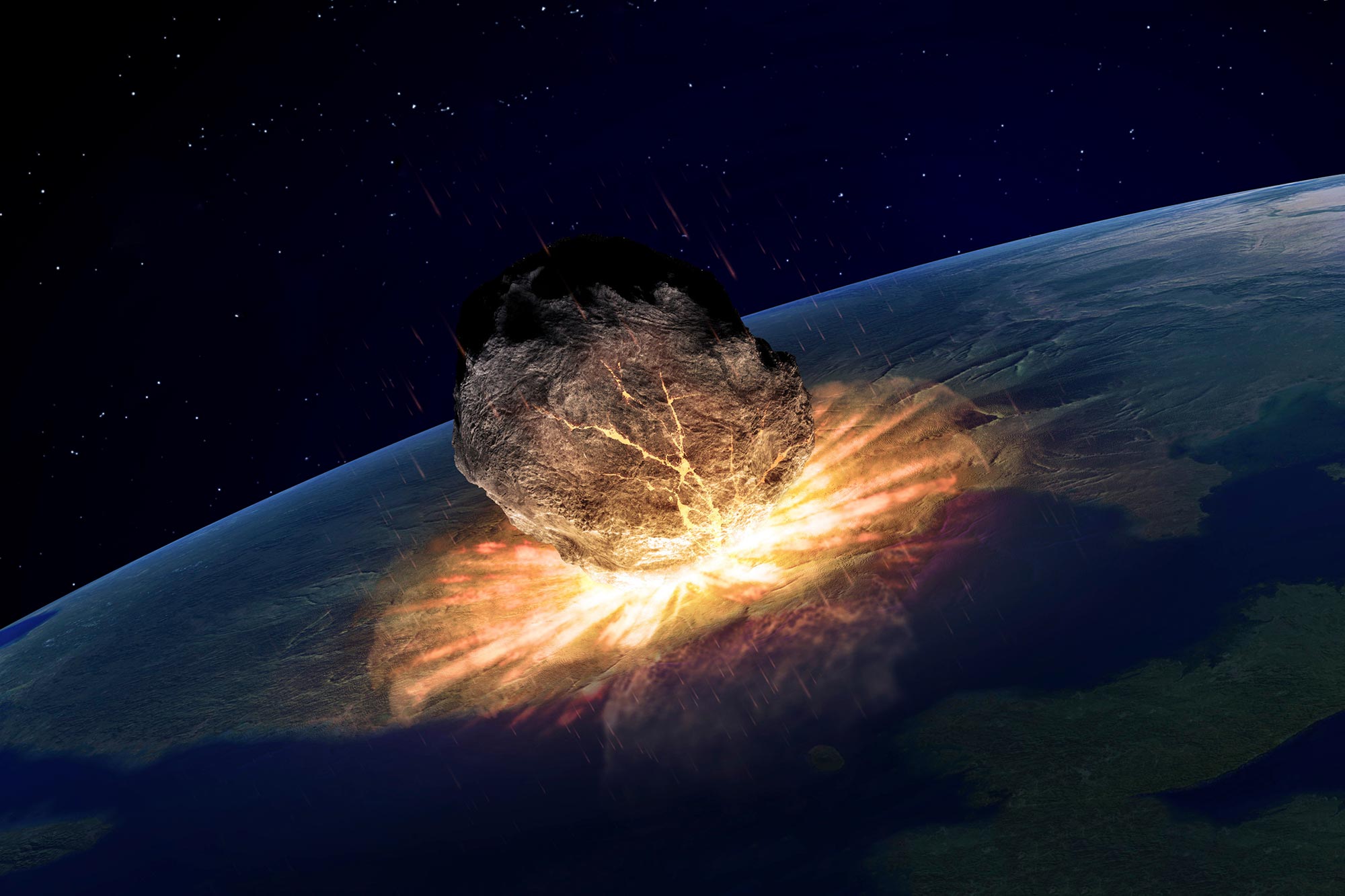
Iridium-rich dust in the Chicxulub crater confirms an asteroid wiped out the dinosaurs in a rapid, global catastrophe.
Researchers believe they have closed the case of what killed the dinosaurs, definitively linking their extinction with an asteroid that slammed into Earth 66 million years ago by finding a key piece of evidence: asteroid dust inside the impact crater.
Death by asteroid rather than by a series of volcanic eruptions or some other global calamity has been the leading hypothesis since the 1980s, when scientists found asteroid dust in the geologic layer that marks the extinction of the dinosaurs. This discovery painted an apocalyptic picture of dust from the vaporized asteroid and rocks from impact circling the planet, blocking out the sun and bringing about mass death through a dark, sustained global winter — all before drifting back to Earth to form the layer enriched in asteroid material that’s visible today.

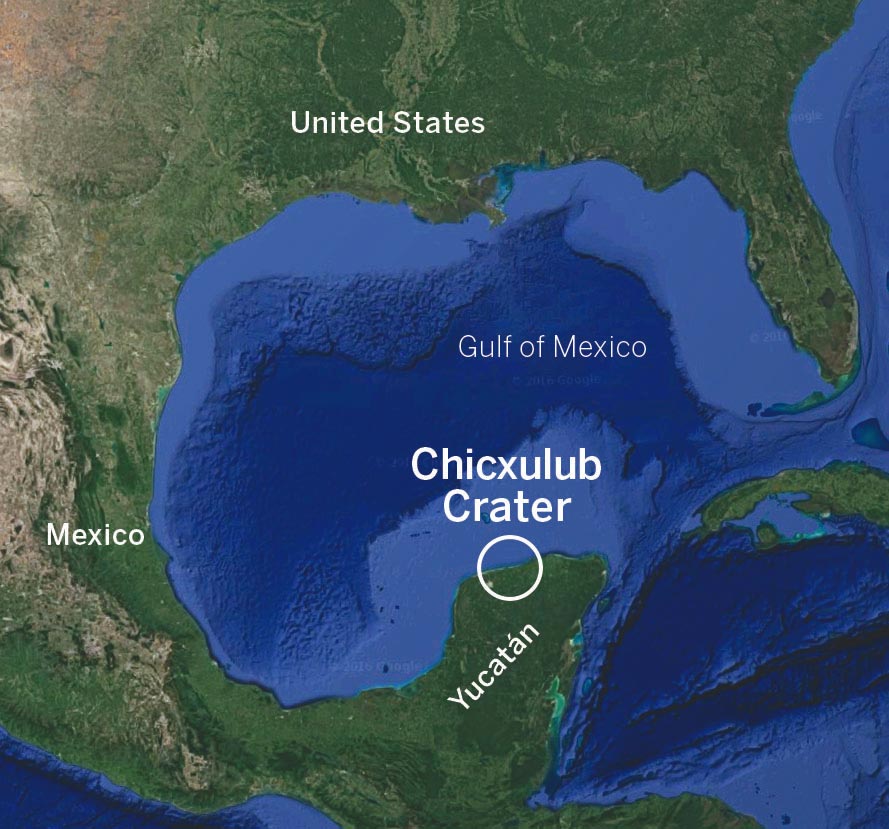
In the 1990s, the connection was strengthened with the discovery of a 125-mile-wide (200-kilometer-wide) Chicxulub impact crater beneath the Gulf of Mexico that is the same age as the rock layer. The new study seals the deal, researchers said, by finding asteroid dust with a matching chemical fingerprint within that crater at the precise geological location that marks the time of the extinction.
“The circle is now finally complete,” said Steven Goderis, a geochemistry professor at the Vrije Universiteit Brussel, who led the study published in Science Advances on February 24, 2021.
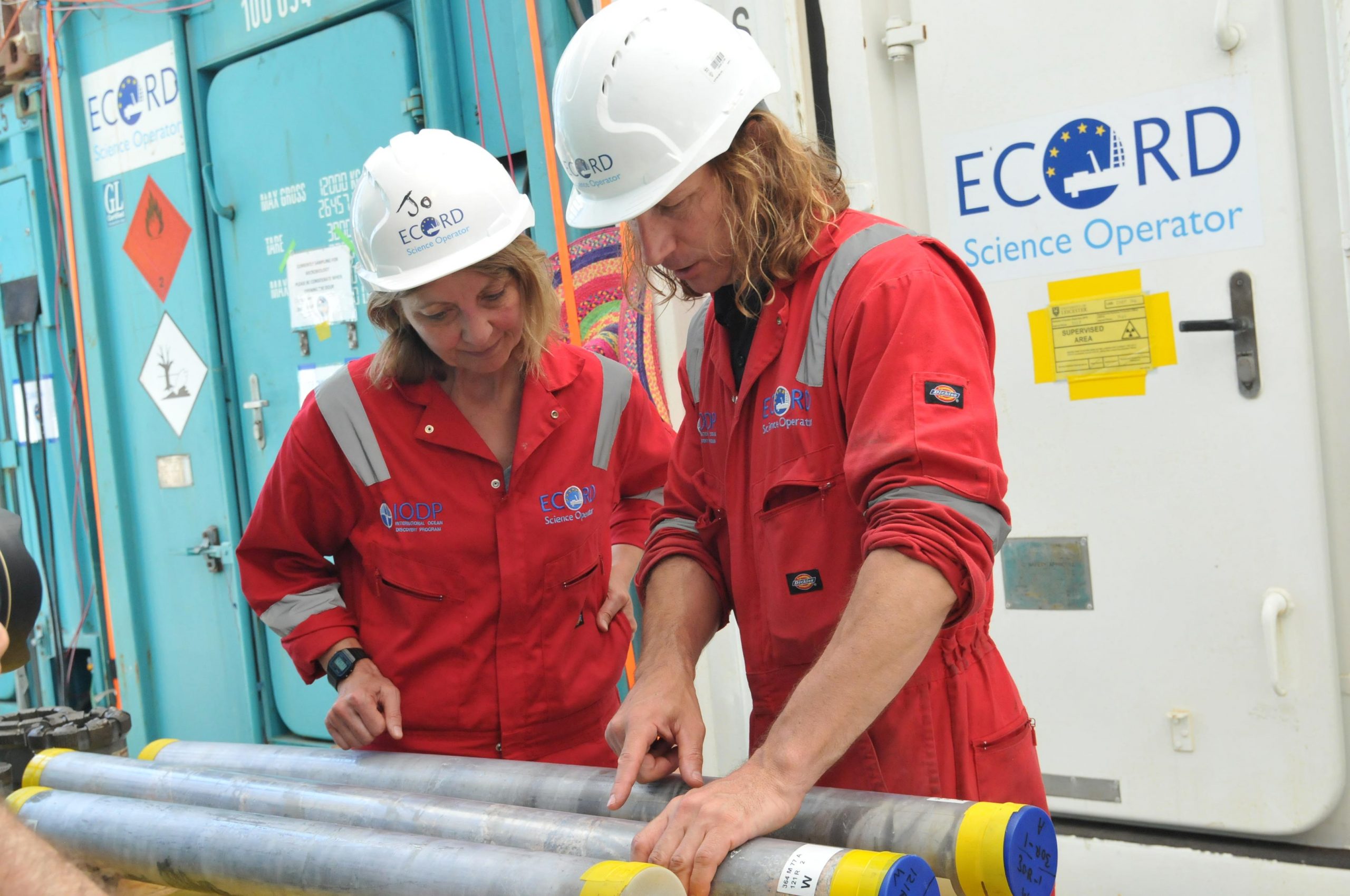
The study is the latest to come from a 2016 International Ocean Discovery Program mission co-led by The University of Texas at Austin that collected nearly 3,000 feet (900 meters) of rock core from the crater buried under the seafloor. Research from this mission has helped fill in gaps about the impact, the aftermath and the recovery of life.
Sealing the Link with Iridium Evidence
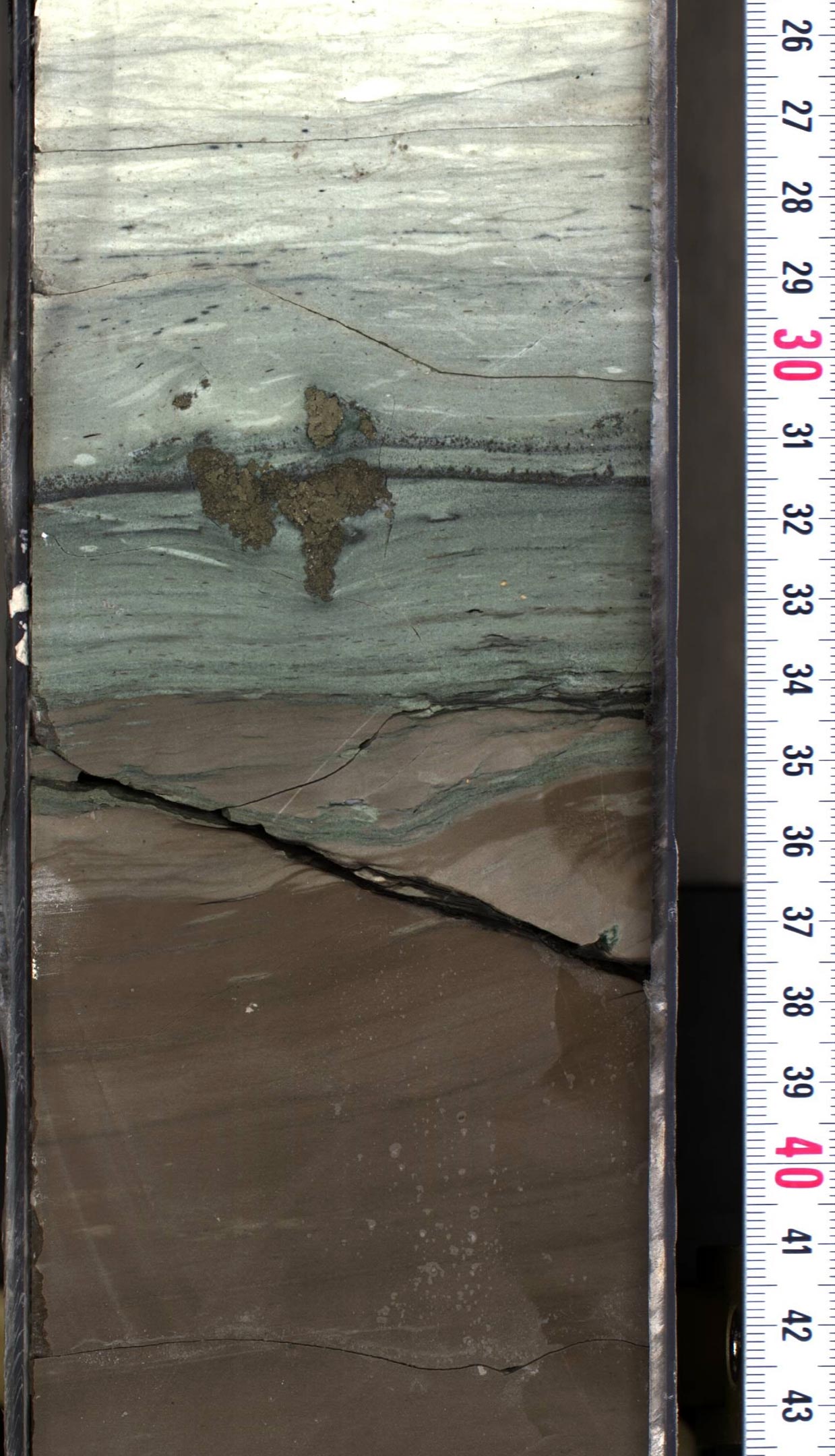
The telltale sign of asteroid dust is the element iridium — which is rare in the Earth’s crust, but present at elevated levels in certain types of asteroids. An iridium spike in the geologic layer found all over the world is how the asteroid hypothesis was born. In the new study, researchers found a similar spike in a section of rock pulled from the crater. In the crater, the sediment layer deposited in the days to years after the strike is so thick that scientists were able to precisely date the dust to a mere two decades after impact.
“We are now at the level of coincidence that geologically doesn’t happen without causation,” said co-author Sean Gulick, a research professor at the UT Jackson School of Geosciences who co-led the 2016 expedition with Joanna Morgan of Imperial College London. “It puts to bed any doubts that the iridium anomaly [in the geologic layer] is not related to the Chicxulub crater.”
The dust is all that remains of the 7-mile-wide (11-kilometer-wide) asteroid that slammed into the planet millions of years ago, triggering the extinction of 75% of life on Earth, including all nonavian dinosaurs.
Timing Extinction by Atmospheric Dust
Researchers estimate that the dust kicked up by the impact circulated in the atmosphere for no more than a couple of decades — which, Gulick points out, helps time how long extinction took.
“If you’re actually going to put a clock on extinction 66 million years ago, you could easily make an argument that it all happened within a couple of decades, which is basically how long it takes for everything to starve to death,” he said.
The highest concentrations of iridium were found within a 5-centimeter (2-inch) section of the rock core retrieved from the top of the crater’s peak ring — a high-elevation point in the crater that formed when rocks rebounded then collapsed from the force of impact.
The iridium analysis was carried out by labs in Austria, Belgium, Japan, and the United States.
“We combined the results from four independent laboratories around the world to make sure we got this right,” said Goderis.
In addition to iridium, the crater section showed elevated levels of other elements associated with asteroid material. The concentration and composition of these “asteroid elements” resembled measurements taken from the geologic layer at 52 sites around the world.
Sulfurous Rocks Point to Climate Impact
The core section and geologic layer also have earthbound elements in common, including sulfurous compounds. A 2019 study found that sulfur-bearing rocks are missing from much of the rest of the core despite being present in large volumes in the surrounding limestone. This indicates that the impact blew the original sulfur into the atmosphere, where it may have made a bad situation worse by exacerbating global cooling and seeding acid rain.
Gulick and colleagues at the University of Texas Institute for Geophysics and Bureau of Economic Geology — both units of the UT Jackson School — plan to return to the crater this summer to begin surveying sites at its center, where they hope to plan a future drilling effort to recover more asteroid material.
Reference: “Globally distributed iridium layer preserved within the Chicxulub impact structure” by Steven Goderis, Honami Sato, Ludovic Ferrière, Birger Schmitz, David Burney, Pim Kaskes, Johan Vellekoop, Axel Wittmann, Toni Schulz, Stepan M. Chernonozhkin, Philippe Claeys, Sietze J. de Graaff, Thomas Déhais, Niels J. de Winter, Mikael Elfman, Jean-Guillaume Feignon, Akira Ishikawa, Christian Koeberl, Per Kristiansson, Clive R. Neal, Jeremy D. Owens, Martin Schmieder, Matthias Sinnesael, Frank Vanhaecke, Stijn J. M. Van Malderen, Timothy J. Bralower, Sean P. S. Gulick, David A. Kring, Christopher M. Lowery, Joanna V. Morgan, Jan Smit, Michael T. Whalen and IODP-ICDP Expedition Scientists, 24 February 2021, Science Advances.
DOI: 10.1126/sciadv.abe3647
Never miss a breakthrough: Join the SciTechDaily newsletter.
Follow us on Google and Google News.
4 Comments
A marvellous Theory proposed on extinction of the Dinosaurs 75% of theEarth’s life by the impact of an asteroid 66 million years before seems right. Reason 1. Asteriod element is unique to cause extinct Dinosaur’s existance is the internal physical phenomenon.
Reason 2. the Earthbound sulfur evaporation completed the cycle of extinction.As both of the facts are cited with due proof along with other necessary quantitative data seems perfect.
“… led to the extinction of 75% of life, including all non-avian dinosaurs.”
Why didn’t the other 25% starve? Could mammals hibernate for 20 years? Why didn’t the non-avian dinosaurs starve? Why didn’t reptiles that filled similar ecological niches, like crocodiles, starve. Why did small mammals survive, yet dinosaurs of similar size did not? It is a compelling hypothesis, but it leaves many questions unanswered.
But just recently (Feb 16) you told us that maybe it wasn’t a meteor.
See https://scitechdaily.com/what-really-killed-the-dinosaurs-harvard-researchers-say-it-was-a-comet-and-they-believe-they-know-where-it-came-from/
The wild illustration you show is of an asteroid clearly big enough to destroy the Earth. The article does not “close the circle” and make certain that the Chicxulub impact is the total answer. What about the proposed Shiva impact, or any number of undiscovered astroblems?