
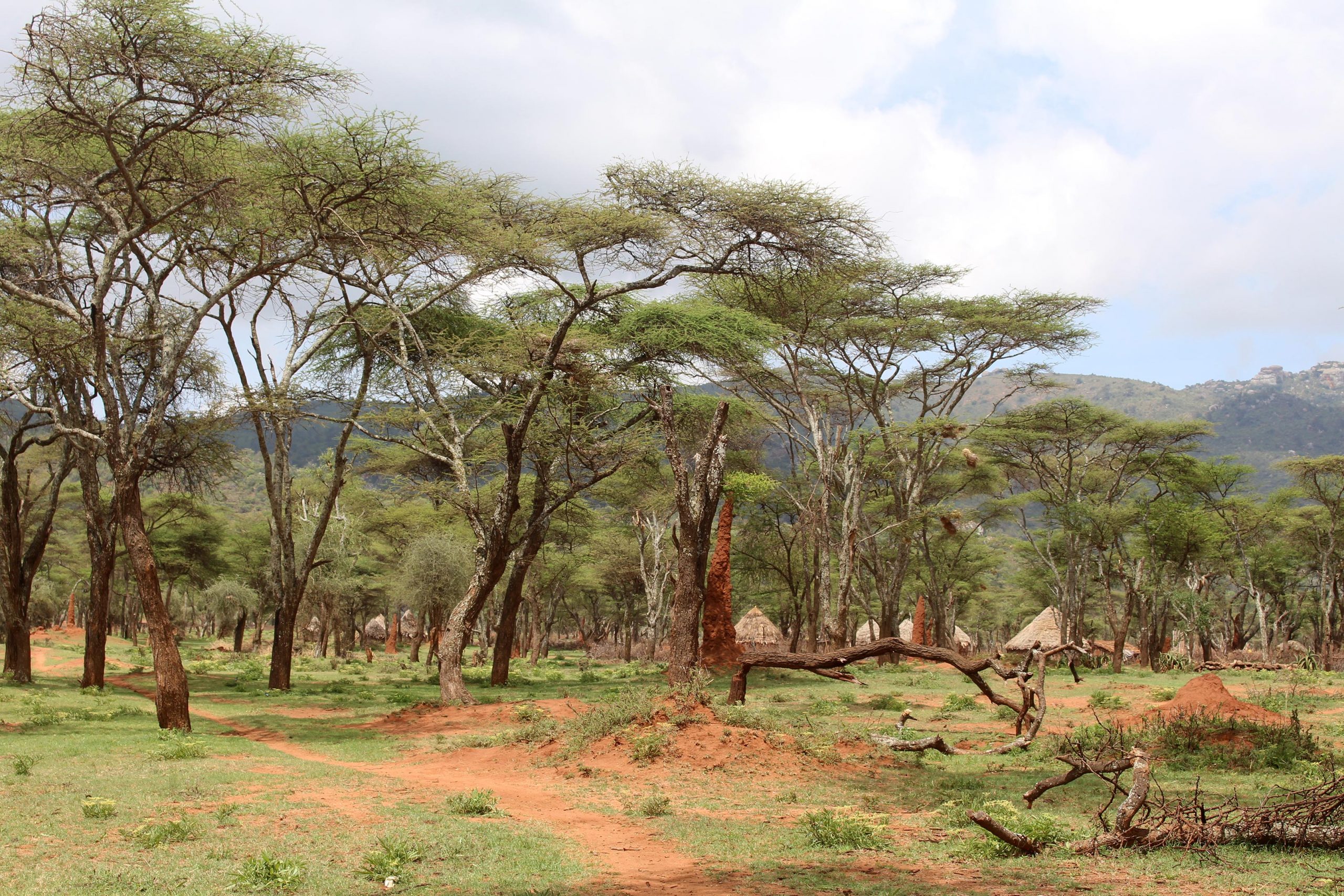
Two Ethiopian birds face extinction as rising temperatures eliminate their climate-defined habitats.
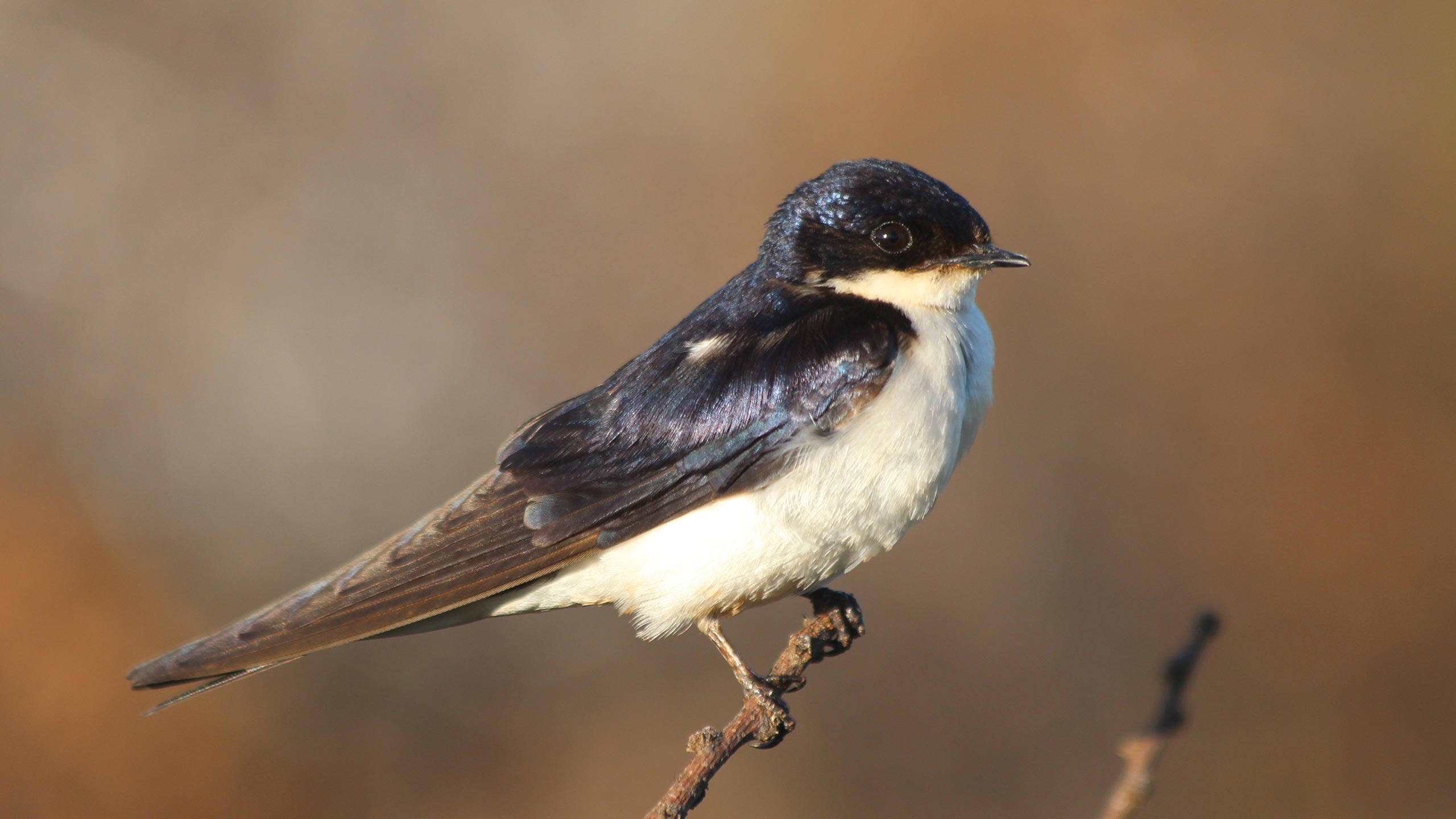
The White-tailed Swallow, Hirundo megaensis, and Ethiopian Bush-crow, Zavattariornis stresemanni, are living in ‘climatic lifeboats’ with their tiny ranges restricted on all sides by temperature and rainfall patterns. Even under moderate climate warming, models predict a severe loss of suitable climate for these birds within the next 50 years — dramatically heightening their risk of extinction.
In research published recently in the journal PLOS ONE, scientists say that monitoring the response of these birds to climate change will be crucial for validating the predictive ability of widely used climate models. It will also help conservationists come up with effective ways of preventing other species from going extinct in the wild.
Intensive conservation measures, such as assisted migration and captive breeding, may be the only options available to safeguard these two Ethiopian bird species now that climate change has sealed their fate in the wild. The new understanding of the birds’ ranges will help to develop conservation management plans for them in the newly formed Yabello National Park in Ethiopia.
“To find that two species are both limited by temperature at every edge of their global distribution is really quite remarkable,” said Dr. Andrew Bladon in the University of Cambridge’s Department of Zoology, first author of the study.
He added: “These completely unrelated species are influenced very similarly by aspects of the local climate. As the temperature rises due to climate change, they will struggle to survive.”
The scientists looked at the impact of a range of future climate change projections from the Intergovernmental Panel on Climate Change (IPCC), from the ‘best case scenario’ in which concerted climate action causes carbon emissions to peak in 2030 before declining, to a ‘worst case scenario’ with no change in carbon emissions driving a 3-5 degree average global temperature rise by the end of the century.
Vanishing Habitats
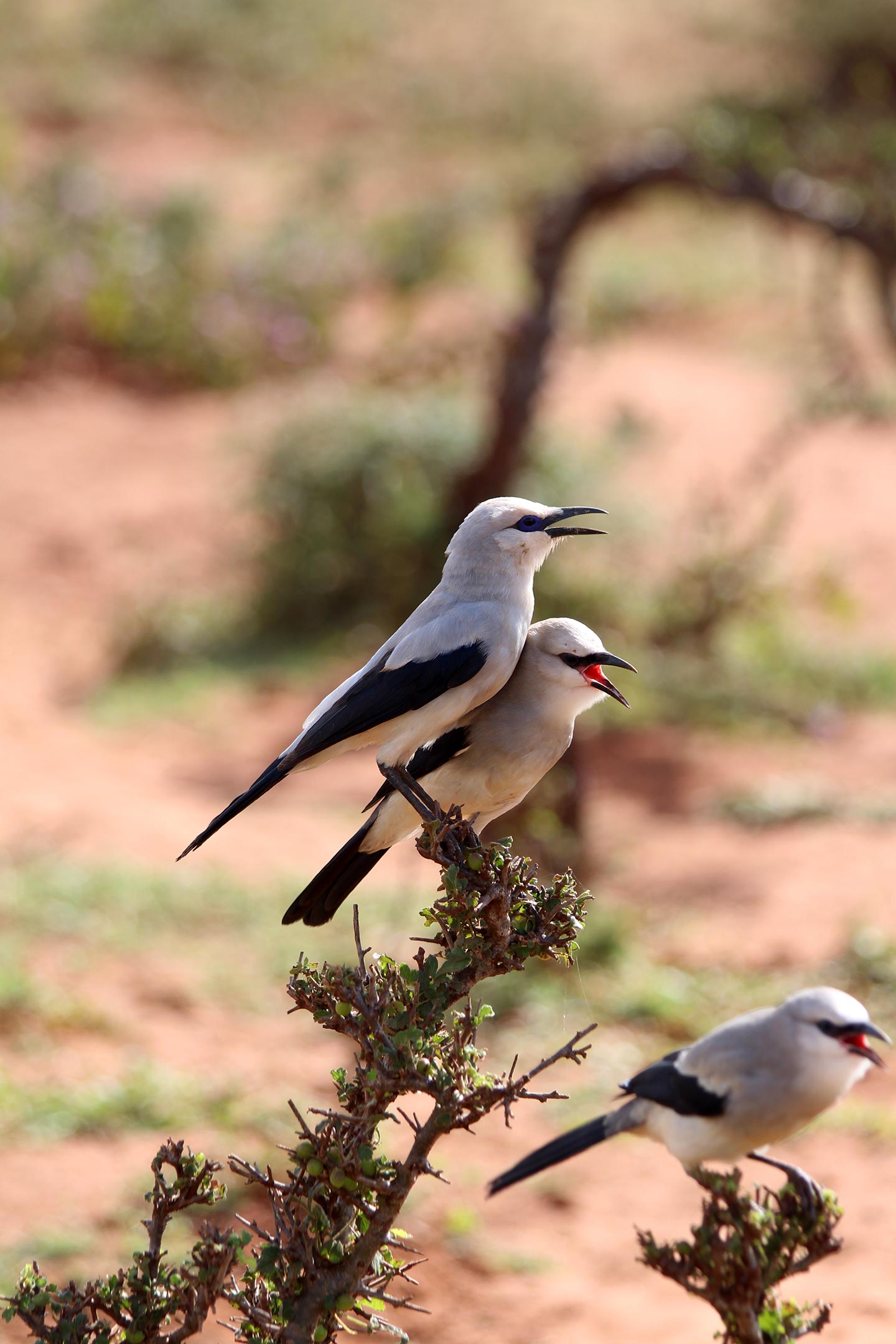
They found that in all scenarios, using a range of modeling approaches, both species are at severe risk of extinction in the next 50 years as the climate is predicted to become unsuitable for their survival in 68-84% (for the Swallow) and 90-100% (for the Bush-crow) of the birds’ current ranges.
Temperature affects the foraging ability of the Ethiopian Bush-crows, so once their range gets too hot the scientists expect them to start disappearing quickly — if they can’t feed, they can’t survive. The mechanism by which warming causes the decline of the White-tailed Swallows is not known, but the team think it may affect the birds’ breeding success.
The White-tailed Swallow is a threatened species found only across roughly 8,000 square kilometers (3,100 square miles) of grassland in southern Ethiopia. The species was first recorded in 1942, and despite extensive searching in other suitable habitats it has never been found anywhere else. The reasons for the swallow’s restricted range have baffled ornithologists for years.
Climate Alone Defines Their Existence
In previous research on the Ethiopian Bush-crow, the team found that higher temperatures form an invisible boundary at every edge of its 4,000 square kilometer (1,550 square miles) range. The new study shows that the range of the White-tailed Swallow, while slightly larger than that of the Ethiopian Bush-crow, is also defined by local climate.
Many species have a range defined by temperature at the northern or southern limit, but the scientists think the White-tailed Swallow and Ethiopian Bush-crow may be the only examples in the world of warm-blooded animals whose entire distribution is driven solely by climate.
“Climate change-driven increases in temperature are terrible for the long-term survival of these two bird species. But if they do go extinct in the next fifty years, they are at least a useful test case to validate climate models that inform a lot of conservation work,” said Bladon.
Studies predict that specialist and range-restricted species are among those most likely to be at risk of extinction from climate change.
Reference: “Climatic change and extinction risk of two globally threatened Ethiopian endemic bird species” by Andrew J. Bladon, Paul F. Donald, Nigel J. Collar, Jarso Denge, Galgalo Dadacha, Mengistu Wondafrash and Rhys E. Green, 19 May 2021, PLOS ONE.
DOI: 10.1371/journal.pone.0249633
This research was a collaboration between the University of Cambridge, BirdLife International, RSPB, Borana National Park Authority Ethiopia, and the Ethiopian Wildlife and Natural History Society, Ethiopia.
Never miss a breakthrough: Join the SciTechDaily newsletter.
Follow us on Google and Google News.