
Close Menu
    Facebook X (Twitter) Instagram
    SciTechDaily
    • Biology
    • Chemistry
    • Earth
    • Health
    • Physics
    • Science
    • Space
    • Technology
    Facebook X (Twitter) Pinterest YouTube RSS
    SciTechDaily
    Home»Biology»Terrestrial Species Outpaced by Marine Species in the Race Against Global Warming
    Biology

    Terrestrial Species Outpaced by Marine Species in the Race Against Global Warming

    By CNRSMay 30, 2020No Comments2 Mins Read
    Facebook Twitter Pinterest Telegram LinkedIn WhatsApp Email Reddit
    Share
    Facebook Twitter LinkedIn Pinterest Telegram Email Reddit
    Marine and Terrestrial Species
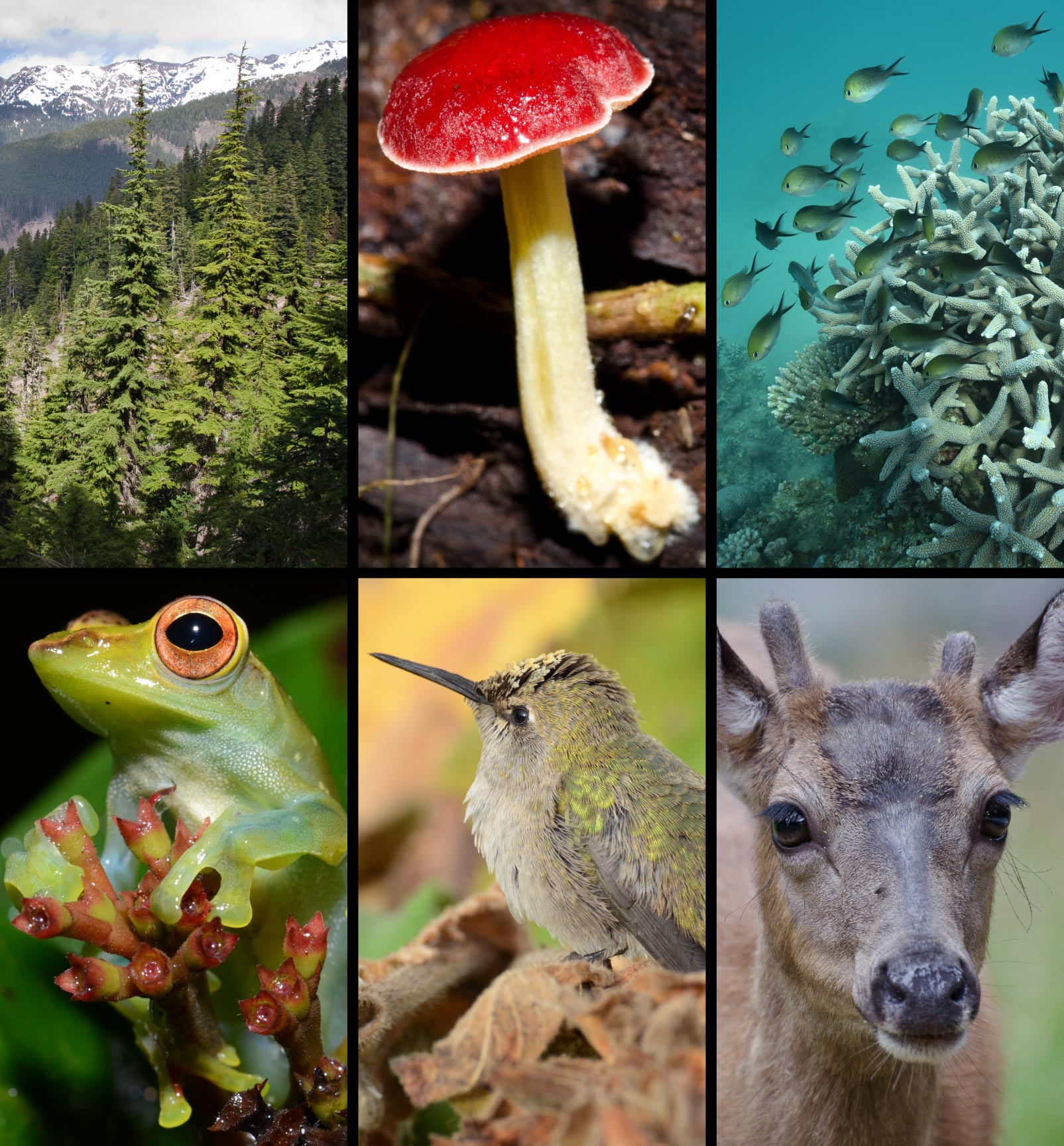
    Some of the 12,000 plant and animal species considered in this study. Credit: © Gaël Grenouillet

    Global warming is causing species to search for more temperate environments to migrate to, but it is marine species – according to the latest results of a Franco–American study mainly involving scientists from the CNRS, Ifremer, the Université Toulouse III – Paul Sabatier and the University of Picardy Jules Verne[1] – that are leading the way by moving up to six times faster towards the poles than their terrestrial congeners.

    By analyzing the speed of change in the distribution range of more than 12,000 animal and plant species, according to isotherm shifts in latitude and altitude, the researchers have shown that under certain conditions marine species are capable of following the invisible migration of temperatures towards the poles.

    This unbridled race against global warming is modulated by the pressure of human activities (fishing, aquaculture, agriculture, silviculture, urban planning) speeding up or slowing down the movement of species in their pursuit of more favorable climatic conditions.

    These results, published in the journal Nature Ecology & Evolution on May 25, 2020, raise questions about the capacity of terrestrial organisms to adapt to anticipated global warming temperatures in the 21st century.

    Reference: “Species better track climate warming in the oceans than on land” by Jonathan Lenoir, Romain Bertrand, Lise Comte, Luana Bourgeaud, Tarek Hattab, Jérôme Murienne and Gaël Grenouillet, 25 May 2020, Nature Ecology & Evolution.
    DOI: 10.1038/s41559-020-1198-2

    [1] The main French laboratories are ‘Ecology and Dynamics of Anthropogenic Systems’ (CNRS/Université de Picardie Jules Verne), ‘Evolution and Biological Diversity’ (CNRS/Université Toulouse III Paul Sabatier/ENFA), the ‘Theoretical and Experimental Ecology Station’ (CNRS/UT3 Paul Sabatier) and the ‘Centre for Marine Biodiversity, Exploitation and Conservation’ (CNRS/Université de Montpellier/Ifremer/IRD).

    Never miss a breakthrough: Join the SciTechDaily newsletter.
    Follow us on Google and Google News.

    Biodiversity Climate Change CNRS Ecology Global Warming
    Share. Facebook Twitter Pinterest LinkedIn Email Reddit

    Related Articles

    Monitoring Species Condemned to Extinction May Help Conservationists Save Others As Global Temperatures Rise

    American Pikas Far More Resilient in the Face of Global Warming Than Previously Believed

    The Great Barrier Reef Has Lost Half Its Corals – Massive Declines in Just 3 Decades

    Tropical and Temperate Reefs Affected Differently by Fishing Pressures

    Lights Out? Fireflies Face Multiple Serious Extinction Threats

    Amazon Forest Regrowth Much Slower Than Thought – May Take Well Over a Century to Fully Recover

    More Biodiversity Loss Outside of Cities Due to Urban Growth

    Biodiversity on Earth Increases With Global Warming

    Climate Change Affects Australian Shrub

    Leave A Reply Cancel Reply

    • Facebook
    • Twitter
    • Pinterest
    • YouTube

    Don't Miss a Discovery

    Subscribe for the Latest in Science & Tech!

    Trending News

    Could Low Vitamin D Be Making Your Pain Worse?

    Scientists Discover Once-Weekly Workout That Melts Belly Fat Surprisingly Effectively

    Scientists Just Tested a Thruster Powerful Enough for Human Missions to Mars

    Doctors Say Your Ice Pack Might Be Making Injuries Worse

    Scientists Discover 43-Foot Sea Reptile Twice the Size of a Great White Shark

    Bees and Birds Are Drinking Alcohol From Flowers

    Scientists Discover How Obesity May Trigger Alzheimer’s Disease

    Scientists Confirm Alcohol Causes Widespread Health Damage

    Follow SciTechDaily
    • Facebook
    • Twitter
    • YouTube
    • Pinterest
    • Newsletter
    • RSS
    SciTech News
    • Biology News
    • Chemistry News
    • Earth News
    • Health News
    • Physics News
    • Science News
    • Space News
    • Technology News
    Recent Posts
    • A Tiny Bright-Blue Octopus Found in the Galápagos Is Completely New to Science
    • Scientists Stop Pancreatic Cancer Before It Starts in Landmark Preclinical Study
    • Scientists Discover Surprising Anti-Aging Power Hidden in Aged Garlic
    • Just Minutes of Intense Exercise Could Slash Disease Risk by 50%
    • People Who Stop Ozempic Often Don’t Gain the Weight Back
    Copyright © 1998 - 2026 SciTechDaily. All Rights Reserved.
    • Science News
    • About
    • Contact
    • Editorial Board
    • Privacy Policy
    • Terms of Use

    Type above and press Enter to search. Press Esc to cancel.