
The structure of many important molecules involved in anaphylaxis to mammalian meat has been uncovered, opening the door to potential future treatments.
The genetic and molecular structure of certain key molecules connected to the potentially fatal mammalian-meat allergy caused by tick bites has been revealed by scientists.
Researchers from the Garvan Institute of Medical Research led the study, which describes how antibodies interact with the sugar molecule galactose-α-1,3-galactose (alpha-gal/α-gal), which is produced by all mammals with the exception of humans and higher primates. It further supports the notion that α-gal serves as the key molecule for this particular allergy.
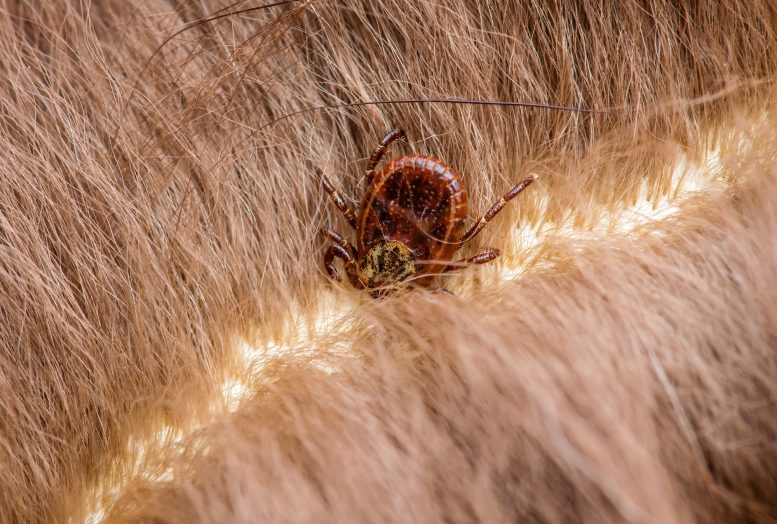
When some tick species, such as the Eastern Australian-endemic paralysis tick Ixodes holocyclus, bite people and expose them to α-gal, the immune system may identify the exposure as dangerous and trigger an allergic reaction, sometimes with life-threatening effects.
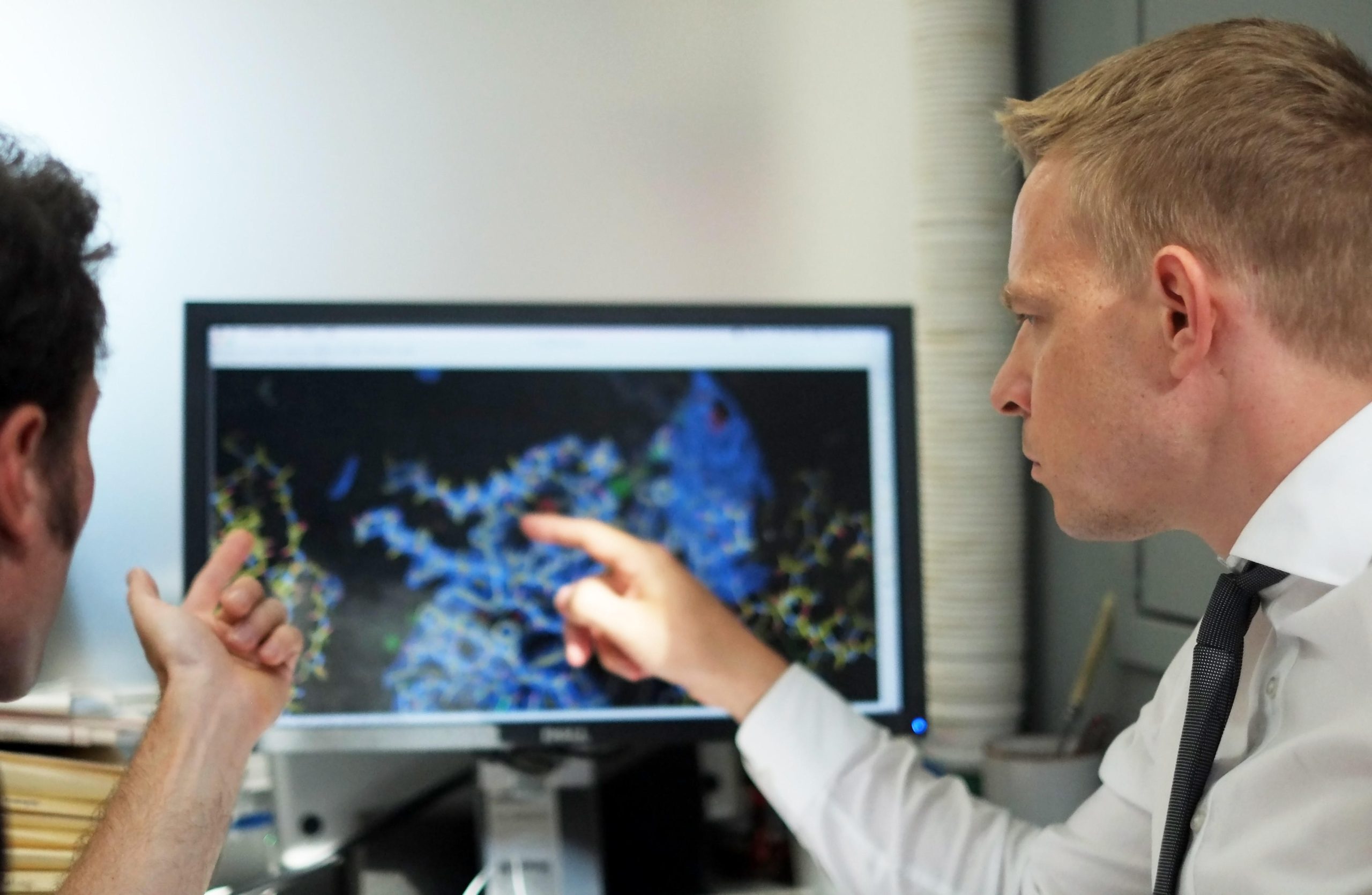
The molecular research, according to the study’s lead author Professor Daniel Christ, Head of Antibody Therapeutics and Director of the Centre for Targeted Therapy at Garvan, revealed that a certain antibody type (3-7) has a natural pocket into which α-gal fits well.
“We have more than 70 types of antibodies and this one is significantly overrepresented with α-gal recognition. We seem to be genetically predisposed to being sensitive to this sugar,” Professor Christ says.
The new study, recently published in the journal Proceedings of the National Academy of Sciences, paves the way for potential therapeutic candidates for treating the rare allergic response.
The Evolutionary Benefit to an Immune Reaction to α-Gal
Scientists analyzed the blood of patients with mammalian-meat allergy to determine which antibodies were produced: the 3-7 type was found frequently in response to α-gal.
The data points to an evolutionary benefit of having an antibody response that can mobilize against α-gal.
“Humans lost the capacity to produce α-gal throughout evolution, but we don’t know why,” says Associate Professor Joanne Reed, co-senior author of this study, from the Westmead Institute. “The suspicion is that it has to do with protection against infectious disease.”
Professor Christ points to recent research on malaria, which shows the Plasmodium parasite has an α-gal coating on its surface. Rapid immune response to α-gal could destroy the parasite before it takes hold, protecting a person from malaria.
NSW Is a Global Hotspot for Tick-Induced Mammalian-Meat Allergy
Sydney’s northern region is a global hot spot for mammalian-meat allergy, with more than 1800 cases reported and the highest prevalence in the world. The Sunshine Coast hinterland around Maleny in Queensland is also another hot spot. The paralysis tick (Ixodes holocyclus) is found in those areas.
Professor Sheryl van Nunen, an allergy specialist at Sydney’s Northern Beaches Hospital, and a co-author of the paper, was the first clinician to link tick bites with mammalian-meat allergy. “There isn’t a week go by that I wouldn’t see two people with this allergy,” she says.
Why some people develop anaphylaxis and others never respond is unknown. Professor van Nunen says it could be related to the number of tick bites, how much saliva is injected, or genetic sensitivity.
Exposure happens when α-gal, present in the saliva of certain tick species, is injected during a bite, says Professor van Nunen. About one-third of people who have developed a sensitivity to α-gal will exhibit symptoms of an allergy to mammalian meat, she says. And another bite can more than double the allergic response. Some people with a severe allergy can be affected by the presence of meat products in food, like beef broth, soft cheeses such as feta or goat’s cheese, or even gelatin.
Collaboration Is the Path to Science Excellence
Professor Robert Brink, Translation Research Pillar Director at Garvan, highlights the excellence and interdisciplinary nature of the work. “The Garvan Institute of Medical Research has world-leading capabilities in both antibody science and genomics. This study combines these two fields to advance our understanding of mammalian-meat allergy, an important and growing health issue for Australia, and for NSW in particular.”
Reference: “Genetic and structural basis of the human anti-α-galactosyl antibody response” by David B. Langley, Peter Schofield, Damien Nevoltris, Jennifer Jackson, Katherine J. L. Jackson, Tim J. Peters, Melanie Burk, Jacqueline M. Matthews, Antony Basten, Christopher C. Goodnow, Sheryl van Nunen, Joanne H. Reed and Daniel Christ, 8 July 2022, Proceedings of the National Academy of Sciences.
DOI: 10.1073/pnas.2123212119
Never miss a breakthrough: Join the SciTechDaily newsletter.
Follow us on Google and Google News.