
Smart Robotics for Soft Plastic Recycling
- Researchers create a robot that sorts soft plastic
- Technology could be a boon for the recycling industry
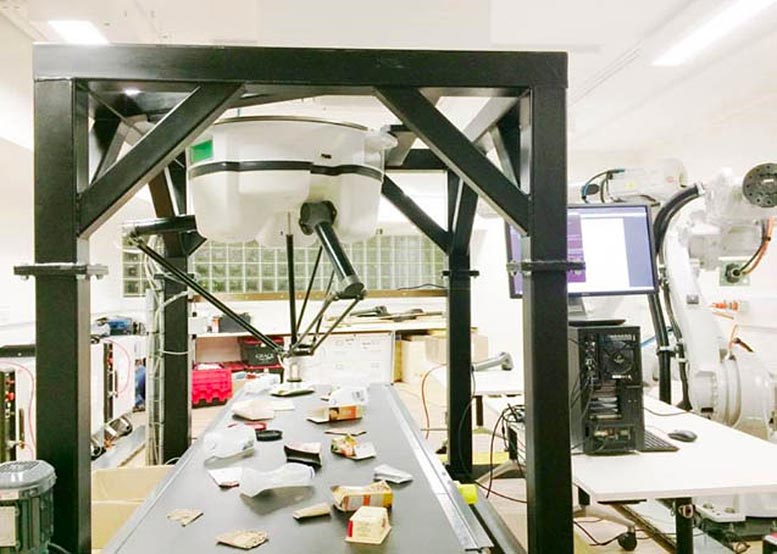
Engineering researchers are developing a unique method to increase the recycling of soft plastics by creating a smart robot that can identify, sort, and separate different types of recyclable waste.
Despite an improvement in plastic recycling in recent years, landfill is a growing issue. Soft plastics like cling wrap and plastic bags are a major contributor to the problem, with 94 percent going to landfills in 2016-17.
Why Soft Plastics Are So Hard to Recycle
Soft plastics lack adequate recycling methods as they easily entangle in waste separation machinery, leading to mechanical failure and contamination of other recyclable materials such as paper. Because of this problem, current recycling methods rely on the manual sorting of soft plastics, an often repetitive and unsafe task.
Working alongside industry partners as part of a federal government Cooperative Research Centre Project grant, researchers from the Centre for Internet of Things (IoT) and Telecommunications at the University of Sydney are developing a unique method to increase recycling of soft plastics – by creating a smart, automated robotic system that uses an AI to sort recyclable waste.
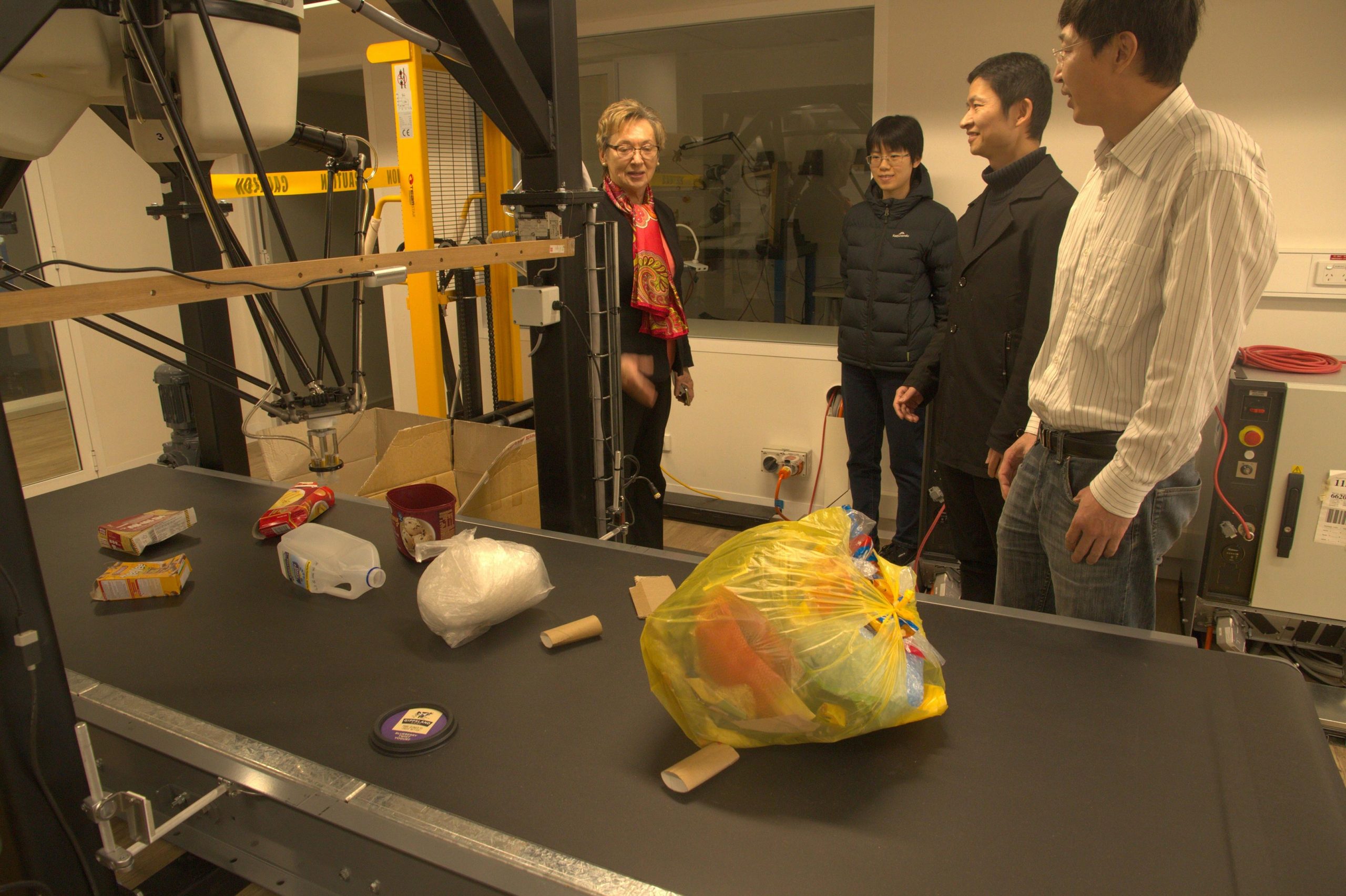
The team includes Professor Branka Vucetic, Professor Yonghui Li, Associate Professor Wanli Ouyang, Dr. Wanchun Liu, and Senior Technical Officer Dawei Tan from the School of Electrical and Information Engineering.
Teaching Robots to ‘See’ Waste Using AI
“The recycling robotic automation system will use artificial intelligence and computer vision to learn how to identify different forms of recycling waste, effectively learning how to ‘see’ and ‘sort’ waste, to create separate waste streams and maintain soft plastics’ purity so they can be recycled,” said IoT expert, Professor Branka Vucetic.
“Soft plastics are a big contributor to landfills and have long been a challenge for the circular economy and waste management sector, as they have lacked an adequate and safe sorting method. Using the latest IoT techniques, we have created a custom robot to solve this issue,” said Professor Yonghui Li.
“Between 2018 and 2019, Australia generated 2.5 million tonnes of plastic waste, which included soft plastics: only 9 percent was sent to recycling while 84 percent went to landfill. We aim to drastically switch those percentages by developing a solution that allows for most soft plastic waste being recycled,” said Dr. Wanchun Liu.
The researchers are working with waste management companies, IQRenew and CurbCycle, technology developers Licella, Mike Ritchie and Associates, and Resource Recovery Design to develop the system.
“Soft plastics are a big contributor to landfill and have long been a challenge for the circular economy and waste management sector, as they have lacked an adequate and safe sorting method.”
Professor Yonghui Li, School of Electrical and Information Engineering
The system will be integrated into IQ Renew’s material recovery facility as part of CurbCycle’s soft plastic recovery program, an Australian initiative that involves the household collection of recyclables that are segregated into bags prior to placing them into their kerbside recycling bin.
“Not only does our project divert household soft plastics from going to landfill; by creating a solution for the collection and sorting of waste with our industry and research partners, we’re also creating a sustainable supply chain that takes rubbish from households to end markets,” said Associate Professor Wanli Ouyang.
“The robot will identify ‘CurbyTagged’ bags and differentiate sources of plastic, separating soft plastics from the fully co-mingled recyclables,” he said.
Transforming Waste into Valuable Products
After being separated from other waste, the soft plastics will be used for various purposes, including advanced recycling into oils and other valuable chemicals using patented Catalytic Hydrothermal Reactor technology (Cat-HTR™) created by Licella Holdings. Licella was founded by Professor Thomas Maschmeyer from the Faculty of Science alongside Licella CEO, Dr. Len Humphreys, and has been supported by the University of Sydney for 14 years.
“This highly innovative materials handling process can help extend the range of the Cat-HTR conversion technology to now include increasingly challenging waste streams, highlighting the benefit of close industrial and academic collaboration,” said Professor Maschmeyer.
The researchers were awarded $2,999,220 as part of an Australian Federal Government CRC-P grant.
Professor Thomas Maschmeyer from the University’s School of Chemistry holds the position of Principal Technology Consultant at Licella.
Never miss a breakthrough: Join the SciTechDaily newsletter.
Follow us on Google and Google News.