
Close Menu
    Facebook X (Twitter) Instagram
    SciTechDaily
    • Biology
    • Chemistry
    • Earth
    • Health
    • Physics
    • Science
    • Space
    • Technology
    Facebook X (Twitter) Pinterest YouTube RSS
    SciTechDaily
    Home»Technology»New Synthetic Biomaterial Can Repair Hearts, Muscles, and Vocal Cords
    Technology

    New Synthetic Biomaterial Can Repair Hearts, Muscles, and Vocal Cords

    By McGill UniversityDecember 4, 2021No Comments3 Mins Read
    Facebook Twitter Pinterest Telegram LinkedIn WhatsApp Email Reddit
    Share
    Facebook Twitter LinkedIn Pinterest Telegram Email Reddit
    Vocal Cord Bioreactor
    A rendered image of the vocal cord bioreactor for testing the hydrogels. Credit: Zixin He

    Scientists From McGill University Develop New Biomaterial for Wound Repair

    Combining knowledge of chemistry, physics, biology, and engineering, scientists from McGill University developed a biomaterial tough enough to repair the heart, muscles, and vocal cords, representing a major advance in regenerative medicine.

    “People recovering from heart damage often face a long and tricky journey. Healing is challenging because of the constant movement tissues must withstand as the heart beats. The same is true for vocal cords. Until now there was no injectable material strong enough for the job,” says Guangyu Bao, a PhD candidate in the Department of Mechanical Engineering at McGill University.
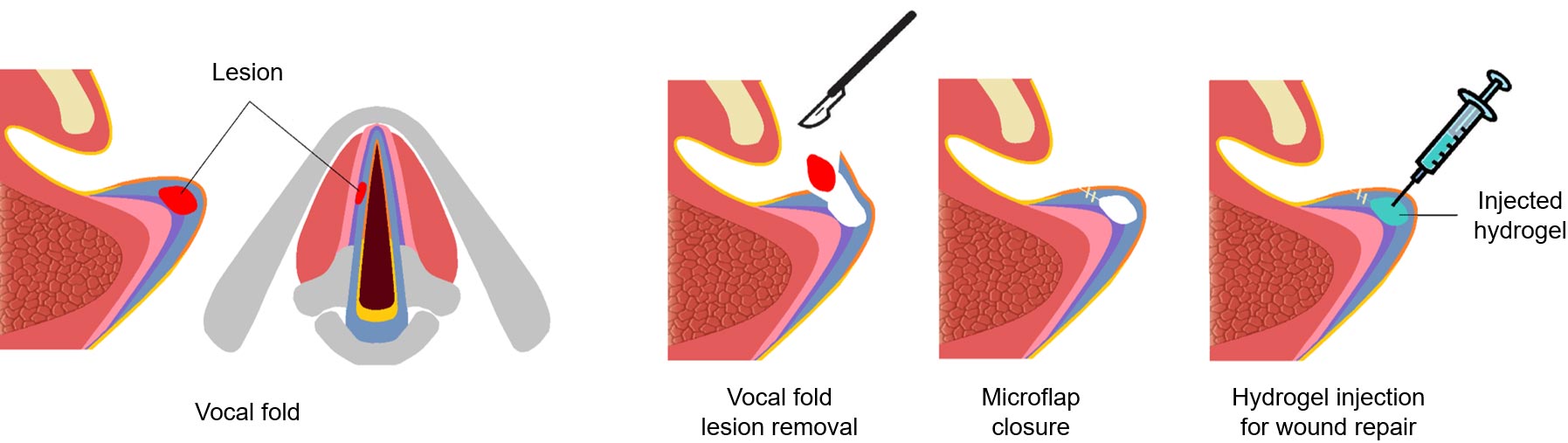
    Injectable Hydrogel
    Illustration shows the use of injectable hydrogel as an implant to fill a wound and to restore the voice. Credit: Sepideh Mohammadi

    The team, led by Professor Luc Mongeau and Assistant Professor Jianyu Li, developed a new injectable hydrogel for wound repair. The hydrogel is a type of biomaterial that provides room for cells to live and grow. Once injected into the body, the biomaterial forms a stable, porous structure allowing live cells to grow or pass through to repair the injured organs.

    “The results are promising, and we hope that one day the new hydrogel will be used as an implant to restore the voice of people with damaged vocal cords, for example, laryngeal cancer survivors,” says Guangyu Bao.
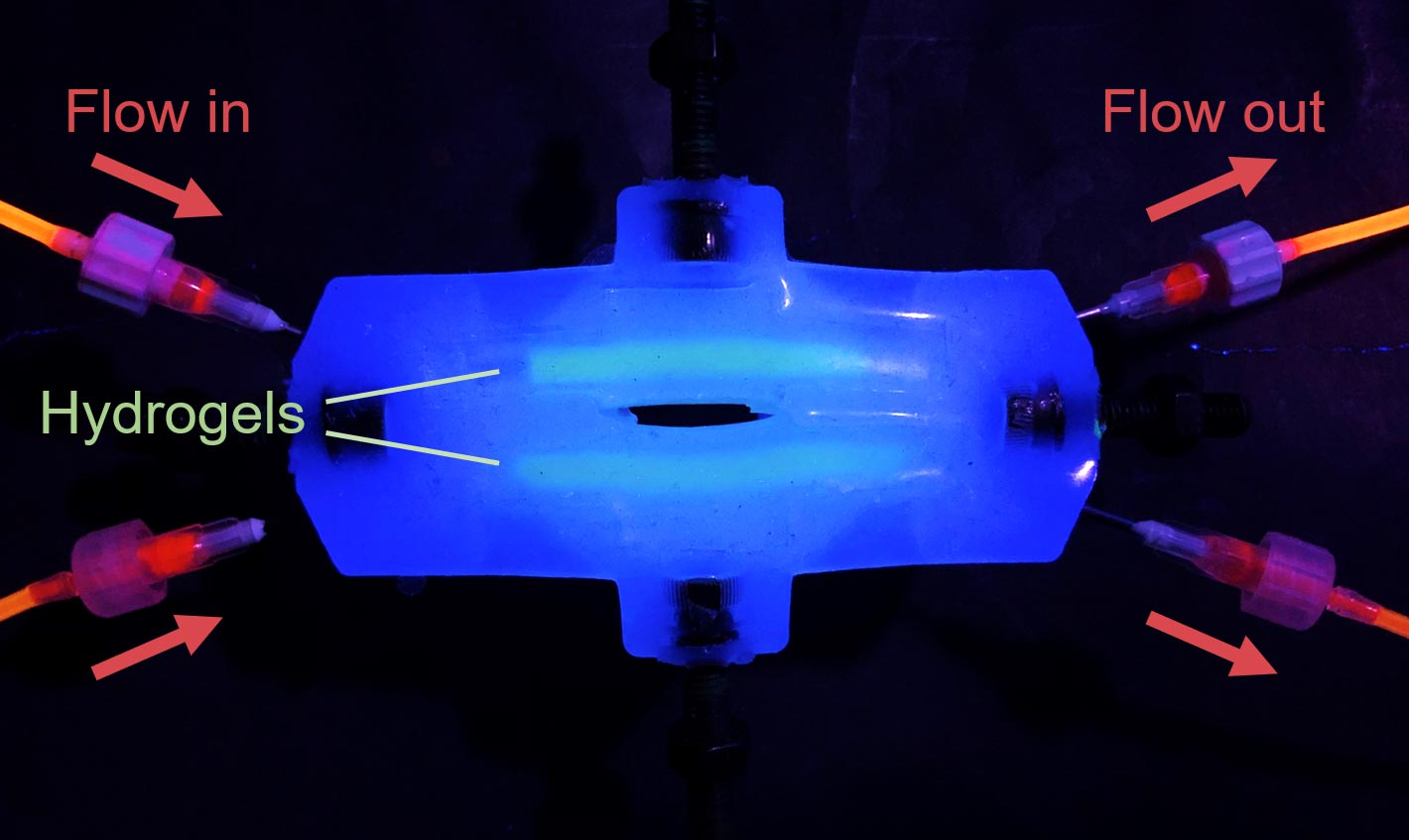
    Vocal Cord Bioreactor Testing
    The flow, mimicking the blood in the human body, passes through 6-centimeter-long hydrogels in the vocal cord bioreactor during testing. Credit: Guangyu Bao

    Putting It to the Test

    The scientists tested the durability of their hydrogel in a machine they developed to simulate the extreme biomechanics of human vocal cords. Vibrating at 120 times a second for over 6 million cycles, the new biomaterial remained intact while other standard hydrogels fractured into pieces, unable to deal with the stress of the load.

    “We were incredibly excited to see it worked perfectly in our test. Before our work, no injectable hydrogels possessed both high porosity and toughness at the same time. To solve this issue, we introduced a pore-forming polymer to our formula,” says Guangyu Bao.
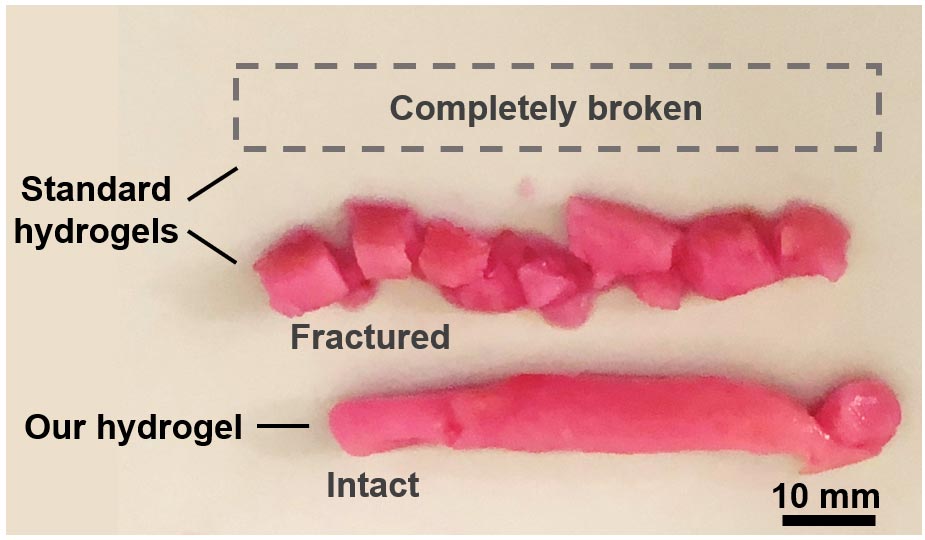
    Hydrogel Testing Vocal Cord Bioreactor
    The researchers tested three different hydrogels using the vocal cord bioreactor. While the new hydrogel remained stable, the two standard hydrogels, which represent most existing injectable hydrogels, did not survive the test. Credit: Sareh Taheri

    The innovation also opens new avenues for other applications like drug delivery, tissue engineering, and the creation of model tissues for drug screening, the scientists say. The team is even looking to use the hydrogel technology to create lungs to test COVID-19 drugs.

    “Our work highlights the synergy of materials science, mechanical engineering, and bioengineering in creating novel biomaterials with unprecedented performance. We are looking forward to translating them into the clinic”, said Professor Jianyu Li, who holds the Canada Research Chair in Biomaterials and Musculoskeletal Health.


    The vocal cord bioreactor simulates the biomechanics of vocal cords to test the hydrogels. Credit: Guangyu Bao

    Reference: “Injectable, Pore-Forming, Perfusable Double-Network Hydrogels Resilient to Extreme Biomechanical Stimulations” by Sareh Taheri, Guangyu Bao, Zixin He, Sepideh Mohammadi, Hossein Ravanbakhsh, Larry Lessard, Jianyu Li and Luc Mongeau, 22 November 2021, Advanced Science.
    DOI: 10.1002/advs.202102627

    Never miss a breakthrough: Join the SciTechDaily newsletter.
    Follow us on Google and Google News.

    Biomechanics Biomedical Engineering Biotechnology Hydrogel McGill University Mechanical Engineering Popular Regenerative Medicine
    Share. Facebook Twitter Pinterest LinkedIn Email Reddit

    Related Articles

    Sweat-Proof Electronic “Smart Skin” Takes Reliable Vitals, Even During Workouts

    Wearable Bioelectronics: Detecting COVID-19 With a Sticker on Your Skin

    Stretchy “Electronic Skin” Promises Cheap and Recyclable Alternative to Wearable Devices

    New Method of 3D-Printing Soft Materials Could Jump-Start Creation of Tiny Medical Devices for the Body

    COVID-19 Coronavirus Breathalyzer Test Developed

    Reversible “Gecko” Adhesives Ready for Easy Mass-Production

    MIT Develops Soft, Flexible Neural Implants That Can Be 3D Printed on Demand

    Bionic Tactile Enhancement – Highly Sensitive Sensors Inspired by Spiders Improve Sense of Touch

    New Bioprinting Technique Shows Potential for Tissue Repair and Regenerative Medicine

    Leave A Reply Cancel Reply

    • Facebook
    • Twitter
    • Pinterest
    • YouTube

    Don't Miss a Discovery

    Subscribe for the Latest in Science & Tech!

    Trending News

    This Strange New Magnetism Could Change How Computers Work

    Scientists Decode a 12,000-Year-Old Mystery Hidden in Ancient Spear Points

    Rare Mutation May Shield the Brain From Alzheimer’s Damage

    James Webb Telescope Detects the Fingerprints of Catastrophic Planetary Collisions

    New Fat-Dissolving Shot Cuts Hidden Visceral Fat in Early Human Trials

    Scientists Discover “Pac-Man Enzyme” That Eats Plastic

    Study Finds Exercise May Be a Surprisingly Powerful Treatment for Pain

    New Research Reveals Dinosaurs May Have Eaten Seaweed

    Follow SciTechDaily
    • Facebook
    • Twitter
    • YouTube
    • Pinterest
    • Newsletter
    • RSS
    SciTech News
    • Biology News
    • Chemistry News
    • Earth News
    • Health News
    • Physics News
    • Science News
    • Space News
    • Technology News
    Recent Posts
    • Just 1,000 More Steps a Day Linked to Better Mental Health in Teens
    • Scientists Find a Surprising Blood Sugar Benefit to Eating With a Loved One
    • Why Too Much Cannabis Can Flip an Anxiety Switch in the Brain
    • Scientists Uncover Two Hidden Forms of Disorder in Next-Generation Semiconductors
    • Biofluorescence Discovered in Fire Salamanders for the First Time
    Copyright © 1998 - 2026 SciTechDaily. All Rights Reserved.
    • Science News
    • About
    • Contact
    • Editorial Board
    • Privacy Policy
    • Terms of Use

    Type above and press Enter to search. Press Esc to cancel.