
Close Menu
    Facebook X (Twitter) Instagram
    SciTechDaily
    • Biology
    • Chemistry
    • Earth
    • Health
    • Physics
    • Science
    • Space
    • Technology
    Facebook X (Twitter) Pinterest YouTube RSS
    SciTechDaily
    Home»Technology»COVID-19 Coronavirus Breathalyzer Test Developed
    Technology

    COVID-19 Coronavirus Breathalyzer Test Developed

    By American Chemical SocietyAugust 20, 2020No Comments3 Mins Read
    Facebook Twitter Pinterest Telegram LinkedIn WhatsApp Email Reddit
    Share
    Facebook Twitter LinkedIn Pinterest Telegram Email Reddit
    Breathalyzer
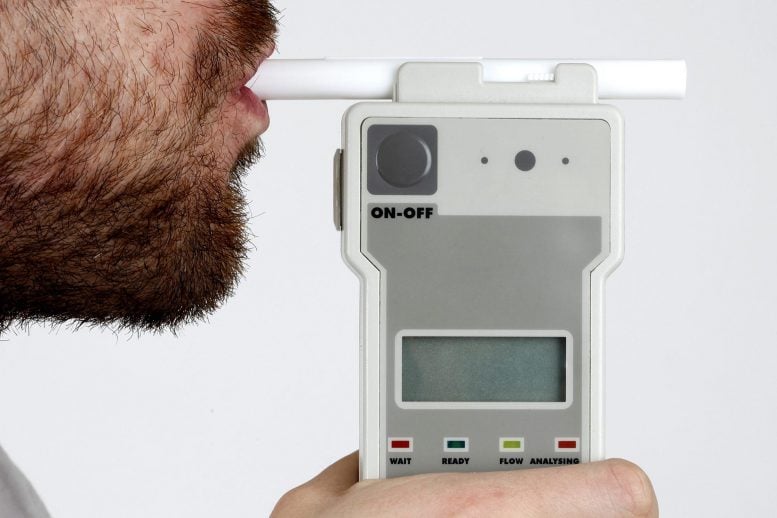
    The prototype device non-invasively detects COVID-19 in the exhaled breath of infected patients, similar to a breathalyzer test for alcohol intoxication.

    Few people who have undergone nasopharyngeal swabs for coronavirus testing would describe it as a pleasant experience. The procedure involves sticking a long swab up the nose to collect a sample from the back of the nose and throat, which is then analyzed for SARS-CoV-2 RNA by the reverse-transcription polymerase chain reaction (RT-PCR). Now, researchers reporting in ACS Nano have developed a prototype device that non-invasively detected COVID-19 in the exhaled breath of infected patients.

    In addition to being uncomfortable, the current gold standard for COVID-19 testing requires RT-PCR, a time-consuming laboratory procedure. Because of backlogs, obtaining a result can take several days. To reduce transmission and mortality rates, healthcare systems need quick, inexpensive and easy-to-use tests. Hossam Haick, Hu Liu, Yueyin Pan and colleagues wanted to develop a nanomaterial-based sensor that could detect COVID-19 in exhaled breath, similar to a breathalyzer test for alcohol intoxication. Previous studies have shown that viruses and the cells they infect emit volatile organic compounds (VOCs) that can be exhaled in the breath.

    The researchers made an array of gold nanoparticles linked to molecules that are sensitive to various VOCs. When VOCs interact with the molecules on a nanoparticle, the electrical resistance changes. The researchers trained the sensor to detect COVID-19 by using machine learning to compare the pattern of electrical resistance signals obtained from the breath of 49 confirmed COVID-19 patients with those from 58 healthy controls and 33 non-COVID lung infection patients in Wuhan, China. Each study participant blew into the device for 2-3 seconds from a distance of 1-2 cm. Once machine learning identified a potential COVID-19 signature, the team tested the accuracy of the device on a subset of participants. In the test set, the device showed 76% accuracy in distinguishing COVID-19 cases from controls and 95% accuracy in discriminating COVID-19 cases from lung infections. The sensor could also distinguish, with 88% accuracy, between sick and recovered COVID-19 patients. Although the test needs to be validated in more patients, it could be useful for screening large populations to determine which individuals need further testing, the researchers say.

    Reference: “Multiplexed Nanomaterial-Based Sensor Array for Detection of COVID-19 in Exhaled Breath” by Benjie Shan, Yoav Y Broza, Wenjuan Li, Yong Wang, Sihan Wu, Zhengzheng Liu, Jiong Wang, Shuyu Gui, Lin Wang, Zhihong Zhang, Wei Liu, Shoubing Zhou, Wei Jin, Qianyu Zhang, Dandan Hu, Lin Lin, Qiujun Zhang, Wenyu Li, Jinquan Wang, Hu Liu, Yueyin Pan and Hossam Haick, 18 August 2020, ACS Nano.
    DOI: 10.1021/acsnano.0c05657

    The authors acknowledge funding from the Technion-Israel Institute of Technology.

    Never miss a breakthrough: Join the SciTechDaily newsletter.
    Follow us on Google and Google News.

    American Chemical Society Biomedical Engineering Biotechnology COVID-19 Infectious Diseases Nanotechnology Popular Virology
    Share. Facebook Twitter Pinterest LinkedIn Email Reddit

    Related Articles

    MIT Quantum COVID Sensor May Offer Faster, Cheaper, and More Accurate Detection of SARS-CoV-2

    MIT’s New Carbon Nanotube-Based Sensor Can Detect COVID-19 or Other Emerging Pathogens

    New DNA Sensor Quickly Determines Whether Viruses Are Infectious

    “Wonder Material” Can Be Used to Detect COVID-19 Virus Quickly and Accurately

    Disinfected by the Sun: New Cotton Face Mask Kills Up to 99.9999% of Bacteria and Viruses in Daylight

    Titanate Nanowire Mask Filter Can Kill Bacteria and Viruses Including SARS-CoV-2/COVID-19

    COVID-19 Vaccine Innovation Could Massively Speed Up Worldwide Production

    Researchers Develop a Replaceable, More Efficient Filter for N95 Masks

    Diagnostic Biosensor Detects SARS-CoV-2 From Nasopharyngeal Swab in Less Than a Minute

    Leave A Reply Cancel Reply

    • Facebook
    • Twitter
    • Pinterest
    • YouTube

    Don't Miss a Discovery

    Subscribe for the Latest in Science & Tech!

    Trending News

    Scientists Uncover Potential Brain Risks of Popular Fish Oil Supplements

    Scientists Discover a Surprising Way To Make Bread Healthier and More Nutritious

    After 60 Years, Scientists Uncover Unexpected Brain Effects of Popular Diabetes Drug Metformin

    New Research Uncovers Hidden Side Effects of Popular Weight-Loss Drugs

    Scientists Rethink Extreme Warming After Surprising Ocean Discovery

    Landmark Study Links Never Marrying to Significantly Higher Cancer Risk

    Researchers Discover Unknown Beetle Species Just Steps From Their Lab

    Largest-Ever Study Finds Medicinal Cannabis Ineffective for Anxiety, Depression, PTSD

    Follow SciTechDaily
    • Facebook
    • Twitter
    • YouTube
    • Pinterest
    • Newsletter
    • RSS
    SciTech News
    • Biology News
    • Chemistry News
    • Earth News
    • Health News
    • Physics News
    • Science News
    • Space News
    • Technology News
    Recent Posts
    • “Like Liquid Metal”: Scientists Create Strange Shape-Shifting Material
    • Early Warning Signals of Esophageal Cancer May Be Hiding in Plain Sight
    • Researchers Have Discovered a THC-Free Cannabis Compound That May Replace Opioids
    • Common Blood Pressure Drug Shows Surprising Power Against Deadly Antibiotic-Resistant Superbug
    • Students Build Dark Matter Detector and Set New Experimental Limits
    Copyright © 1998 - 2026 SciTechDaily. All Rights Reserved.
    • Science News
    • About
    • Contact
    • Editorial Board
    • Privacy Policy
    • Terms of Use

    Type above and press Enter to search. Press Esc to cancel.